Hudson Yards Headquarters Space
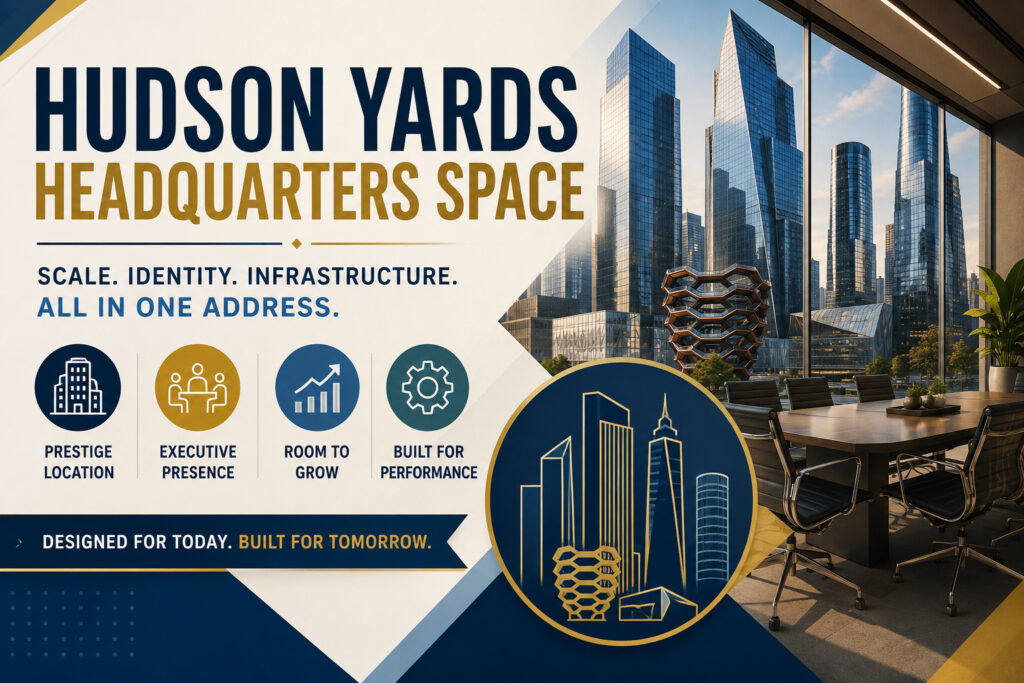
Hudson Yards headquarters space means more than a polished suite in a newer tower. Most tenants use this phrase when they need scale, identity, infrastructure, and growth room in one address. They want one workplace that supports executives, teams, clients, recruiting, and daily operations.

What Hudson Yards Headquarters Space Usually Means
In practice, this phrase points to several needs at once. Some tenants want a district overview. Others want a true large block. Another group wants a turnkey floor with executive presence. A final group wants a long-term headquarters lease with custom build rights. Those four paths appear again and again in the current benchmark set.
| What the tenant usually means | What the search really turns into |
|---|---|
| A district check | Is Hudson Yards the right setting for a flagship office |
| A large-block request | Can the district deliver 25,000 to 100,000 square feet or more |
| A turnkey need | Is there a strong prebuilt or sublease that saves time |
| A true headquarters move | Can one address support brand, leadership, clients, and future growth |
That difference matters. A flexible office solves speed. A headquarters solves identity, scale, privacy, workflow, and long-term control. If your team needs boardrooms, branding, client reception, and department planning, you need more than a furnished suite. The benchmark set also shows that this phrase often pulls in flexible office pages, district pages, live listings, and occupier profiles at the same time.
Why Large Tenants Target Hudson Yards
Few Manhattan districts match Hudson Yards for modern inventory at enterprise scale. Within the district, premier towers range from about 1.3 million to 2.9 million square feet. Some floorplates can handle more than 500 people on one floor.
The physical product also fits headquarters use. One major tower offers column-free interiors and panoramic views. Another adds floor-to-ceiling windows across a 1.8 million square foot tower. A third spans a full city block and includes sky lobbies, terraces, and very large floorplates. Together, those traits support dense planning, strong image, and future growth.
Access remains a major advantage. The No. 7 subway serves the district directly. Penn Station sits two blocks east. Buses, ferries, the West Side Highway, and the Lincoln Tunnel add regional flexibility. That mix helps Manhattan staff, suburban commuters, and client traffic.
The neighborhood also works beyond the workday. Hudson Yards pairs office towers with dining, retail, wellness, and public space. Roughly one million square feet of retail supports the district. Several towers also add terraces, event areas, food halls, and fitness space. That mix helps recruiting, hospitality, and employee convenience.
What Counts as True Headquarters Space
A real headquarters floor starts with scale. In Hudson Yards, that usually means a full floor, stacked floors, or a large contiguous block. The best options give your company a defined arrival point. They also support open seating and perimeter rooms on one efficient plan. Current headquarters examples on our site show exactly that pattern.
Layout quality matters just as much. Strong headquarters space supports leadership offices, meeting rooms, conference rooms, pantry space, quiet rooms, and open neighborhoods for teams. Clean circulation keeps visitors out of staff work zones. Good planning also keeps the glass line working for people, not dead space. The live layouts on our Hudson Yards inventory pages repeatedly feature this mix.
Identity matters too. Some large-block offerings include exclusive lobby access, branding opportunities, terraces, or event areas. Others trade that for faster delivery through an existing installation. Neither format wins on every deal. The right answer depends on timing, capital, and culture.
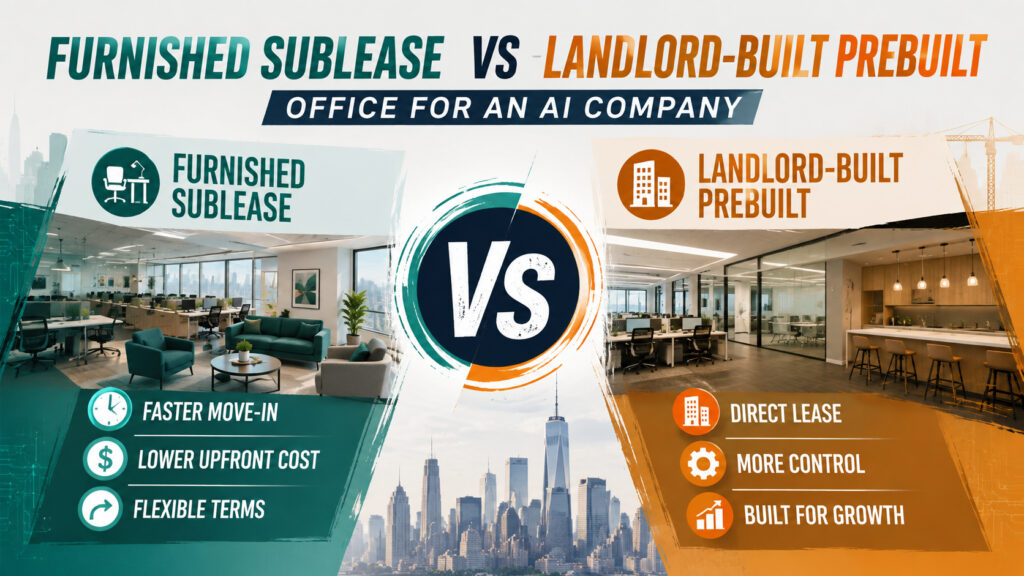
Lease structure also shapes the decision. A direct lease usually fits a longer runway and a custom build. By contrast, a sublease can save time and reduce upfront work when the layout already fits. Current Hudson Yards headquarters opportunities include both formats. That gives tenants a real choice between speed and control.
Current Headquarters Options
Current live examples show how wide the headquarters lane can run. A full-floor direct option offers about 45,543 square feet. A separate multi-floor headquarters sublease spans 45,942 square feet. Another furnished full-floor option totals 30,314 square feet. Smaller full-floor choices also appear around 10,500 to 10,700 square feet.
Full-floor direct identity: Hudson Yards Headquarters Space offers about 45,543 square feet on a full floor. The layout includes reception, perimeter rooms, open work areas, and a central café hub.
Multi-floor speed play: Hudson Yards Office Space Headquarters spans about 45,942 square feet across two floors as a sublease. That option adds strong amenities, event support, and a term through 2034 with extension potential.
Furnished growth floor: Hudson Yards Full Floor Unit totals about 30,314 square feet. It seats seventy-two workstations and adds private offices, meeting rooms, and a central pantry.
Compact but serious alternatives: Office Space In Hudson Yards offers about 10,517 square feet on a full floor with twelve private offices. Hudson Yards Office for Lease lists about 10,680 square feet and fits teams that want a polished high-floor presence.
Those examples clarify an important point. Headquarters space does not require one exact size. It requires the right mix of image, layout, infrastructure, and lease structure. Some firms need 40,000 square feet now. Others need 12,000 square feet today and expansion rights tomorrow.
For broader inventory context, compare Hudson Yards office space for lease, Hudson Yards office space for rent, and Hudson Yards offices. Those pages help separate general supply from true headquarters-grade options.
Cost, Terms, and Market Context
Live large-block listings in Hudson Yards often post pricing on request. That pattern shows how much economics can turn on floor height, term, credit, existing buildout, and lease structure. Tenants should compare the total deal, not only the headline rent. Our current Hudson Yards headquarters listings follow that same approach.
The broader Manhattan market supports that approach. Trophy leases above $100 per square foot rose sharply in 2024. Strong leasing momentum continued through 2025. Sublease inventory then fell below 11 million square feet in the second quarter of 2026. That total stood at less than half the late-2022 peak. Move-in-ready big blocks do not stay open forever.
Scarcity changes strategy. If you need a branded full floor, start early. If you need fast occupancy, test live subleases first. If you want full customization, line up direct options before your current term gets short. Once tenants wait too long, choice narrows and leverage drops. That logic fits both the market trend and the current structure of live Hudson Yards inventory.
For pricing context, start with our Hudson Yards office space cost guide. Then compare active inventory through Hudson Yards office and Hudson Yards office space pages. After that, use best Hudson Yards office buildings for tenants to sort fit by building style, access, and user profile.
How To Choose the Right Headquarters Footprint
Start with attendance, not payroll. Measure daily seats, not total employees. Then map office count, meeting load, pantry needs, leadership mix, client flow, and growth assumptions. That process tells you whether you need one floor, stacked floors, or a short-term bridge. Current Hudson Yards layouts show why this step matters. They vary widely in workstation count, office mix, and conferencing depth.
Next, decide how much identity you want. Some teams need one private floor with direct arrival. Other groups can use a stacked installation. Client-heavy firms usually want stronger front-of-house planning. Internal teams often prefer more open seating and fewer enclosed offices. That tradeoff appears clearly across the direct and sublease options now on the market.
Also consider timing. A prebuilt headquarters option cuts months when the layout already works. A raw or lightly built floor gives more control when culture and branding matter most. Direct leases support deeper customization. By contrast, subleases can reduce cost and speed delivery. Both paths appear in current Hudson Yards inventory.
Finally, preserve flexibility in the document. Ask for expansion rights where possible. Request signage only when it adds real value. Review extension language carefully. Make sure the lease matches the business plan, not only the move date. For a process guide, use How to Lease an Office in Hudson Yards alongside Hudson Yards office space for rent.
Frequently Asked Questions
Is Hudson Yards headquarters space the same as coworking
No. Flexible suites can solve short-term occupancy. However, most enterprise tenants need more control, privacy, brand presence, and planning depth than coworking provides. The benchmark set makes that distinction clear because flexible office results sit beside live listings, district pages, and occupier pages rather than replacing them.
Can one floor handle a large staff
Yes. Some Hudson Yards towers can accommodate more than 500 people on a floor. Current full-floor options on our site run from about 10,500 square feet to more than 45,000 square feet.
Should I pursue a direct lease or a sublease
Choose the structure that fits your priority. Direct leases usually support longer control and deeper customization. Subleases often deliver faster occupancy and existing improvements. Hudson Yards currently offers both.
Does Hudson Yards work for regional commuting
Yes. The district connects directly to the No. 7 subway. Penn Station sits two blocks away. Buses, ferries, and road access expand the catchment even further.
What if my company needs a headquarters look without a massive block
That is common. A high-floor full-floor suite around 10,500 square feet can deliver executive presence, strong light, private offices, and conference rooms. The right plan matters more than raw size.
Why do district pages, tower pages, and occupier pages cluster around this topic
Because tenants use this phrase in different ways. Some want proof of neighborhood quality. Others want specific buildings. Another group wants live spaces. The strongest answer joins those threads into one clear explanation. The current benchmark set shows that mix very clearly across Google, Bing, and Yahoo.
Looking for a Headquarters in the Hudson Yards?
We represent tenants only. We do not market space for landlords. Our job is to help occupiers compare options, create leverage, and negotiate smarter terms.
Fill out our 📋 online form or give us a call today 📞 212-967-2061 — let’s find the right options for your business.