156 Fifth Avenue
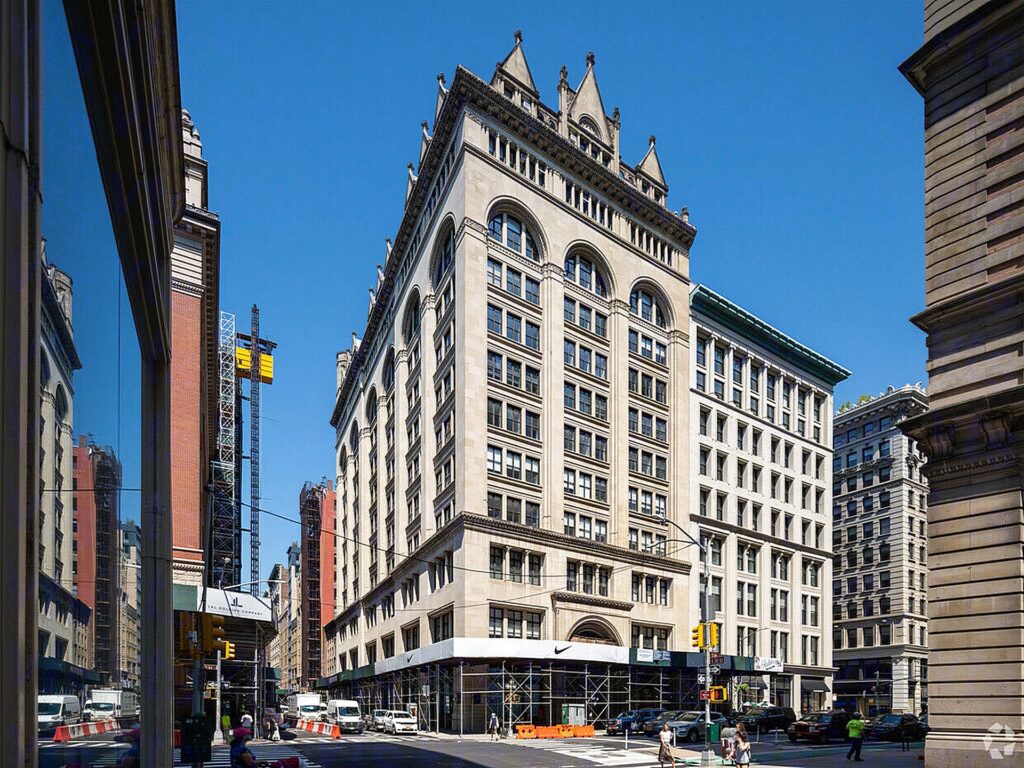
156 Fifth Avenue stands as one of the Flatiron District’s most recognizable prewar office buildings, positioned prominently at the corner of Fifth Avenue and West 20th Street. Known historically as the Presbyterian Building, the property delivers a blend of landmark architecture, Fifth Avenue frontage, and modernized office infrastructure that continues to attract a wide range of tenants—from creative firms and technology companies to professional services and boutique financial groups.
The building’s defining characteristic is its location. Sitting directly along Fifth Avenue between Union Square and Madison Square Park, 156 Fifth Avenue places tenants in the center of one of Manhattan’s most active and desirable office corridors. This location provides immediate access to transit, dense retail amenities, and a surrounding ecosystem of established office users that reinforce both convenience and brand positioning.
Architecturally, the property reflects the scale and character that tenants actively seek in Midtown South. The structure features classic masonry construction, strong window lines, and a recognizable façade that contributes to a polished corporate identity without sacrificing the creative loft-style appeal that defines the Flatiron market. Inside, office spaces are configured to support modern workplace layouts, combining open workstation areas with perimeter offices and collaborative meeting environments.
From a leasing perspective, 156 Fifth Avenue occupies a strategic middle ground in the market. It offers the aesthetic and branding advantages of a Fifth Avenue address while maintaining the efficiency and flexibility associated with Midtown South office product. This balance makes the building particularly attractive to tenants who want a recognizable address without committing to the pricing levels of newer trophy construction.
Tenants benefit from direct proximity to Union Square’s major subway hub as well as the 23rd Street corridor, creating a highly accessible workplace for employees commuting from all parts of New York City and the surrounding region. The immediate neighborhood supports daily operations with an extensive mix of restaurants, fitness options, retail, and hospitality venues, allowing companies to provide a complete workplace experience without relying on in-building amenities alone.
Overall, 156 Fifth Avenue positions itself as a high-character, high-visibility office asset within the Flatiron District. For tenants evaluating Midtown South, the building represents a compelling option that combines location, identity, and functional office layouts in one of Manhattan’s most consistently in-demand submarkets.
156 Fifth Avenue is a landmark Class B office building located at the corner of Fifth Avenue and West 20th Street in Manhattan’s Flatiron District. Originally constructed between 1894 and 1895 as the Presbyterian Building and designed by architect James B. Baker in the Romanesque Revival style, the property has been preserved and upgraded to support modern office tenancy while maintaining its historic architectural identity within the Ladies’ Mile Historic District.
The building occupies a prominent Fifth Avenue corner position, delivering strong branding exposure, architectural distinction, and immediate proximity to Union Square, Madison Square Park, and the broader Midtown South office ecosystem. Its positioning makes it a consistent target for tenants seeking identity-driven space in a transit-rich, amenity-dense location.
Core Building Metrics
- Building Address: 156 Fifth Avenue, New York, NY 10010
- Submarket: Flatiron District / Midtown South
- Property Type: Class B Office Building
- Alternate Name: The Presbyterian Building
- Ownership / Management: Institutional ownership (HRC Corporation / operator-managed asset)
- Original Construction: 1894–1895
- Architect: James B. Baker
- Architectural Style: Romanesque Revival / Ladies’ Mile Historic District
- Building Height: Approximately 13–14 stories
- Total Building Size: Approximately 230,000–234,000 Square Feet
- Floor Plate Sizes: Efficient mid-size plates typically ranging from ~10,000 to 20,000 Square Feet
- Ceiling Heights: Vary by floor, with higher ceilings on lower levels and strong volumetric feel in upper floors
- Window Lines: Large, evenly spaced historic windows providing strong natural light across multiple exposures
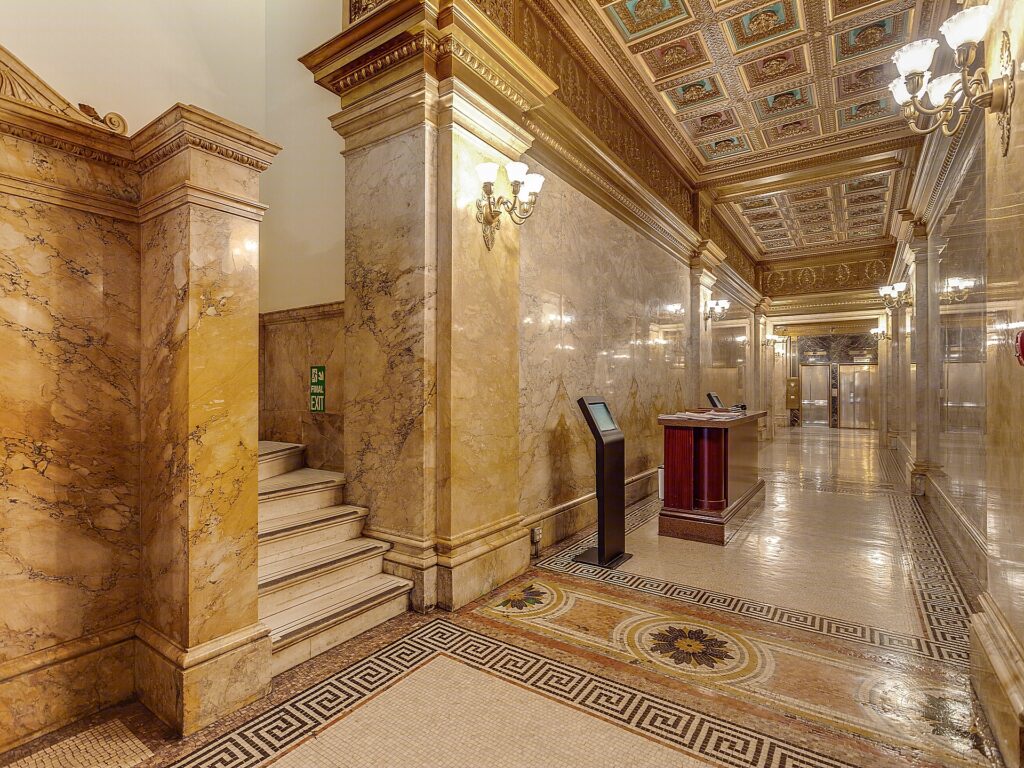
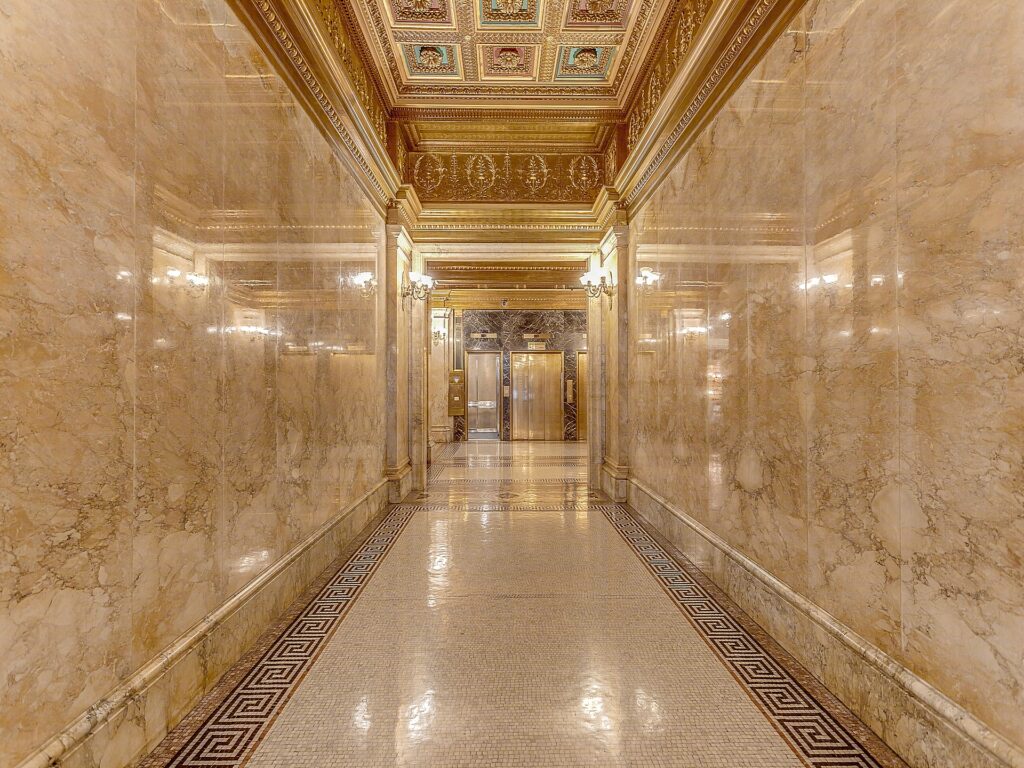
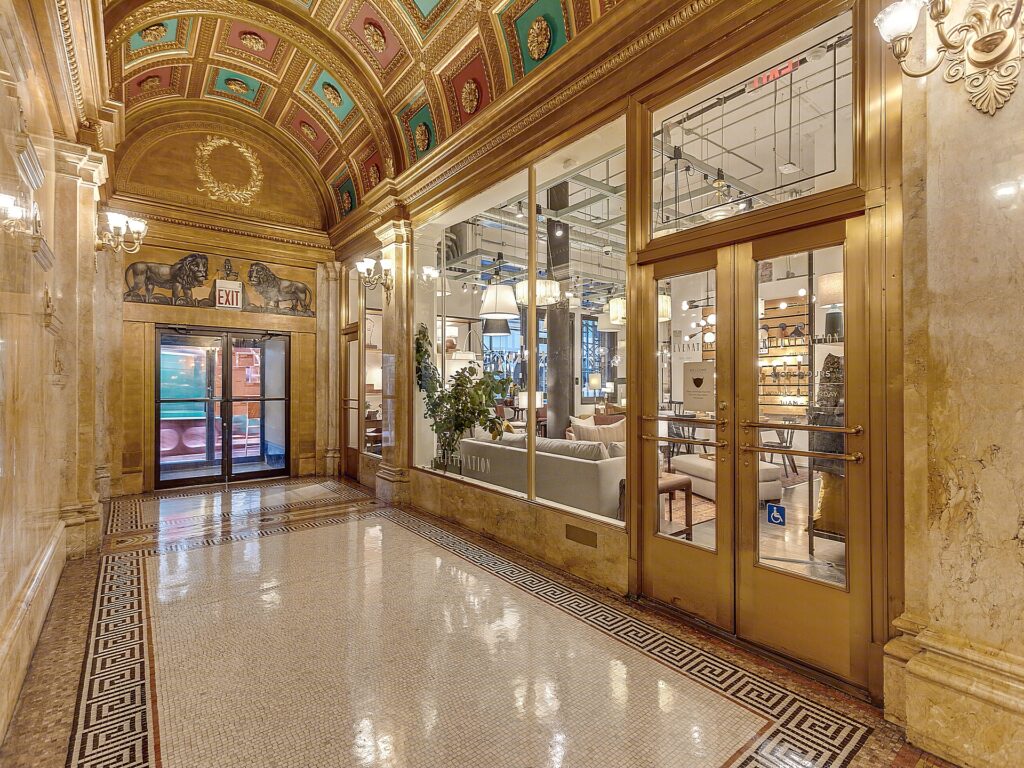
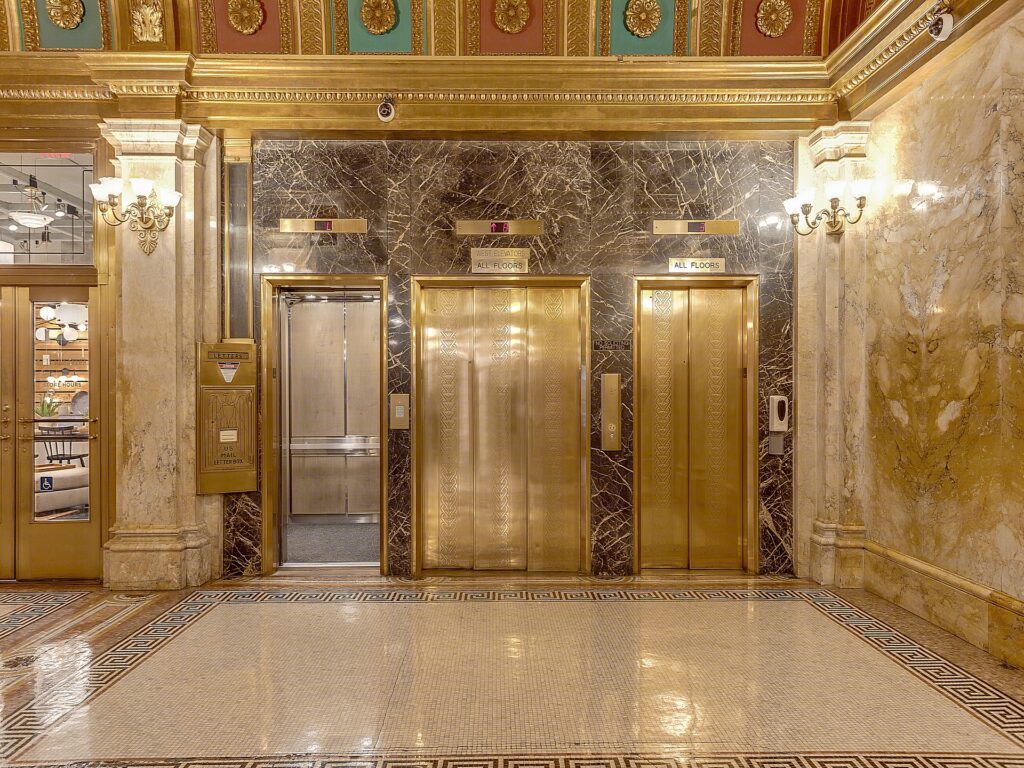
- Lobby Presence: Ornate, restored lobby with marble finishes, decorative ceilings, and attended entry
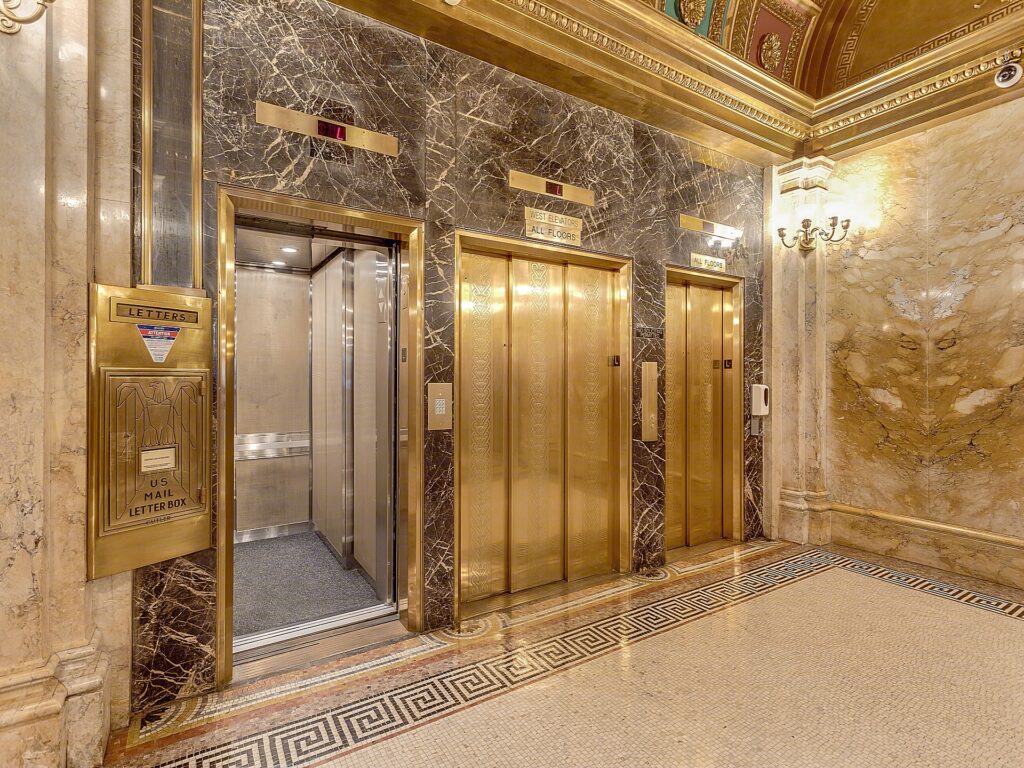
- Elevator Infrastructure: Multiple passenger elevators servicing all floors
- HVAC Systems: Upgraded tenant-controlled HVAC systems (varies by installation)
- Electrical Systems: Modernized infrastructure supporting contemporary office buildouts
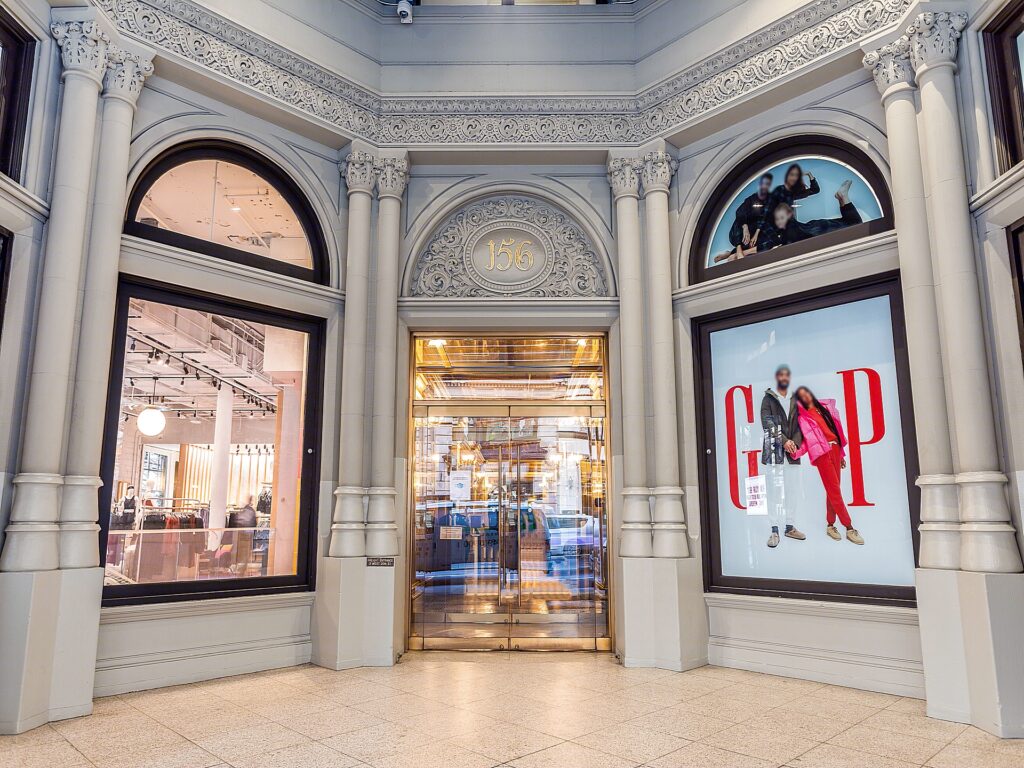
- Retail Component: Ground-floor retail along Fifth Avenue frontage
- Security: Attended lobby with controlled building access
- Fiber Connectivity: High-speed telecom and fiber infrastructure available throughout
Architectural & Structural Highlights
156 Fifth Avenue is defined by its Romanesque Revival façade, featuring heavy masonry construction, arched window openings, and strong vertical articulation that creates a commanding presence along Fifth Avenue. The building’s corner massing enhances visibility and identity, particularly for tenants occupying partial or full floors with frontage exposure.
Inside, the property retains historic detailing, most notably within the lobby, where marble-clad corridors, vaulted ceilings, and decorative finishes create a high-end arrival experience uncommon for Midtown South assets at this price tier.
The structural grid and window distribution allow for efficient office layouts while preserving the character that tenants seek in prewar Flatiron buildings.
Workplace Environment
Office installations within 156 Fifth Avenue typically balance open-plan efficiency with perimeter office layouts. The building’s window lines and ceiling volumes support bright, usable workspaces that appeal to both creative and traditional office users.
Typical workplace configurations include:
- Open workstation layouts positioned to maximize natural light
- Perimeter private offices and executive rooms
- Conference and meeting room buildouts
- Reception areas leveraging architectural character
- Pantry and breakout areas integrated within the floorplate
The building’s mid-size floor plates are particularly attractive for small to mid-sized tenants looking to occupy full floors without excess inefficiency.
Tenant Advantages
From a leasing perspective, 156 Fifth Avenue offers a combination of location, identity, and efficiency that is difficult to replicate in Midtown South.
Key tenant benefits include:
- Prime Fifth Avenue address within the Flatiron District
- Strong branding and signage presence due to corner positioning
- Immediate access to Union Square transit hub and 23rd Street subway lines
- Walkable access to Madison Square Park and surrounding amenities
- Historic character paired with modern office functionality
- Efficient full-floor opportunities for mid-sized tenants
The building is especially well-suited for technology firms, creative agencies, design companies, and professional services groups seeking a recognizable NYC address without moving into premium Class A pricing.
Operational Efficiency
The building’s floor plate sizes and layout flexibility allow tenants to design efficient office environments without excessive loss factor or awkward configurations typical of older structures.
Modern infrastructure upgrades support contemporary business needs while maintaining the structural integrity of the original building. This creates a balance between cost efficiency and workplace quality, particularly for tenants transitioning out of coworking or smaller loft spaces.
Overall Positioning
156 Fifth Avenue stands as a high-character, location-driven office asset in the Flatiron District. It bridges the gap between boutique prewar charm and functional modern workspace, offering tenants a Fifth Avenue presence, strong transit access, and efficient layouts in one of Manhattan’s most consistently in-demand submarkets.
For companies evaluating Midtown South office space, the building represents a strategic option for both immediate occupancy and long-term positioning within a competitive, high-visibility corridor.