Do Landlords Still Offer Turnkey Build-Outs, or Is the Trend Shifting Back to Raw Delivery?
One of the most important questions facing Manhattan office tenants in 2025 is whether landlords are still delivering turnkey build-outs or if the market is shifting back to raw delivery. Construction cost inflation, evolving tenant demands, and a highly competitive leasing environment are reshaping how build-out concessions are structured. For tenants, this decision directly impacts budget, timeline, image, and flexibility. Understanding whether turnkey delivery is still on the table—or whether landlords are pushing tenants toward raw space with an allowance—is critical for negotiating favorable lease terms.
What Is a Turnkey Build-Out?
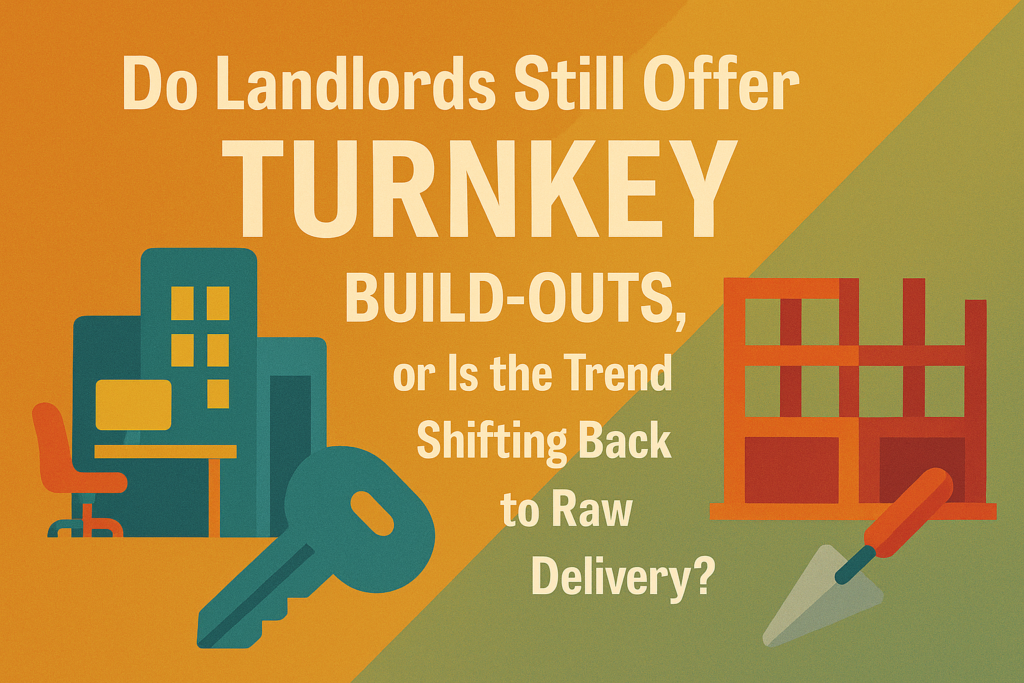
A turnkey build-out is when the landlord delivers a fully finished, move-in ready office space. The landlord assumes responsibility for design, construction, and permitting, often working with their in-house or preferred contractors. The tenant receives the “keys” to a completed space on day one, without having to manage construction themselves.
Key Features:
- Landlord-managed process: Includes architectural drawings, approvals, and construction.
- Move-in ready: Walls, flooring, lighting, pantry, and sometimes furniture are in place.
- Predictable cost to tenant: No upfront outlay for construction, though rent is typically higher to cover these costs.
- Time savings: Allows tenants to start operations quickly without managing vendors.
For many small to midsize tenants, turnkey has long been the default option because it eliminates hassle and risk.
What Is Raw Delivery?
Raw delivery means the landlord provides the office in its current condition—sometimes with basic HVAC, electrical, and bathroom cores in place, but otherwise unfinished. The tenant is responsible for completing the build-out, often funded through a Tenant Improvement (TI) allowance provided by the landlord.
Key Features:
- Tenant control: Full say over design, finishes, and layout.
- Budget flexibility: TI allowance offsets some costs, but tenants may pay the balance.
- More upfront responsibility: Requires tenants to hire architects, contractors, and project managers.
- Timing concerns: The lease often starts before construction is finished, meaning tenants may be paying rent while building.
Raw delivery is favored in high-end or specialized offices where customization is critical—such as law firms, financial firms, or technology companies with unique workplace requirements.
Why the Shift Away from Turnkey?
1. Construction Cost Inflation
Post-pandemic supply chain issues, labor shortages, and material inflation have made construction costs volatile. Landlords are increasingly reluctant to commit to turnkey promises, fearing they’ll overrun budgets. Shifting responsibility back to tenants allows landlords to cap their exposure.
2. Tenant Customization Demands
Modern office users often want highly personalized layouts—open bench seating for tech, multiple private partner offices for law firms, soundproof pods, wellness rooms, or hospitality-level kitchens. Since no two tenants want the same thing, landlords are less inclined to guess what works and more inclined to let tenants design it themselves.
3. Lease Term Risk
Turnkey investments only make sense for landlords if tenants commit to longer lease terms, giving the landlord time to amortize costs. But with many tenants preferring shorter, flexible leases (5 years or less), landlords hesitate to front-load expensive turnkey packages.
4. Market Segmentation by Building Class
- Class A trophy towers: More likely to provide generous TI allowances rather than turnkey, since tenants want prestige and customization.
- Class B & C buildings: Still offer turnkey as a way to stay competitive, particularly for smaller tenants who want to avoid hassle.
- Boutique buildings: Often limited to raw delivery, with landlords offering rent concessions instead of full build-outs.
Tenant Advantages in Each Model
Advantages of Turnkey Build-Outs:
- Budget predictability: No upfront construction bills; costs folded into rent.
- Speed to occupancy: Critical for growing companies or those with relocation deadlines.
- Reduced risk: Landlord manages permits, contractors, and code compliance.
Advantages of Raw Delivery with TI Allowance:
- Full design control: Layout tailored to exact staffing, branding, and workflow.
- Higher-end finishes possible: Tenants can allocate budget toward premium image upgrades.
- Potential cost leverage: If tenants can build efficiently, they may stretch the TI allowance further.
Who Still Gets Turnkey Build-Outs in Manhattan Today?
Turnkey remains common for small to midsize tenants in Class B and C buildings where landlords use it as a leasing incentive. Professional service firms, nonprofits, and startups often prefer turnkey because it reduces complexity and accelerates move-in.
In contrast, enterprise tenants in Class A towers typically expect raw delivery plus TI allowance. These tenants have strong credit, long-term leases, and specific requirements that make landlord-driven turnkey impractical.
Negotiating Build-Out Terms in 2025
Factors That Influence the Deal:
- Lease term length – Longer commitments unlock more landlord-funded construction.
- Tenant creditworthiness – Stronger tenants secure better concessions.
- Market cycle – In today’s tenant-friendly market, even raw deliveries can come with generous TI packages.
- Use type – Offices for finance, law, or healthcare often get more funding than speculative tech startups.
- Space size – Smaller units are more likely to be delivered turnkey; larger floor plates usually shift to tenant-led construction.
Tenant Strategies:
- Push for blended deals: Negotiate a partial turnkey plus TI allowance to customize finishes.
- Trade rent for improvements: Ask for free rent in exchange for taking the space raw.
- Lock in detailed work letters: If turnkey is offered, define specifications clearly to avoid disputes over quality.
- Amortize upgrades: Explore having higher-grade finishes financed through rent if upfront budget is tight.
When Should Tenants Choose Turnkey vs. Raw?
- Choose Turnkey If:
- You have limited time and need immediate occupancy.
- Your layout needs are relatively standard (conference rooms, bullpen, pantry).
- You want to cap upfront costs and focus budget on operations.
- Choose Raw Delivery If:
- You have unique branding, image, or functional requirements.
- You have capital reserves to invest in customization.
- You’re signing a long-term lease where control over layout justifies the expense.
Conclusion
So, do landlords still offer turnkey build-outs, or is the trend shifting back to raw delivery? The answer is that both models coexist in today’s Manhattan market, but the balance is shifting. In Class B and C spaces, turnkey remains a critical leasing tool. In Class A trophy towers, raw delivery with TI allowances is the dominant model, as landlords avoid construction risk and tenants demand control.
For tenants, the key is not accepting one model at face value, but rather leveraging market conditions, credit strength, and lease term length to negotiate the best deal possible. By understanding the trade-offs between turnkey convenience and raw flexibility, businesses can align their real estate decisions with their budget, image, staff size, and long-term growth strategy.
Next Steps
If you’re navigating the decision between turnkey and raw delivery in Manhattan, our team at NewYorkOffices.com specializes in tenant representation. We help you negotiate the right build-out terms, maximize landlord concessions, and secure an office space that fits your business today and tomorrow. Contact us to discuss your requirements and gain an advocate in your search.
Fill out our 📋 online form or give us a call today 📞 212-967-2061 — let’s find the right office for your business.