What Is a Prebuilt Office Space—And Is It Right for Your Business?
Prebuilt office spaces are rapidly becoming the go-to solution for companies that want to avoid the delays, costs, and uncertainties of custom build-outs. In Manhattan’s fast-moving leasing market, these move-in-ready offices offer convenience and flexibility—but they’re not always the right fit for every business. If you’re weighing your options, understanding what a prebuilt space offers—and what it doesn’t—can help you make a smarter leasing decision.
What Is a Prebuilt Office Space?
A prebuilt office space—also known as “spec suite” or “pre-configured space”—is an office unit that a landlord has already built out and furnished with basic infrastructure. These spaces are fully constructed before a tenant signs a lease. Typically, they include glass-fronted private offices along the perimeter, open workstation areas, a finished pantry, and at least one conference room. Lighting, flooring, and finishes are installed to appeal to a broad range of tenants, often with a clean, modern aesthetic.
Prebuilt offices differ from built-to-suit spaces, which are customized during the lease negotiation process. They also differ from second-generation or as-is space, which may come with inherited layouts or require modifications before occupancy.
Who Benefits Most from Prebuilt Offices?
Prebuilt office space appeals to a wide range of tenants, particularly those with tight timelines or conservative build-out budgets. Fast-growing startups, nonprofits, boutique financial firms, legal practices, and satellite teams for larger corporations frequently choose prebuilt options.
If your company needs to move in quickly or doesn’t want to take on the complexity of managing a construction project—especially in Manhattan’s Class A buildings—then prebuilt may be the right choice. You’ll know what you’re getting, you can tour the actual space, and occupancy is often available within weeks.
Pros and Cons of Prebuilt Office Space
The biggest advantage of prebuilt space is speed. There’s no waiting for architectural plans, city permits, or construction delays. You can sign a lease and move in almost immediately. Prebuilts also eliminate the financial risk of underestimating build-out costs, which often exceed tenant improvement (TI) allowances.
Another major benefit: landlord credibility. When the landlord is willing to invest upfront in a turnkey space, it signals a commitment to attract tenants quickly and reduce vacancy. And because the space is designed to lease efficiently, you can expect functional layouts with strong lighting, window lines, and finishes that appeal to most teams.
However, the tradeoff is limited customization. You’ll likely have to accept the existing configuration, and while landlords may allow minor modifications (like swapping out a conference room for a wellness room), most won’t do major demolition or rebuilds once the suite is finished. For firms with specific workflow needs or specialized rooms—like soundproof editing bays or extensive storage—prebuilt may fall short.
What to Look for in a Prebuilt Office in Manhattan
Not all prebuilt offices are created equal. Focus on layout functionality, especially the ratio of private offices to open workstations. Check for natural light on at least two exposures, if possible, and make sure rooms aren’t overly narrow or oddly shaped.
Pay attention to ceiling heights, column obstructions, window treatments, and mechanical systems. Many top-tier prebuilt offerings now include high-end finishes like polished concrete floors, exposed ceilings, or integrated AV in the conference rooms—features that blur the line between prebuilt and bespoke.
Location also matters. Prebuilt suites in Midtown Class A buildings often come with access to shared amenities like tenant lounges, rooftop terraces, and bike storage. These shared perks can offset the limitations of your suite’s private footprint.
Can You Customize a Prebuilt Space?
To a limited degree—yes. Landlords may agree to install additional glass fronts, reconfigure soft walls, or alter finishes if the changes are minimal and the lease term is long enough to justify the cost. These light-touch upgrades are easier to negotiate before signing the lease.
However, heavy construction requests typically move the suite into built-to-suit territory, which reintroduces delays and undermines the original value proposition of a prebuilt. If you find yourself needing major alterations, you may be better served by raw space with a TI allowance.
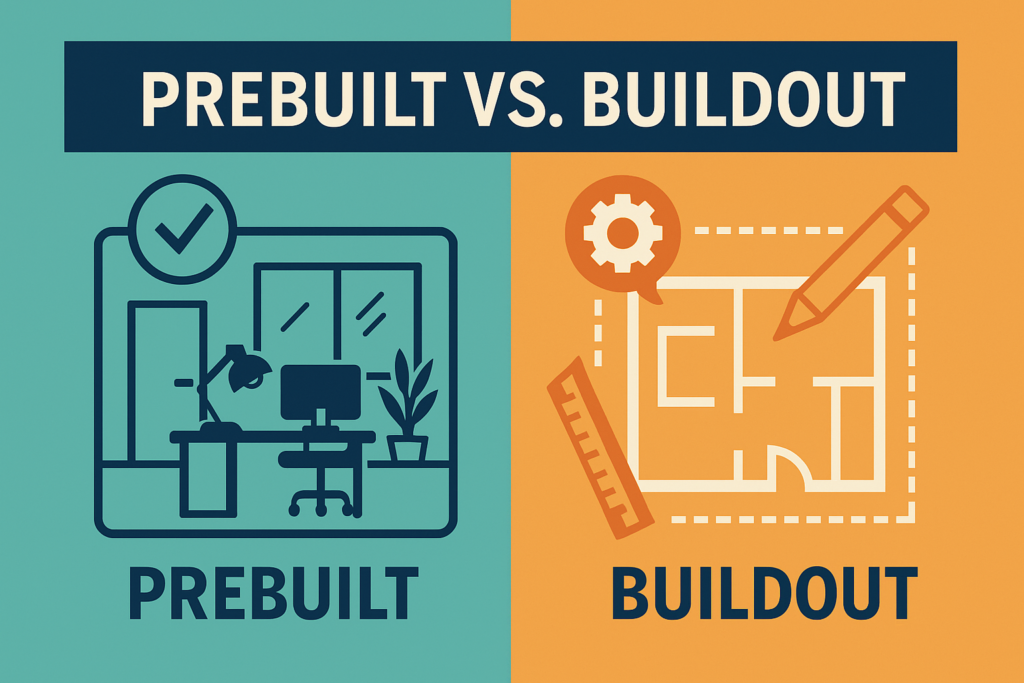
Prebuilt vs. Buildout: What’s the Difference?
In commercial real estate, the terms prebuilt and buildout refer to the condition and customization level of an office space prior to tenant occupancy.
- Prebuilt (Spec Suite):
A prebuilt office space is move-in ready. It comes with a finished layout—typically including private offices, conference rooms, open work areas, lighting, flooring, and a pantry. These spaces are designed to appeal to a broad range of tenants and allow for immediate occupancy with minimal hassle. - Buildout (Tenant Improvement):
A buildout refers to the process of customizing a raw or second-generation space to meet the tenant’s specific requirements. This may involve architectural planning, construction permits, demolition, and installation of walls, fixtures, and specialty features. While it allows for greater control over layout and branding, it also involves longer lead times, budgeting, and design coordination.
Both approaches serve different tenant needs. Prebuilt offices offer speed and predictability, while buildouts offer personalization and long-term flexibility. In today’s Manhattan leasing market, many businesses choose prebuilt suites to avoid construction delays and reduce upfront costs.
People Also Asked
What is a prefab office?
A prefab office refers to a modular, pre-manufactured structure that is assembled off-site and transported to a location for use—typically for temporary or standalone operations. In contrast, a prebuilt office space in Manhattan refers to a fully constructed, move-in-ready suite inside a commercial building, designed for lease without additional customization or construction.
What is the difference between commercial space and office space?
Commercial space is a broad category that includes all types of property used for business purposes, such as retail, industrial, hospitality, and office space. Office space, on the other hand, is a specific type of commercial property designed for administrative, professional, or corporate operations. All office space is commercial, but not all commercial space is suitable for office use.
Is it legal to live in an office space?
In New York City, living in an office space is generally illegal. Office buildings are zoned and permitted for commercial use only, and residential occupancy violates building codes, fire safety regulations, and lease agreements. Tenants who attempt to live in office spaces may face eviction or fines, and landlords could incur legal liabilities.
What is a bare office space?
A bare office space, also known as raw or white-box space, is an undeveloped commercial unit without interior partitions, finishes, or built-in infrastructure. It provides a blank canvas for tenants who want to build out the space to their exact specifications. Unlike prebuilt space, bare offices require a full design, permitting, and construction process before move-in.
What is required to lease an office space?
To lease an office space in Manhattan, tenants typically need to provide financial documentation (such as tax returns, bank statements, or business financials), sign a commercial lease agreement, and may be required to submit a security deposit. Landlords often evaluate the tenant’s creditworthiness, lease term, business use, and fit with other tenants in the building. In competitive markets, a personal guaranty or Good Guy Clause is often part of the negotiation, especially for smaller or newer businesses.
Can you lease an office and live in it?
No—living in an office space is not legally allowed in New York City. Office buildings are zoned for commercial use, and residential occupancy violates zoning laws, building codes, and lease agreements. Attempting to reside in an office could lead to eviction, fines, or legal action against both the tenant and landlord.
What is the typical lease term for office spaces?
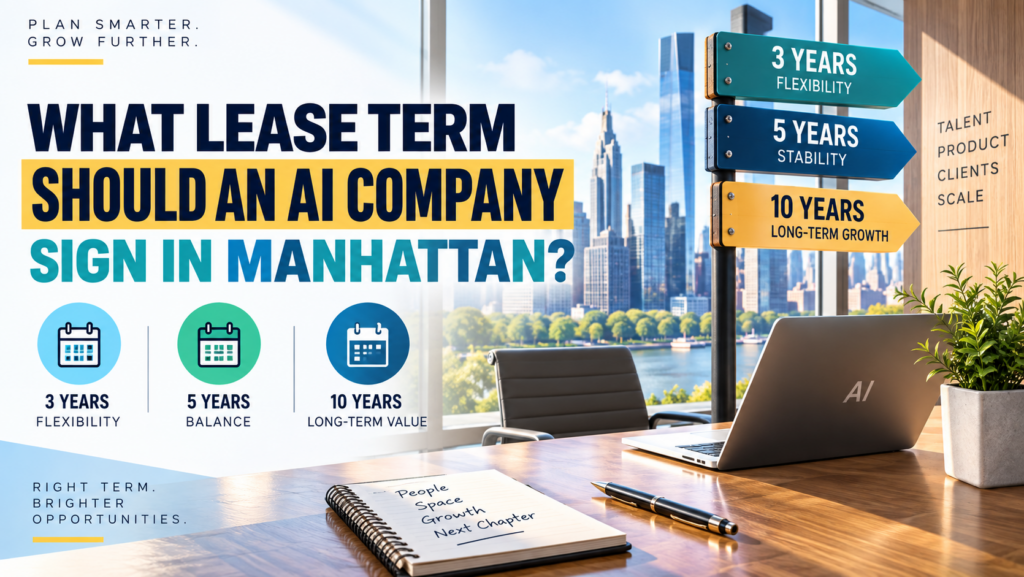
In Manhattan, the typical lease term for office space ranges from 3 to 10 years, depending on the size of the space, tenant credit, and market conditions. Smaller tenants or those leasing prebuilt suites often secure 3–5 year terms, while larger tenants negotiating custom build-outs may commit to 7–10 years. Flexibility is increasing in 2025, with some landlords offering shorter terms on spec suites to attract fast-moving or growth-oriented tenants.
Modern Prebuilt Office Space: From Afterthought to Asset
Prebuilt office spaces were once viewed as an afterthought—often little more than a quick cosmetic upgrade with fresh carpet and paint. They were considered a low-budget solution, suitable only for tenants in a hurry or without the resources for a custom build-out. But in today’s Manhattan office market, that perception has shifted dramatically. Modern prebuilt spaces are often high-quality, thoughtfully designed suites, complete with glass-fronted offices, finished pantries, LED lighting, and wired infrastructure. Many are furnished, branded, and styled to appeal to contemporary tenants—allowing businesses to skip the construction process entirely and still present a polished, professional image on day one.
Final Thoughts: Is Prebuilt Office Space Right for You?
Prebuilt office space is an ideal solution for many businesses that prioritize convenience, transparency, and speed. It removes the guesswork from the leasing process, eliminates long build-outs, and allows you to tour and evaluate real spaces instead of conceptual plans. In a market like Manhattan—where timing and image both matter—prebuilts can offer the polished look of a custom space with far less friction.
Still, they aren’t right for everyone. If your business requires a unique layout or has specific technical demands, you may be better off exploring a custom build with clear concessions in place. But for most tenants—especially small to midsize firms—prebuilt offices offer a practical, stylish, and fast-tracked path to getting up and running in New York’s most competitive neighborhoods.
Fill out our 📋 online form or give us a call today 📞 212-967-2061 — let’s find the office for your business.