What Building Features and Amenities Should I Ask About?
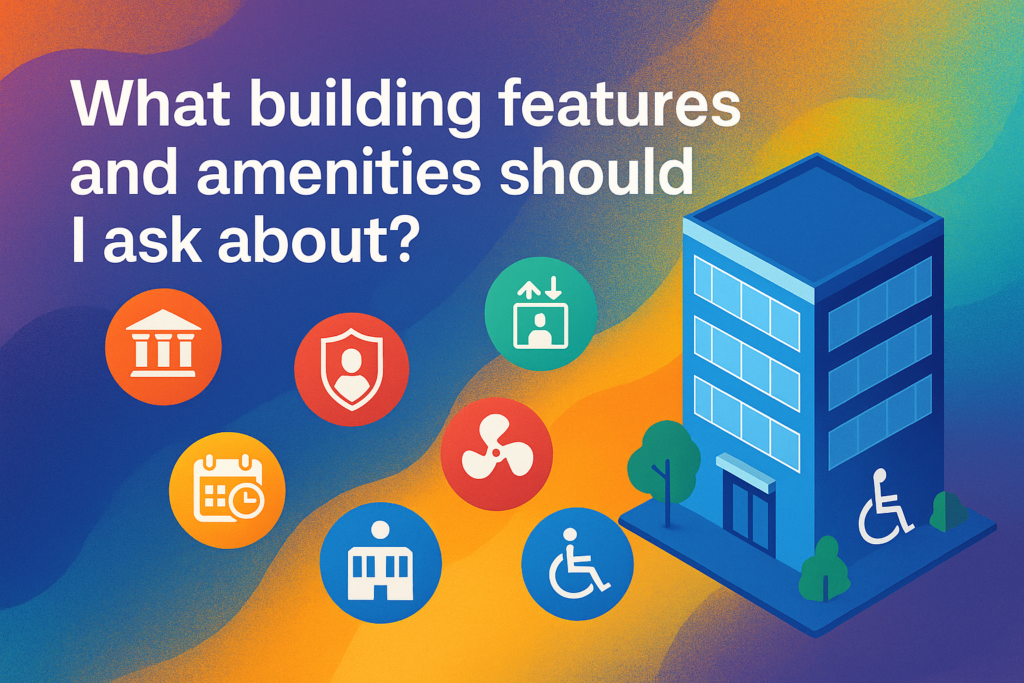
What building features and amenities should I ask about? When you’re searching for office space, especially in a competitive market like Manhattan, it’s crucial to look beyond just the square footage of the suite. Building features and amenities can significantly impact your team’s day-to-day experience, your company’s image, and even your bottom line. To make an informed decision, you should ask detailed questions about the building itself – not just the office unit you’re leasing. Below, we break down who, what, why, where, when, and how of key building features and amenities from a tenant’s perspective. Use this as a checklist of what to inquire about during tours and negotiations, ensuring the property will meet your business needs now and in the future.
Lobby and First Impressions
Lobby quality and common areas are the first things anyone notices upon entering a building. A clean, well-designed lobby with a professional front desk or concierge can speak volumes about the building’s class and management. Ask about the lobby’s condition and appearance – is it modern and well-maintained? Is there comfortable seating for visitors waiting, and does it create a good first impression for your clients and staff? A high-quality lobby often correlates with a building’s image and prestige, which can enhance your own company’s image. Also, find out if the lobby and common corridors are climate-controlled (air conditioned/heated) year-round; this detail contributes to comfort, especially if guests or employees are waiting in those areas.
Security in the lobby is another aspect to consider. Many office building lobbies in New York have security desks where visitors check in or present ID. You’ll want to know if there are uniformed security personnel on duty and during what hours. A secure lobby with controlled access (turnstiles or keycard entry) helps protect your business assets and employees. These features not only provide peace of mind but can also reflect well on your company’s commitment to safety.
Other common areas in the building, such as hallways, restrooms, and shared kitchens on multi-tenant floors, should also be assessed. Are the restrooms clean and modern? How frequently are they serviced? High-traffic common areas should be clean, well-lit, and in good repair. This indicates attentive property management. Remember, you and your employees will be using these spaces daily, so their condition will affect everyone’s comfort and satisfaction. Don’t hesitate to ask if any recent renovations have been done to common areas or if any are planned; a building that keeps its common spaces updated is likely well managed.
Security and 24/7 Access
Beyond the lobby security, building security systems and access policies are vital features to understand. Inquire about the overall security measures in place. Is there 24/7 on-site security staffing, or is security present only during business hours? A building with round-the-clock security guards or at least on-call security can make employees who work late or come in early feel safer. Additionally, ask about surveillance cameras in common areas, parking facilities, and entrances. Extensive CCTV coverage and secure entry systems (like keycard or smartphone app access) are indicators of a secure building.
After-hours access is a key amenity for many businesses. Make sure to ask if the building allows tenants to access their offices on nights and weekends. Some buildings lock their doors or turn off elevators after certain hours unless you have a special access card. If you have a team working across different time zones, or if overtime and late nights are common in your industry, 24/7 access is essential. Clarify how after-hours access works: Can employees simply use their access cards to enter at any time? Is there a security sign-in required after hours? Are there any additional costs for keeping the building open late or for running HVAC (air conditioning/heating) during off-hours (more on HVAC below)? Knowing this in advance will help you avoid unwelcome surprises, like overtime HVAC fees or locked doors when your team needs to pull a late shift.
Another related question is emergency access and protocols. Ask how the building handles emergencies or alarms. Are there clear evacuation procedures, and has the security team been well-trained for various scenarios? While we hope to never need these measures, it’s good to know the building takes safety seriously. Some newer buildings offer emergency apps or notification systems for tenants – a tech-forward perk that adds reassurance.
Finally, consider visitor access and deliveries. If clients or guests will be coming in frequently, what is the procedure for visitor entry? A smooth system (like registering visitors in advance or a concierge who greets and directs guests) contributes to a professional experience. Similarly, ask about package delivery handling – is there a secure mailroom or package center where deliveries are received and stored? These operational details fall under amenities that can make daily business life easier.
Elevator Count and Capacity
In a multi-story office building, elevators are a critical feature for convenience and efficiency. Make it a point to ask about the number and speed of elevators. If you’re considering space on a higher floor (common in Manhattan high-rises), you don’t want your team or visitors waiting endlessly for an elevator during rush hours. A good rule of thumb is that a mid-size building should have multiple elevators, and large towers should have an elevator bank sufficient for the tenant population (sometimes even divided into low-rise and high-rise banks). Ask if the elevators are modern and well-maintained: Have they been recently upgraded or renovated? Modern elevator systems with features like destination dispatch (where you input your floor before boarding) can significantly cut down travel time and reduce crowding.
Beyond passenger elevators, inquire about freight elevators and loading docks if your business will need to move equipment, furniture, or large deliveries in and out. A building with a dedicated freight elevator (and a loading area) will make moves and deliveries much easier and may save you money by streamlining operations (for example, not having to rent an off-hour freight elevator time slot in a building that only allows moves at night). Find out the hours the freight elevator is available and if you need to reserve it for large moves. Some buildings restrict moves to evenings or weekends to avoid disturbing other tenants, so knowing this helps you plan ahead.
Elevator capacity and peak time performance are also worth asking about. Does the building experience long wait times at 9 AM or 5 PM? You could ask current tenants you meet or the building manager about typical wait times. In tall buildings, especially older ones, morning rush can be a real issue for productivity. If the landlord has done elevator modernization or added more cars to service peak demand, that’s a great sign. Also, inquire about backup power for elevators – does the building have generators that run elevators in case of a power outage? This is both a safety and convenience feature.
Ultimately, reliable and sufficient elevators mean your staff can get to and from the office without frustration, and it even affects things like timely attendance at meetings (no one likes budgeting 10 extra minutes just to account for elevator queues). For businesses with frequent in-and-out activity (messengers, clients, employees coming and going all day), elevator efficiency can be surprisingly important to daily operations.
Heating, Ventilation and Air Conditioning (HVAC)
The building’s heating, ventilation, and air conditioning (HVAC) system is a fundamental feature that directly impacts comfort and productivity. Every tenant should ask about how the HVAC is managed in the building. Key questions include: When does the HVAC run, and is it available 24/7? Most office buildings provide climate control during standard business hours (for example, 8:00 AM to 6:00 PM on weekdays). If your team will need to work late or on weekends, find out if the building’s HVAC runs during those times and if there is an extra charge for after-hours HVAC. In many Manhattan buildings, if you want heating or cooling beyond normal hours, you must request it in advance and pay an hourly fee. Knowing this allows you to budget accordingly or negotiate terms if after-hours work is a regular part of your operations.
Also, ask whether your space will have independent temperature control. Some buildings have central air systems where the landlord controls the temperature for the whole floor or building, while others allow each tenant to adjust thermostats within their suite. Being able to control your own thermostat can be a big plus, as different companies have different comfort needs (for instance, an office full of computer equipment might need more cooling, or a firm with fewer people might prefer it a bit warmer). If it’s a central system, what’s the protocol if it’s too hot or cold? Is there a responsive maintenance team that can adjust it quickly?
Ventilation and air quality are part of this discussion too. In older buildings, ask if the HVAC has been updated for modern air filtration and circulation. Post-2020, many landlords have upgraded filters or increased fresh air intake for better health and wellness, so inquire about any such improvements. Good ventilation and clean air (for example, HVAC systems with HEPA filters or UV purification) can reduce stuffiness and create a healthier environment – a point that employees certainly appreciate.
Lastly, find out how the building handles seasonal changes and maintenance. Do tenants have control over heating in winter and cooling in summer? Are there any known issues with the building’s heating system in January or the cooling in August? A well-maintained HVAC system should provide consistent comfort year-round. Poor HVAC performance can not only be uncomfortable but also hurt productivity and even affect sensitive equipment. Therefore, making sure the building’s climate control meets your needs is both a comfort and a cost issue (e.g., high utility costs if you have to install supplemental A/C units would be a red flag).
Maintenance and Building Management
A building might have shiny amenities, but if it’s not well-run, you could face headaches down the line. Always ask about the building’s maintenance policies and management quality. Start with cleaning services: does the building provide janitorial service for tenant spaces, and is it included in the rent or charged separately? In many commercial leases, basic cleaning of your office (emptying trash, vacuuming, cleaning common areas of your suite) is included on weekdays. Confirm what’s covered: for example, are bathrooms inside your suite cleaned by building staff or is that your responsibility? Knowing this helps you avoid double-paying for cleaning or ending up with unexpected chores.
Ask how you can request maintenance or repairs if something in your suite or the common area needs fixing. Is there an on-site building engineer or handyman available during business hours? A prompt maintenance team is priceless when, say, the lights malfunction or a door hinge breaks. Find out if the building has a tenant portal or helpdesk system for maintenance requests and what the typical response time is. Well-run properties often boast responsive management that can address issues within 24 hours or sooner for urgent matters.
It’s also wise to inquire about preventive maintenance routines. Does the building regularly service its elevators, HVAC systems, plumbing, and other critical infrastructure? A proactive approach means fewer breakdowns that could disrupt your work. You might ask if there have been any significant outages or problems in recent years (for instance, repeated elevator downtime or HVAC failures). The landlord’s representative should be able to speak to the building’s reliability. If they mention recent upgrades – like a new roof, new boilers, or a modernized electrical system – that indicates investment in maintenance.
Another aspect of building management is communication and rules. Ask if the management provides regular updates or newsletters to tenants (for example, to announce fire drills, building events, or maintenance work).
Also, review the building’s rules and regulations document if available. This can cover policies like:
What are the building’s standard hours?
How are holidays handled?
Is there a backup generator and what does it power?
Can you bring in outside contractors freely for renovations?
Even policies like a “good guy clause” in the lease might be worth clarifying during negotiations (in Manhattan, a Good Guy Guarantee is a common lease provision that can actually benefit tenants by allowing early exit under certain conditions – it’s not a building amenity, but it’s related to the building’s leasing terms that can save you money or hassle down the road).
While you don’t need to get into every lease clause on a tour, knowing the landlord’s general flexibility and tenant-friendly policies is part of evaluating the building’s overall package.
In short, a well-managed building with solid maintenance means you can focus on your business without worrying about leaky ceilings or dirty hallways. The quality of management often reveals itself in the small details:
Are the light bulbs in corridors promptly replaced?
Is the lobby well-staffed and organized?
Don’t underestimate the value of a landlord who is attentive and service-oriented – it can make your tenancy far more pleasant and predictable.
Shared Amenities and Perks for Tenants
Modern office buildings often differentiate themselves with a range of shared amenities designed to enhance tenant satisfaction and convenience. These amenities go beyond the basics and can greatly improve your team’s work-life balance and daily experience. Be sure to ask what facilities are available for tenants in the building – you might be surprised at the perks on offer, especially in newer or recently renovated Class A buildings.
Common health and wellness amenities include on-site fitness centers or gyms, wellness rooms, and outdoor spaces. An on-site fitness center means your employees can fit in a workout without leaving the building – a big time-saver and morale booster. If there is a gym, find out if it’s free for tenants or requires a membership fee, and check the quality of the equipment. Some buildings also provide locker rooms with showers, which are great for those who bike to work or exercise during the day. Alongside gyms, yoga or meditation rooms and mother’s rooms (for new mothers who need a private space) are increasingly common amenities focusing on wellness. If wellness is a priority for your team, these features can save costs (no need for external gym memberships for employees) and promote a healthier, happier workforce.
Outdoor and green spaces deserve a special mention. Ask if the building has any accessible outdoor area such as a rooftop terrace, balcony, or courtyard. In the dense city environment, a rooftop garden or terrace where employees can get fresh air, eat lunch, or even hold casual meetings is a wonderful perk. Green spaces provide a mental break during hectic workdays and can contribute to employee well-being. Even indoor green walls or atriums can improve ambiance and air quality. These features might not directly affect your bottom line, but they can help attract and retain talent – people appreciate a pleasant environment.
Consider collaborative and convenience amenities as well. Does the building offer any shared conference rooms or meeting facilities that tenants can use or rent? A shared conference center is extremely useful if you occasionally need a large meeting space or event space beyond your office’s capacity. Rather than leasing a bigger office just for a boardroom that sits idle most of the time, you could leverage a building’s conference center when needed – optimizing your rent expenses. Ask how you reserve these rooms and if there’s any cost involved. Some high-end buildings even have auditoriums or training rooms available.
Another amenity to inquire about is tenant lounge or common social areas. These could be cafés, break rooms, or business lounges within the building open to all tenants. A well-designed tenant lounge with Wi-Fi, comfortable seating, and perhaps free coffee/snacks can provide your staff a change of scenery for informal meetings or breaks. It also fosters a sense of community among building occupants. Check if the building hosts tenant appreciation events or networking gatherings; this can be an indirect amenity, offering opportunities to mingle with other professionals in the building.
On-site dining options are a huge convenience factor. Ask if there’s a cafeteria, food hall, or any restaurants and coffee shops on the premises. Even a small café or an in-building Starbucks can save everyone time in the mornings or at lunch. In Manhattan, many buildings have eateries or at least a decent deli at street level. If not, see if food trucks or vendors regularly serve the area as an alternative. Some top-tier buildings have full-service cafeterias or even catering services – great for days when you want to keep the team in for lunch meetings.
Don’t forget daily convenience services. Is there a sundry shop, a mailroom, or package handling service? Some buildings provide dry cleaning pickup/drop-off, a concierge who can help with personal errands, or even amenities like bike repair stations. These extras might seem small, but they can simplify life for your employees (and thus are selling points when recruiting or retaining staff).
In recent years, flexible workspace amenities have grown popular. This includes things like coworking areas or drop-in work lounges within the building that any tenant’s employees can use. For example, if someone just wants a quiet spot away from their usual desk, or if you have a visiting team member without an assigned desk, a shared coworking area in the building is useful. Similarly, ask if the building has any “phone booth” pods or quiet rooms for private calls that tenants share. These kinds of flexible working amenities acknowledge that not all work happens at one’s desk.
Lastly, gauge how modern and tech-friendly the amenities are. For instance, is there an app for tenants to access services (like booking the conference room or getting building updates)? Some buildings now have apps that act as digital concierge services for ordering food, RSVP-ing to events, or unlocking doors with your phone. While not a necessity, such tech perks indicate the building is keeping up with the times.
Keep in mind that amenities should align with your company culture and needs. It’s exciting to see a game room with foosball or a golf simulator in a building, but if your team wouldn’t really use it, it’s just window dressing. Focus on what will actually benefit your employees and possibly save your company money (e.g., on-site daycare might be invaluable for a company with many working parents, whereas a pet-friendly policy is crucial if you plan to bring an office dog). Always ask for a full list of a building’s amenities, and then prioritize which ones matter most to you. Those are the ones to weigh when comparing buildings or even to negotiate on (perhaps you can ask for access to a nearby building’s gym if yours lacks one, or a discount to a partner fitness center).
Parking and Transportation
In Manhattan, parking is often a rare (and expensive) commodity, but depending on your situation, it might still be a relevant question. If you or your employees plan to drive to work, ask if the building has its own parking garage or lot. How many parking spaces are available to your company, and is there a monthly fee per space? Some office buildings have limited on-site parking reserved for top executives or require a separate leasing agreement for spaces. Others might not have parking on-site but have arrangements with nearby parking garages for tenant discounts. Be sure to clarify this if driving is common for your team. Even if just a few people drive, knowing the parking options and costs will help those individuals plan their commute (and it might be something you negotiate or subsidize as an employer).
For most New York City offices, public transportation access is a bigger deal. Check which subway lines or commuter rail stations are nearby. A building’s proximity to transit is arguably an amenity in itself – it affects how convenient it is for your staff (and clients) to reach the office. You should ask (or research) what the nearest subway stations are and how far the walk is. Also consider bus lines, PATH trains (if you have people coming from New Jersey), and so on. If a building offers a shuttle service to transit hubs (some large office complexes do), that’s a nice perk to know about. Being close to major transit can even save you money indirectly by widening your talent pool (employees have an easier commute, possibly reducing turnover or tardiness).
For those who bike to work, bicycle storage is an important amenity. Many modern buildings provide a secure bike room or bike racks in the garage. Ask if the building has indoor bike storage (and how you access it – sometimes you need to register for a bike room key or fob). Coupled with the earlier mention of showers and lockers, a bike-friendly building encourages eco-friendly commuting. If you have avid cyclists on your team or plan to promote biking, a safe place to store bikes is key (no one wants to lug a bike up the elevator or worry about theft on the street).
Electric vehicle (EV) charging stations are a newer amenity popping up in parking garages. If you or employees drive electric cars, it might be worth asking if the building’s parking facility has EV charging and what the usage policy is (Is it free? First-come, first-serve? How many chargers?). This might not be common in every building yet, but it’s growing in importance.
Lastly, think about client and visitor access in terms of transportation. If you expect frequent client visits, is the building easy to find and access? For example, is there a convenient drop-off/pick-up spot for taxis or ride-shares in front of the building? Is the area well-connected or notoriously congested? In Manhattan, virtually everywhere is busy, but being near major avenues or landmarks can help. Some buildings have a canopied loading area or a private driveway which can be a plus for VIP arrivals or deliveries.
In summary, while transportation features might not be “amenities” in the traditional sense, they are critical practical considerations. A building that can cater to various commuting methods (public transit, driving, biking) will make life easier for your team and any visitors. Don’t overlook these questions, especially if your business runs on punctuality and ease of access for others.
Accessibility and ADA Compliance
Accessibility should be on your checklist both for legal compliance and to ensure that all employees and visitors can comfortably use your office. Ask if the building is ADA compliant (ADA stands for Americans with Disabilities Act, which sets standards for accessible design). In a modern Class A building this should be a given, but in some older Manhattan buildings, you want to verify that necessary upgrades have been made. Key features to confirm include: step-free entrances (ramps or level entry at the lobby), elevators that serve all floors (and not just freight elevators for wheelchair access), and accessible restrooms. If the building has multiple levels of lobby or odd steps in common areas, are there lifts or ramps available? Also, check for things like braille or tactile lettering on signs and elevator buttons, and audible signals in elevators – all signs of ADA compliance.
Even beyond ADA basics, think about general ease of navigation for anyone with mobility issues. For instance, are doorways wide enough? Do the lobby turnstiles accommodate wheelchairs (many have an accessible gate)? If you have or might have employees who use mobility aids, these details matter a lot. A building might legally comply but still be inconvenient if, say, the only accessible entrance is through a back door or if the elevators are very narrow. It’s worth asking and even testing the path from the street to your potential office for accessibility.
Compliance and safety features extend into other areas too. Inquire about the building’s fire safety systems. Is there a modern sprinkler system and alarm system throughout the building? Newer high-rises are required to have sprinklers, but some older buildings were grandfathered in or retrofitted later. A building with comprehensive sprinkler coverage and up-to-date fire alarms is much safer in an emergency (and can even lower insurance costs). Ask if fire drills are conducted and how the building manages evacuations, especially from high floors or for people with disabilities – a good building manager will have answers.
Another aspect to consider is whether the building has any health and safety certifications. For example, some buildings pursue certifications like WELL Building Standard (focused on health and wellness of occupants) or Fitwel for healthy environments. While not mandatory, such certifications show that the building design and operations consider occupant health (things like air quality, water quality, lighting, comfort, and even promotion of exercise). If you have a very health-conscious workforce or want to demonstrate a commitment to a healthy workplace, a building’s participation in these programs could be a bonus.
In the wake of global health events, also ask if the building has implemented any special health measures. This might include enhanced cleaning protocols, touchless entry systems (automatic doors, touch-free elevator panels or call buttons, sensor-based faucets in restrooms), and improved air filtration as mentioned earlier. Many offices have upped their game in hygiene and safety – knowing these measures can reassure your team about returning to the office. For example, some buildings now use hospital-grade disinfectants regularly or have added hand sanitizer dispensers in common areas. These might seem like minor details, but together they contribute to an environment where people feel safe and cared for.
Ultimately, a building that is accessible and compliant is not just about following the law – it reflects inclusivity and foresight. As a tenant, you want an environment where everyone on your team or client list, regardless of physical ability, feels welcome and can navigate easily. Don’t hesitate to ask detailed questions on this front; a reputable landlord will be proud to discuss how their property accommodates all individuals.
Technology and Connectivity
In today’s digital world, the technology infrastructure of an office building is as important as its physical structure. You should investigate what tech features the building offers to ensure it can support your business operations. Start with the basics: internet connectivity. Is the building fiber-ready or serviced by high-speed internet providers? In many cities, buildings can be “fiber-lit” by providers like Verizon, AT&T, Spectrum, or specialized fiber companies. Ask which internet service providers are available and if the building has any redundant connections (for instance, two separate fiber lines from different carriers, which is good for backup if one network goes down). If your work is bandwidth-intensive or mission-critical, a building with robust internet options and even pre-wired Ethernet can save you time and money getting connected.
Inquire if the building has a WiredScore or similar digital connectivity certification. WiredScore is a rating system that evaluates a building’s internet infrastructure, redundancy, and mobile coverage. A WiredScore Platinum building, for example, has top-tier connectivity and backup systems. While not every landlord will know this offhand, it’s a plus if they do – it means connectivity has been third-party verified.
Beyond internet, consider mobile phone signal strength. Some buildings, especially those with thick concrete or metal construction, can impede cell signals. It’s worth checking your phone’s reception during the tour. If you notice dead zones, ask if the building has a Distributed Antenna System (DAS) or cellular boosters installed to improve coverage inside. Reliable cell phone reception is essential for most businesses – you don’t want dropped calls in the conference room.
Ask about any smart building features. Modern office towers often come with integrated technology for tenant convenience and energy efficiency. This could include: app-based access (using your smartphone instead of a keycard to enter), digital tenant directories or information screens in the lobby, or even smart HVAC and lighting systems that adjust based on occupancy. Some buildings provide a tenant engagement app where you can submit service requests, receive news about building events, or even see who has signed in as a visitor for you. These tech amenities can streamline operations. For example, an app-based entry means new hires or guests can be granted access quickly without waiting for a physical badge.
Another factor is telecommunications infrastructure inside the building. Are there plenty of phone lines or VoIP capability, if your business requires that? Is the electrical power supply stable and does the building offer backup power generators for tenants’ use? If you run servers or other critical equipment, you might want to know if you can hook into a building generator or UPS (uninterruptible power supply) systems for emergency power. Some high-end buildings provide limited generator power to each tenant or have outlets connected to a backup system in case of outages. This could be crucial if you’re in finance, tech, or any field that can’t tolerate downtime.
Sustainability technology might be on your list too. For instance, a building with smart energy management or solar panels might pass on some energy savings to tenants and aligns with corporate social responsibility goals. Features like intelligent elevators, motion-sensor lights, or automated shading systems might not be at the top of your ask list, but they do indicate a modern building that could operate more efficiently (potentially reflecting in operating costs you might share).
In summary, confirm that the building won’t hold back your business technologically. Fast and reliable internet, good cell coverage, and modern conveniences should be expected, but not all buildings (especially older ones) are equal in this regard. By asking these questions, you’ll avoid moving into a “digital dead zone” and ensure your team can plug in and be productive on day one.
Space Layout and Flexibility
While not a “building amenity” in the strictest sense, the flexibility of the space and any included features are important to ask about, as they can save you money and impact how well the office works for you. Layout and design flexibility refers to how easily the space can be configured to suit your needs. When touring a potential office, consider the shape of the floor plate, the placement of windows, and the location of structural columns or core elements (like elevators or restrooms) – these factors will dictate whether you can create the layout you want (be it an open bullpen, clustered team areas, or private executive offices). Ask the landlord or broker if the space can accommodate your preferred layout. For example, if you need a lot of private offices, are there enough windowed sections for them, or will some offices be internal? If you prefer an open plan, does the HVAC system and lighting layout support that (many private offices might mean adjusting vents and lights)?
Find out if the office comes built out or raw. Some spaces are delivered fully built with existing offices, conference rooms, and pantries – possibly even furnished (this is common in “pre-built” speculative suites or second-hand subleases). Other spaces might be raw or recently demolished to a clean slate, meaning you’ll be building it to your own specs. Each scenario has pros and cons. If it’s pre-built and matches your needs, you save on build-out time and costs. If it’s not a fit, you might negotiate to renovate it. Ask whether the landlord is willing to customize the space for you as part of the deal (and to what extent). In many Class A and B buildings, landlords offer a Tenant Improvement allowance (a budget for you to build out the space) or will build it out for you according to an agreed plan. Clarify how that process works: Will their architect draft a test fit for your layout? Do they provide a standard build-out (like they’ll construct offices with glass fronts, a pantry, etc., up to a certain quality), or are you taking it “as-is”?
One often overlooked question: Is any furniture or equipment included or available? If you’re touring a space that’s currently furnished (like a sublease or a model suite), ask if those furnishings come with the lease or could be purchased. Desks, chairs, and meeting room furniture can be costly to procure new, so an already furnished space is a valuable perk that can save you tens of thousands of dollars and make your move-in faster. Even if furniture isn’t included, sometimes landlords have partnerships or discounts with furniture vendors, or there might be leftover furniture in storage that you could utilize. It never hurts to ask.
Consider ergonomics and comfort features inside the suite. While you’ll likely bring your own furniture, some building owners provide certain built-ins or enhancements. For example, are there any standing desks, built-in filing cabinets, or shelving that come with the space? What about window treatments (blinds) – are those installed or is that on you? Small things like pre-installed blinds or a built-in reception desk can save you money in setup. If the space has a kitchenette or pantry area, is the refrigerator, microwave, or dishwasher included? These are amenities at the suite level but worth clarifying so you know what to budget for.
Future expansion or contraction options also relate to flexibility. If you anticipate growth, ask if there is additional space in the building that could be available in the future. Some landlords will offer a right of first refusal on adjacent space or have flexible walls that can be opened up to expand. Alternatively, if you’re unsure about committing to the full size you might eventually need, see if shorter-term expansion space (like a smaller swing space or access to coworking facilities in the building) is possible. The ability to adapt your space to your changing staff size can be a big advantage – it saves you from moving again or leasing too much space “just in case.”
Lastly, inquire about build-out timing and any rent abatement while setting up. If you need to renovate or furnish the space, how much time will you have before rent starts (this is often called free rent or build-out period)? A building owner who provides a generous build-out period is effectively giving you the amenity of time to make the space perfect without double-paying rent (at your old and new place simultaneously). This can significantly affect your budget and stress level during the transition.
In essence, asking about space layout and included features ensures you’re not just getting four walls, but a workable office solution. An office that fits your team well leads to better productivity and can even save costs by using space efficiently. The more the landlord can contribute – whether in build-out, design, or furnishings – the less out-of-pocket expense for you. So don’t shy away from questions about “what’s included” with the space and how you can tailor it; these are often negotiable parts of a deal.
Lease Terms and Special Considerations
While your primary focus may be on tangible features, it’s also wise to discuss any lease terms or policies that could affect your enjoyment of the building’s amenities. For instance, confirm who pays for what utilities and services. In some leases (typically gross leases), services like cleaning, electricity, and HVAC are included in your rent, whereas in others (net leases or certain loft-style spaces) you might pay those separately. If the building has a lot of amenities, double-check if use of those amenities is truly free or if there’s a fee (e.g., a fee for the gym or conference center usage, or a membership requirement). That way you can factor it into the cost-benefit analysis.
Specifically in Manhattan, be aware of the “Good Guy Guarantee” (Good Guy Clause) that we touched on earlier. While not a building amenity, this lease clause is so common in NYC that it’s worth asking about upfront. A Good Guy Clause is a provision that allows you to personally guarantee the lease only up until the point you vacate the space (provided you’ve given notice and paid all rent due). It’s designed to let tenants exit leases early without ongoing liability, as long as they act honorably (the “good guy”). Why does this matter to you? If your business is young or growth is uncertain, having this clause in the lease provides flexibility and peace of mind – you won’t be on the hook for rent for years after you leave, as long as you follow the terms. Additionally, landlords often require either a Good Guy Guarantee or a hefty security deposit; if you agree to the clause, they might reduce the security deposit. That frees up some of your budget (which you could allocate towards other needs, like an extra amenity or office improvement). So it’s both a risk management and a cost consideration. When negotiating, ask if the lease will include a Good Guy Clause and what the specific requirements are (notice period, any penalties, etc.). Given it’s a standard in NYC, a landlord who doesn’t use one is notable – you’d want to know what alternative they expect (sometimes a full personal guarantee without limitation, which is riskier for you).
Also, clarify any rules around subleasing or assignment of your space. If the building has many amenities, it might attract subtenants or shared office arrangements if you ever have extra space. A flexible sublease clause in your lease is helpful – it’s like an “exit strategy” amenity. Not directly about the building’s features, but if down the line you needed to downsize and sublet part of your office, you’d want to know you have that right. Some modern buildings even partner with flex-space operators that can take back space or help you expand within their portfolio; it’s worth asking if such options exist.
Another consideration: building rules that might affect your use of amenities or space. For example, if you want to bring a dog to the office (some startups love office dogs), check the building’s pet policy. A few buildings advertise as pet-friendly, which could be a unique perk if important to you. Conversely, many strictly forbid non-service animals. If you have employees who bike, ask if any rules restrict bicycle entry (some older buildings didn’t allow bikes through the lobby – less of an issue if there’s a bike room via the freight entrance). If you plan to add heavy equipment or unique installations in your office (like a large server rack, a private bathroom, or heavy machinery), verify if the building has any restrictions on floor load or requires landlord approval for alterations. Knowing these limits in advance can save a lot of hassle.
Lastly, ask about future building plans. Are any major renovations, facade upgrades, or construction projects on the horizon? A building might be adding new amenities (great news, but maybe noisy during construction) or planning to renovate the lobby next year. Such projects can temporarily disrupt daily life (scaffolding, noise, elevator shutdowns) but could also mean you’ll enjoy a better building soon. It’s good to have a heads-up so you can plan or negotiate accordingly (perhaps getting some rent abatement if a major project will directly impact your space).
In summary, don’t separate the amenities and features from the lease terms – they work hand in hand to define your experience. A stellar amenity package means little if the lease conditions stop you from taking full advantage of it (for example, a great conference center that you can never book because of high fees or restrictive rules isn’t truly an amenity). Cover both bases in your discussions: the physical qualities of the building and the contractual terms of using them.
Final Thoughts: Finding the Right Fit
Selecting a new office is about balancing location, budget, image, and the features that matter most to your business. By asking about all the building features and amenities above, you’ll gain a complete picture of what working in a particular building will be like. Keep notes on each property – does Building A offer a state-of-the-art gym and rooftop deck, while Building B has lower rent but no frills? There’s no one-size-fits-all answer; the “best” set of amenities depends on your team’s priorities. However, being thorough in your questions ensures there are no unwelcome surprises after you sign the lease. You’ll either confirm that a building provides excellent value (maybe those free amenities save you money elsewhere), or you’ll identify red flags (like poor maintenance or limited access) before it’s too late.
Tenant advantage tip: Always frame amenities in terms of benefits to your company. Will a nicer lobby help impress VIP clients (boosting your brand image)? Could 24/7 access or a backup generator support a critical project that runs around the clock (preventing costly downtime)? Might an included furniture package or shared conference center reduce your out-of-pocket expenses? By viewing features through the lens of value to you, you can prioritize which questions to ask and which amenities to negotiate for. Remember that in a soft market, landlords are often willing to make deals – if a building lacks something important, sometimes you can negotiate alternatives (e.g., the landlord covers membership to a nearby gym if their building has none).
Finally, don’t forget that expert help is available. If you find the process overwhelming or want an experienced partner to guide you, consider reaching out to a tenant representative or commercial real estate broker who knows the local market. They can quickly tell you which buildings have the best reputations for amenities and management, and help you compare options side by side.
NewYorkOffices.com is one such resource – we specialize in matching businesses with office spaces that tick all the right boxes. Our team can streamline your search, arrange tours, and negotiate on your behalf, ensuring you get the optimal combination of features, amenities, and lease terms for your needs. In a city as dynamic as New York, having a knowledgeable ally can make all the difference. In the end, the goal is to find an office where your employees are happy, your clients are impressed, and your operation can run smoothly.
By asking about the building features and amenities that matter, you’re one step closer to finding an office space that truly works for you. Good luck with your search, and remember – the right questions lead to the right space!
Fill out our 📋 online form or give us a call today 📞 212-967-2061 — let’s find the office for your business.
Resources
Accessibility: Office Building Amenity
Bike Storage: Office Building Amenity
Car Parking: Office Building Amenity
Child Care: Office Building Amenity
Concierge Services: Office Building Amenity
Conference Hall: Office Building Amenity
Eco-Friendly Options: Office Building Amenity
Ergonomic Furniture: Office Space Amenity
EV Charging Stations: Office Building Amenity
Fitness Center: Office Building Amenity
Flexible Workspaces: Office Building Amenity
Green Space: Office Building Amenity
Health Measures: Office Building Amenity
Natural Light: Office Building Amenity
Onsite dining and snacks: Office Building Amenity
Outdoor Space: Office Building Amenity
Pet friendly: Office Building Amenity
Restrooms: Office Building Amenity
Security: Office Building Amenity
Staffed Lobby: Office Building Amenity
Shower Facilities: Office Building Amenity
Tenant Lounge: Office Building Amenity
Wifi: Office Building Amenity