The Lobby Factor: How First Impressions Are Driving Lease Decisions Today
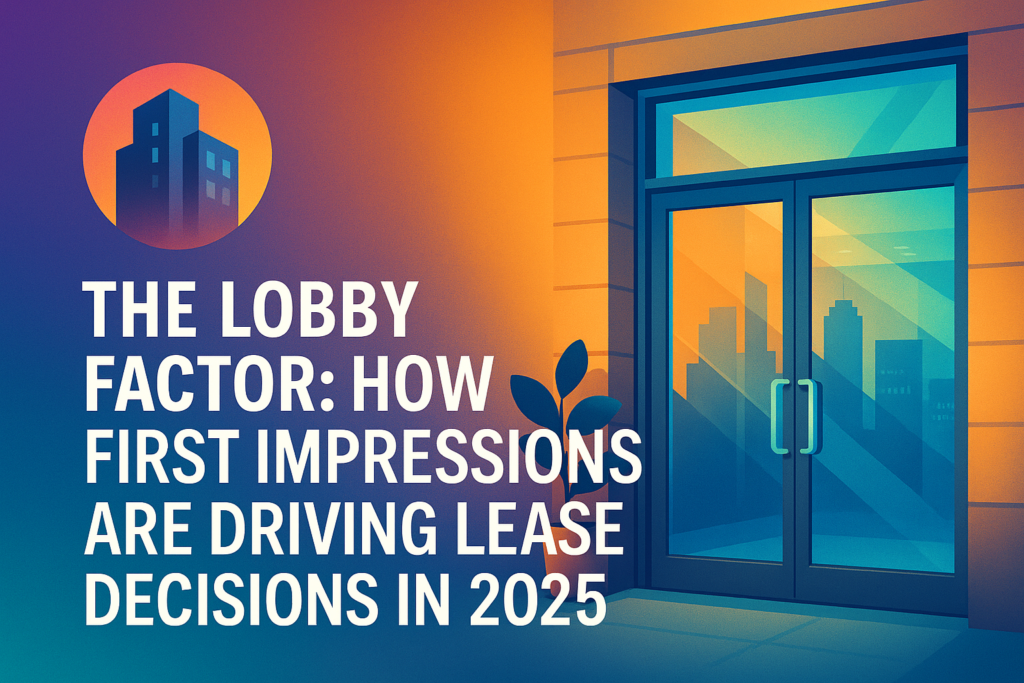
In Manhattan’s fiercely competitive office market, first impressions carry real weight. In 2025, office lobby amenities have evolved far beyond marble floors and security desks. Landlords now use lobbies as showcase spaces — blending hospitality, technology, and branding — to attract and retain tenants. For small and midsized firms, the lobby experience is no longer cosmetic. It’s a factor shaping leasing choices, staff satisfaction, and client perception.
Why the Lobby Matters More in 2025
Image and Prestige
For many firms, the lobby is the first point of contact for clients, recruits, and staff. A building with a modernized, hospitality-inspired entrance instantly conveys professionalism and status. In Manhattan, where competition is intense, tenants increasingly equate lobby quality with brand credibility.
Amenities and Lifestyle
Today’s office lobbies often include:
- Concierge desks offering tenant services.
- Coffee bars or grab-and-go cafés integrated into the space.
- Lounge seating for informal meetings and staff collaboration.
- Technology integration, including mobile guest check-in and touchless security.
These features make the lobby an extension of the workplace rather than a mere pass-through.
Recruitment and Retention
For staff, a welcoming lobby environment signals investment in employee experience. In a tight labor market, firms see lobby amenities as part of their broader strategy to attract and retain talent.
Tenant Benefits of Strong Lobby Amenities
- Budget Leverage
Choosing a building with upgraded lobby amenities allows tenants to offer staff and clients a premium experience without paying for private build-outs. - Client Perception
For law firms, finance companies, and professional services, a high-quality lobby reinforces brand reputation the moment clients walk in. - Day-to-Day Utility
A lobby café or lounge provides informal meeting space, freeing tenants from needing extra square footage inside their own suite. - Location Equity
In competitive corridors like Midtown or Downtown, lobby design helps differentiate otherwise similar buildings.
Risks and Trade-Offs
- Cost Premiums: Buildings with luxury lobbies may command higher rents.
- Shared Space: Lobby amenities are communal, meaning tenants must balance prestige with privacy.
- Overemphasis on Image: For some firms, practical considerations like square footage and layout outweigh lobby appeal.
Midtown vs. Downtown Lobby Trends
- Midtown Manhattan: Trophy towers lead with hotel-style lobbies, featuring concierge desks, curated art, and integrated tenant lounges. These buildings lean heavily on lobby experience as part of their prestige package.
- Downtown Manhattan: With higher vacancy rates, landlords have invested in lobby repositioning to compete. Many Downtown assets now feature modern, amenitized entries to attract cost-sensitive tenants seeking both affordability and image value.
Tenant Strategies: Making the Lobby Factor Work
- Tour Beyond the Suite: Evaluate the full arrival experience, from entry to elevator, not just the office space.
- Calculate Utility: Consider how lobby lounges and cafés reduce the need for larger leased suites.
- Negotiate Wisely: If paying a rent premium, push for concessions elsewhere (free rent, TI allowances) to balance costs.
- Align with Brand: Match the lobby style — modern, boutique, or historic — with your company’s identity.
Standard Lobby vs. Upgraded Lobby in Manhattan (2025)
| Category | Standard Lobby (Manhattan 2025) | Upgraded Lobby (Manhattan 2025) |
|---|---|---|
| Costs | Lower base rents; few premiums tied to lobby quality | Often commands higher rents; premium image included in pricing |
| Amenities | Basic reception desk, security station, elevator access | Concierge desk, lounge seating, coffee bars, tenant services, touchless tech |
| Tenant Benefits | Functional entry, minimal impact on leasing decisions | Enhances brand perception, offers shared meeting/lounge space, improves staff experience |
| Client Impressions | Neutral to dated; may feel transactional | Professional, hospitality-driven; sets positive tone for visitors and recruits |
| Risks | May appear outdated, hurting prestige for client-facing firms | Rent premium may outweigh benefits if image is less important |
| Best Fit | Budget-focused tenants, back-office operations, firms with limited client visits | Law, finance, professional services, or any tenant prioritizing image and first impressions |
This comparison shows how office lobby amenities in Manhattan 2025 can directly influence leasing decisions. While standard lobbies meet basic needs, upgraded entries deliver branding, client confidence, and shared amenity value. For some tenants, the added cost is a necessary investment in image — while for others, focusing on suite quality may outweigh lobby prestige.
When to Choose Standard vs. Upgraded Lobbies: A Tenant Guide
Choose a Standard Lobby When…
- Budget is the top priority. You want to minimize rent and direct savings toward staff, tech, or expansion.
- Your work is back-office or low client-facing. Few visitors means lobby prestige has less impact.
- You prioritize the suite itself. Tenant improvements, layout, and private amenities matter more than shared entry space.
- You’re in transition. Shorter-term tenants may not need to pay extra for lobby upgrades they won’t fully utilize.
Choose an Upgraded Lobby When…
- Image and first impressions matter. Law firms, finance companies, and professional services benefit from a hospitality-grade lobby.
- You host frequent visitors. A modern lobby conveys professionalism before a single word is spoken.
- You want shared amenities. Lounge seating, coffee bars, and concierge desks add daily value without leasing extra square footage.
- Talent retention is key. A polished, amenity-rich entry signals investment in staff experience.
- You plan to stay long-term. A premium lobby helps reinforce brand permanence over the life of the lease.
A Blended Strategy
Some Manhattan tenants in 2025 are combining both. They place client-facing teams in buildings with upgraded lobbies while housing support staff in standard-lobby buildings nearby. This balances prestige with cost efficiency, turning lobby selection into a strategic advantage rather than a simple aesthetic choice.
Bottom Line
The decision between standard vs. upgraded office lobby amenities in Manhattan 2025 comes down to what drives value for your business. For firms focused on budget and back-office efficiency, standard lobbies get the job done. For image-conscious companies competing for clients and talent, upgraded lobbies are a direct investment in brand and experience.
Outlook for 2025
The office lobby amenities Manhattan 2025 trend reflects a permanent shift in tenant expectations. As hybrid work redefines the purpose of office space, lobbies are evolving into multipurpose environments that project image, enhance staff experience, and provide shared amenity value. For tenants, ignoring the lobby factor risks missing out on leverage and long-term branding advantages.
Conclusion
In 2025, the lobby factor has become a core driver of Manhattan leasing decisions. Office lobby amenities now shape first impressions, tenant image, and staff satisfaction — making them far more than window dressing. For firms balancing budget, prestige, and recruitment, a strong lobby can tip the scales between two otherwise similar buildings.
We help tenants evaluate not just the office suite, but the entire building experience — from lobby to rooftop — ensuring every lease aligns with brand, budget, and staff needs.
Fill out our 📋 online form or give us a call today 📞 212-967-2061 — let’s find the right office for your business.