Manhattan Office Leasing for Small Businesses: Key Challenges and Tenant Advantages
For many small and mid-sized companies, leasing office space in Manhattan can feel like navigating a maze. The market’s opacity and intense competition tend to favor landlords by default, often overwhelming tenants with legalese and hidden costs. Before signing anything, it helps to recognize exactly where landlords hold the upper hand—and how a prepared tenant can shift the balance.
Information Asymmetry: Negotiating in the Dark
Landlords and their brokers typically have far more data than you do. They know the true vacancy in the building, how long a space has sat empty, and what concessions (like free rent or TI allowances) have been granted to other tenants. By contrast, a small tenant usually only sees the advertised rent and marketing photos. Commercial real estate is famously opaque, hiding the “cost of concessions” and occupancy details from the public. In practice, you’re often negotiating blind: every extra clue the landlord has (like which tenants are flexible on terms) directly improves their leverage, while you’re left guessing at market value. In short, landlords call the tune on information – so tenants must dig deep with questions to level the playing field.
1. Information Asymmetry (The Single Biggest Problem)
Small businesses are negotiating blind.
Landlords and their brokers know:
- The true vacancy in the building (not just what’s advertised)
- How long the space has sat empty
- What concessions other tenants actually received
- Where ownership is flexible vs. inflexible
- Which deals the landlord needs to close
Small tenants typically know:
- Asking rent
- Photos
- Marketing copy
- A vague “market range”
Result:
Tenants negotiate against a party with 10–20× more deal intelligence.
Landlord advantage:
They price optimistically and concede only when forced.
Anchor Tenants vs. Small Deals
Large “anchor” tenants carry much more bargaining power than small ones. A company leasing an entire floor or signing a long-term lease stabilizes cash flow and even convinces lenders. Landlords will usually give big tenants steep concessions (rent cuts, build-outs, exclusivity clauses, etc.). By contrast, small businesses that take only part of a floor are often viewed as “optional” – easy to replace if needed. In a diversified rent roll, the loss of one small tenant has minimal impact. This means landlords don’t feel urgency to please smaller tenants. As one market analysis puts it, an anchor tenant almost “dictates terms,” whereas a single smaller lease holds no outsized sway. The result is that, without competition, a landlord may default to optimistic pricing and only budge when pressured by multiple offers.
2. Small Businesses Don’t Create “Fear of Loss” for Landlords
Large tenants:
- Fill entire floors
- Anchor buildings
- Stabilize cash flow
- Affect lender perception
Small businesses:
- Lease smaller blocks
- Are easier to replace
- Are often viewed as “optional deals”
Result:
Landlords don’t feel urgency unless competition is introduced.
Tenant disadvantage:
Without multiple live options, leverage collapses.
Broker Representation: Who Works for You?
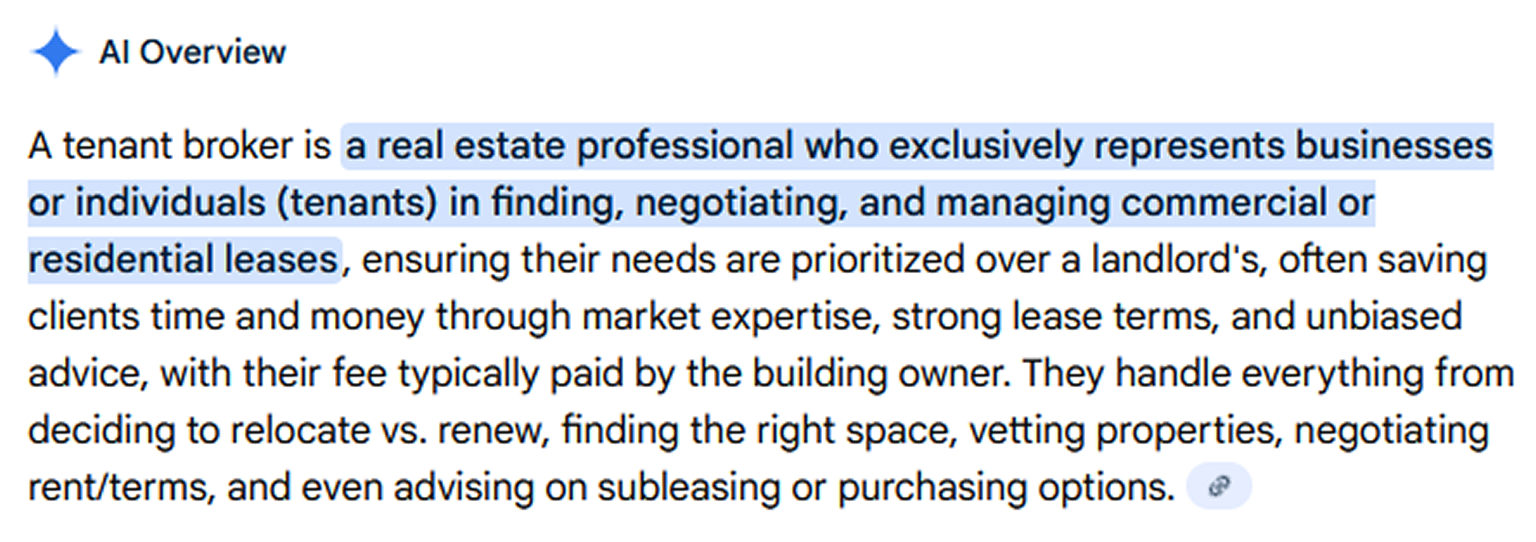
Remember that the listing agent or building broker is legally obligated to maximize the owner’s return, not your benefits. Even well-intentioned brokers will tend to protect face rent and reveal any concession only bit by bit. If you rely on a landlord’s broker as your guide, you will almost certainly get a one-sided view of the deal. In fact, industry experts warn that without a true tenant representative, “you may never see the full scope of what’s available — or get blindsided by lease terms you didn’t expect”. In other words, that friendly broker showing you space is really working for the landlord. Only by hiring your own tenant-focused advisor (“tenant-broker” not landlord / property broker) can you control the flow of information and ensure the landlord’s narratives don’t go unchallenged.
3. Listing Brokers Do Not Represent the Tenant (Even When They’re Helpful)
This is misunderstood constantly.
A building broker:
- Is legally obligated to maximize landlord value
- Controls the flow of information
- Decides what flexibility is disclosed (and when)
Even well-intentioned brokers:
- Reveal concessions incrementally
- Protect face rent optics
- Push deal structures that benefit ownership
Key reality:
A landlord broker cannot negotiate against their own client for your benefit.
Beyond Base Rent: Concessions and Hidden Value
Almost any small business can get fixated on the advertised rent per square foot, but that misses most of the value in a lease. Landlords commonly offer concessions – free rent, tenant-improvement (TI) budgets, or expense caps – to attract tenants without formally lowering the sticker rent. For example, a six-month rent abatement at lease start or a generous TI allowance for build-out can easily be worth as much as a dollar-per-sf reduction. In fact, without knowing it, tenants may be losing hundreds of thousands of dollars by overlooking these items. Common concessions to negotiate include:
- Free Rent (Rent Abatement): A period (often the first few months) where you pay no rent.
- Tenant Improvement Allowance: Landlord-provided funds or a per-sf budget to customize the space.
- Flexible Terms: Options like renewal rights, termination/expansion clauses, or sublet/assignment rights.
- Expense Caps & Amenities: Limits on CAM or tax increases, plus perks like parking discounts or signage rights.
Negotiating these extras is often far more impactful than haggling over a small rent reduction. In practice, a deal that “wins” on rent can still leave a tenant deeply underwater if they miss securing concessions like long free-rent periods or build-out dollars.
4. Concessions Are More Important Than Rent — and Poorly Understood
Most small businesses focus on:
- Rent per square foot
What actually matters more:
- Free rent length
- Tenant improvement dollars
- Turnkey build-outs
- Furniture inclusion
- Early termination options
- Expansion / contraction rights
Result:
Tenants often “win” on rent but lose six figures in value elsewhere.
Lease Terms and Risk Shifting
Standard Manhattan leases are written to push risk onto the tenant. You may be signing up for full triple-net obligations (covering taxes, maintenance, insurance) plus strict use/alteration clauses. For instance, many leases require you to restore the space to “vanilla shell” condition at term’s end, even if the demolition costs are steep. Small businesses often overlook these clauses. Likewise, holdover rents and personal guarantees (“good guy” clauses) can be especially punishing if not negotiated. Experts urge tenants to scrutinize provisions like restoration, holdover penalties, and guarantees. As a precaution, request any flexibility you might need down the road (e.g. a good-guy personal guarantee that ends when you hand back keys, or a cap on expense pass-throughs). In effect, the default lease language always benefits the landlord; it’s up to you to carve out shared-risk terms in the negotiation.
5. Lease Language Is Written to Shift Risk — Not Share It
Standard leases are drafted to:
- Push operating cost risk onto tenants
- Limit landlord responsibility
- Lock tenants into rigid use and assignment clauses
- Restrict flexibility if business needs change
Small businesses rarely:
- Push back on restoration clauses
- Understand escalation structures
- Model downside scenarios
Landlord advantage:
Risk transfer is baked in unless actively negotiated out.
Timing and Urgency
Landlords can afford to wait for their ideal tenant, but your small business may not. Most companies start hunting only when a lease is expiring or space is needed immediately – creating time pressure. Brokers note that tenants in a rush often end up in overpriced subleases or mismatched buildings. In contrast, landlords with vacancies know they can hold out. To counter this, plan early. Ideally, begin searching 6–9 months before you need to move. That way you can tour multiple options, refine your needs, and negotiate calmly rather than on a deadline. Remember: urgency is the landlord’s leverage. Giving them time works in your favor.
6. Time Pressure Works Against Tenants, Not Landlords
Small businesses are often:
- Moving because of growth
- Forced by lease expiration
- Driven by staffing or operational deadlines
Landlords:
- Can wait
- Can carry vacancy longer than most tenants can delay decisions
Result:
Tenants rush. Landlords do not.
Time pressure weakens negotiation more than price sensitivity.
Pitfalls of Plug-and-Play Spaces
It’s tempting to pick a “plug-and-play” or coworking space to avoid build-outs, but be very careful. These turnkey suites are marketed as fast and convenient, but they frequently carry much higher rents once you account for services and amenities. For example, all-inclusive coworking rates in Manhattan often run $120–140/sf (month-to-month), whereas a traditional direct lease might be $35–$60/sf in the same area. In other words, you’ll pay a premium for flexibility. Moreover, plug-and-play layouts lock you into someone else’s design and can limit future growth. If you do consider a built-out option, insist on seeing the effective rent (total costs over the lease term) and compare it to a raw lease with negotiated TI. In many cases, taking the time to negotiate a traditional lease will get you more space, lower costs, and greater long-term flexibility.
7. “Prebuilt” and “Plug-and-Play” Spaces Can Be Traps
These are marketed as:
- Faster
- Cheaper
- Easier
But often:
- Hide inflated effective rent
- Remove tenant improvement leverage
- Lock tenants into fixed layouts
- Limit future flexibility
They’re not bad — but they must be priced and negotiated correctly.
Gaining the Upper Hand: Tenant Strategies
The advantage flips when tenants act strategically. Think of your search as a competitive, information-driven campaign rather than a one-off deal. In practice:
- Generate Competition: Tour multiple buildings and overlapping sublease options so landlords know you have alternatives. Multiple live offers (or potential ones) create fear of loss on the landlord’s side.
- Ask the Right Questions: Don’t accept brochure figures at face value. Early on, ask each landlord about TI budgets, free-rent potential, vacancy history and building plans. Benchmarking these concessions lets you compare deals holistically rather than on face rent alone.
- Negotiate Structure, Not Just Rent: Focus on deal structure (TI, flex terms, exit options) as much as on the dollar rate. A small rent difference may be dwarfed by an extra six months of free rent or a termination clause that you negotiate into the lease.
- Hire a True Tenant Rep: Your biggest ally can be an advisor or broker who works for you, and only you. A dedicated tenant rep will challenge the landlord’s broker and uncover hidden terms, closing the information gap.
- Use Time as Leverage: Be patient. Landlords tend to concede more to certainty (a signed lease) than to urgency. Start early, keep your options open, and don’t settle out of desperation.
In short, frame the deal your way. Stay competitive by having choices, stay informed by pushing for data, and structure your lease for flexibility. A prepared tenant who builds in these safeguards can often flip the tables on the default landlord-favored market.
8. Small Businesses Often Negotiate Once Every 5–10 Years
Landlords and their brokers:
- Negotiate deals every day
- Track market shifts in real time
- Learn from hundreds of transactions
Tenants:
- Negotiate rarely
- Lack pattern recognition
- Make high-impact decisions with little repetition
This experience gap is enormous.
How Small Businesses Actually Gain the Advantage
The advantage flips when tenants:
- Create competition
- Multiple buildings
- Multiple landlords
- Overlapping timelines
- Control information flow
- Ask the right questions early
- Benchmark concessions, not just rent
- Negotiate structure, not just price
- Flexibility clauses
- Exit options
- Growth paths
- Remove the landlord broker’s narrative control
- By having true tenant representation
- Or at least independent market intelligence
- Slow the process
- Landlords concede more to certainty than urgency
- Time is leverage when used correctly
The Quiet Truth
The market favors landlords by default —
but it rewards prepared tenants disproportionately.
The quiet truth is that Manhattan’s office market defaults to the landlord’s side. But a smart, well-prepared tenant can turn that around. By creating competition, demanding transparency, and negotiating holistically (beyond just price), small businesses can secure leases on favorable terms. In the end, this is the difference between accepting a space under pressure and engineering a deal that fuels your growth.
Small businesses can win — but only when the deal is framed as:
- Competitive
- Informed
- Structured for flexibility
- Negotiated holistically
That’s the difference between accepting a space and engineering a lease.
If you’re a small business trying to understand what your real options are in Manhattan today, it often helps to simply have a conversation first. We work exclusively on the tenant side, helping businesses explore what the current office landscape actually offers, where flexibility exists, and how different choices affect budget, layout, and long-term growth. Whether you haven’t started or you’re early in the process or already looking at spaces, we’re here to help you think through the market before any commitments are made.
Fill out our 📋 online form or give us a call today 📞 212-967-2061 — let’s find the right options for your business.