Moving Your Office to Manhattan’s Financial District: Who Benefits Most?
Small and medium-sized businesses across finance, tech, law, and even startups are increasingly eyeing Manhattan’s Financial District as a potential home for their offices. The Financial District (often called FiDi) is the historic center of New York finance, but in recent years it has transformed into a diverse business hub. Who benefits most from relocating to FiDi – finance firms, tech companies, law firms, or startups? The answer can vary depending on your industry’s needs and goals. In this comprehensive guide, we’ll break down the advantages FiDi offers each type of business, and how moving downtown could impact your budget, image, location advantages, and day-to-day operations.
Why Consider Moving to the Financial District?
Before comparing benefits by industry, it’s important to understand what makes the Financial District attractive today for any business. A few key factors apply no matter your field:
- Lower Office Costs: Office rents in the Financial District are typically lower than those in Midtown Manhattan. On average, downtown office space can be 20–30% less expensive per square foot than prime Midtown locations. This cost savings allows tenants to either reduce their overhead or afford upgraded space and amenities for the same budget. For a small or mid-sized firm, a FiDi address might mean getting a Class A office or extra square footage that would be out of reach uptown.
- Prestige and Image: FiDi’s storied history as the home of Wall Street lends any business located here a certain prestige by association. A downtown Manhattan address – near landmarks like the New York Stock Exchange and Federal Reserve – can boost your company’s image. This is especially true for firms in finance or professional services, where a Financial District office signals credibility and seriousness. Clients and partners may subconsciously link your company to the dynamism and success associated with the area.
- Central, Well-Connected Location: The Financial District sits at the tip of Manhattan, which might sound “far,” but it’s actually one of the most connected locations in NYC. Almost every subway line converges in or near FiDi, from the 1/2/3, 4/5/6, A/C/E, J/Z, R/W, to the PATH trains to New Jersey. Commuters from New Jersey, Brooklyn, Queens, Staten Island (via ferry), and other parts of Manhattan can all reach downtown easily. This ease of access widens your potential talent pool and makes life easier for your staff and clients. Additionally, the PATH station and ferries mean talent living in Jersey City, Hoboken, or Staten Island have a one-seat ride to the office. In short, FiDi offers unparalleled transportation convenience for a Manhattan office.
- Modern Office Stock and Amenities: Over the past two decades, Lower Manhattan’s office inventory has been upgraded and expanded. The area includes brand-new skyscrapers like those at the World Trade Center complex, as well as elegantly renovated historic buildings. This gives tenants a wide range of office types – from sleek glass high-rises with cutting-edge infrastructure, to classic landmark buildings with unique character. Many buildings now feature state-of-the-art tech infrastructure (high-speed fiber, advanced security), fitness centers, conference facilities, and even rooftop terraces. Landlords in FiDi have been proactive in attracting new industries, so build-outs like open-plan layouts for tech firms or collaborative spaces for coworking are readily available. You can find turn-key pre-furnished offices and flexible short-term suites, or fully custom spaces, depending on your needs.
- Growing Residential and Retail Scene: One criticism of the Financial District in past decades was that it “shut down” after 5 PM, lacking the 24/7 vitality of neighborhoods like Midtown or Soho. That has changed dramatically in recent years. The residential population of Lower Manhattan has boomed – old office towers have been converted to apartments, and new condos have sprung up – more than doubling the number of residents compared to 20 years ago. As a result, FiDi now has a much livelier after-work scene. Trendy bars, restaurants, food halls, and shops have opened to serve both the new residents and the influx of office workers. For your employees, this means plenty of lunch options, coffee shops, and after-work entertainment right outside the office. The neighborhood feel is still more relaxed than Midtown’s hustle, but it no longer becomes a ghost town at night. This improved quality of life in the Financial District can be a selling point when recruiting talent who want convenience without the round-the-clock chaos of Midtown.
- Historical Significance and Inspiration: Let’s not forget the intangible benefit of working in a place steeped in history. The cobblestone streets and landmarks of the Financial District tell the story of New York’s rise as a financial capital. For firms in any industry, there’s something inspiring about being near the birthplace of American business – whether walking past Federal Hall (where George Washington took his oath) or the New York Stock Exchange. This atmosphere can energize your team and impress visitors. A startup founder noted that having an office a block from Wall Street gave their small company an “instant credibility boost” when meeting with investors and clients, simply because of the iconic location.
In summary, the Financial District offers tangible advantages (cost savings, transit, modern offices) and intangible perks (prestige and atmosphere) that can benefit a wide range of businesses. Now, let’s dive into how these benefits play out specifically for finance firms, tech companies, law firms, and startups – and discover who stands to gain the most.
Benefits of a Financial District Office for Finance Firms
It’s no surprise that financial firms have long been centered in the Financial District. As the traditional home of big banks, investment firms, and brokers, FiDi’s very ecosystem is geared to support finance industry needs. Here are the key advantages finance companies enjoy by being in FiDi:
1. Proximity to Financial Institutions and Clients: If you’re in finance – whether a bank, hedge fund, private equity, or insurance company – being near other financial institutions is invaluable. FiDi is home to the New York Stock Exchange, Nasdaq MarketSite, the Federal Reserve Bank of New York, and numerous banking headquarters and trading floors. This means you are minutes away from clients, partners, and counterparties. In the finance world, crucial meetings or transactions often arise at a moment’s notice. A hedge fund manager located downtown can meet an investment banking partner for a face-to-face meeting or attend an IPO pricing at the NYSE within 5–10 minutes of leaving the office. The convenience and immediacy of being embedded in the financial ecosystem cannot be overstated – deals move fast, and a FiDi address keeps you close to the action.
2. Access to Top Talent and Networks: The Financial District naturally attracts a dense concentration of finance professionals. Young talent from around the world – analysts, traders, fund managers – come to Wall Street to build their careers. By situating your office in FiDi, you tap into this rich talent pool. It’s easier to recruit experienced finance professionals who already live in NYC or New Jersey and expect a downtown work location. Furthermore, your team will benefit from networking opportunities simply by being in the neighborhood. A casual after-work drink can put your employees in contact with peers at other banks or funds; industry conferences and events frequently take place downtown as well. This daily proximity to industry peers fosters partnerships, deal flow, and knowledge sharing. Essentially, a finance firm in FiDi is at the epicenter of the finance community, which is a strategic advantage for growth and reputation.
3. Prestige and Client Confidence: A Wall Street address still carries weight. Clients – be they investors, corporate clients, or high-net-worth individuals – often associate a downtown office with stability and clout in the finance sector. For example, a boutique investment firm or fintech startup might find that having an office in the Financial District lends them extra credibility when pitching to clients or raising capital. It signals, “We’re serious players, right here alongside the big leagues.” This psychological edge can complement the real quality of your work in building client trust. Moreover, many financial firms choose landmark FiDi buildings (such as a suite in the World Financial Center or a historic Wall Street building) precisely for the gravitas it conveys during client visits.
4. Infrastructure for Financial Operations: Financial companies have particular needs – from technology to security. FiDi’s office buildings are well-equipped for these demands. Many buildings have redundant power and telecom systems (a legacy of serving trading companies that require zero downtime), on-site data centers or direct fiber connections to major exchanges, and enhanced security protocols. Additionally, being downtown places you close to regulators and industry utilities; for example, the proximity to regulators (like the Federal Reserve or SEC offices) and industry bodies can streamline compliance or coordination efforts. Whether it’s ensuring fast execution of trades or hosting secure investor meetings, the infrastructure in FiDi is aligned with finance-sector requirements.
5. Like-Minded Services and Amenities: Supporting a finance business often involves specialized services – and in FiDi, these are right at hand. Need a top-tier corporate law firm for a deal? Many are either in the district or a short walk/subway ride away. Require a quick turn from your auditors or consultants? Big four accounting and consulting firms have downtown offices. Even amenities like high-end hotels (for out-of-town clients), executive dining, and industry clubs (like the Down Town Association or Cipriani Club) are in the vicinity. These conveniences mean a finance firm’s day-to-day operations and hospitality needs can be met seamlessly.
Tenant Tip – Budget vs. Image: Financial firms often face a trade-off between cost and image. Midtown Manhattan has long been another hub for finance (particularly around Park Avenue or Times Square), and some major banks moved there for larger space or convenience to certain executives’ commutes. However, those Midtown offices come at a premium cost. The Financial District’s cost advantage means a finance firm can often secure Class A space with stellar views and amenities downtown for significantly less rent than a similar office in Midtown. For small to mid-sized finance firms, this is ideal – you get the image of a Wall Street address without busting your budget. In fact, many hedge funds and investment advisors choose FiDi for exactly this reason: they can allocate more budget to talent and technology rather than rent, yet still impress clients with a high-profile location.
In short, finance firms arguably gain the most direct benefits from a FiDi office. This neighborhood was built for finance, and it remains true that if you are in the finance industry, being in the Financial District places you at the heart of your industry’s network and resources. The synergy and cachet are difficult to replicate elsewhere. Next, we’ll look at how a different sector – tech – can leverage FiDi’s unique advantages.
Benefits of a Financial District Office for Tech Companies
New York City is not only a finance capital – it’s also a burgeoning tech and startup hub. Traditionally, NYC tech companies gravitated to areas like Silicon Alley (Flatiron, Chelsea) or more recently Hudson Yards and Brooklyn. However, the Financial District is increasingly attracting tech firms, especially those in fintech, enterprise software, and media tech. Small and medium tech companies can indeed benefit from setting up shop in FiDi. Here’s how:
1. Cost-Effective Space (Room to Grow): For tech startups and companies conscious of burn rate, the lower rent in the Financial District is a major draw. Office space in trendy Midtown South neighborhoods has become very expensive due to high demand from tech and creative firms. In FiDi, you can find modern loft-style spaces or open-plan suites at a relative bargain. Lower costs mean more runway for startups and the ability to lease a slightly larger office that accommodates growth. A tech company that might only afford a cramped office for 20 people in Soho might, for the same budget, get a spacious office for 30 in FiDi. This breathing room can be invested in better workstations, collaborative zones, or simply avoided altogether until you need it, saving costs. Additionally, landlords in FiDi often offer aggressive concessions (like months of free rent or improvement allowances) to attract diverse tenants, which is an opportunity for a young company to customize their dream workspace affordably.
2. Access to Finance Industry Clients and Partners: Fintech companies (financial technology startups) have a particularly strong case for locating in the Financial District. If your tech product or service targets banks, investment firms, or corporate finance departments, being walking distance from your potential clients is gold. You can schedule demos, pilot projects, or networking lunches with Wall Street firms at a moment’s notice. Even non-fintech tech companies can benefit from the B2B opportunities downtown. For instance, an enterprise software provider or cybersecurity firm may find many prospective corporate clients in the cluster of companies in and around FiDi. Proximity fosters stronger relationships – your engineers and salespeople can be on-site quickly to troubleshoot or pitch, which clients appreciate. Moreover, access to investors is a plus: many venture capitalists and angel investors in NYC focus on fintech and enterprise tech, and they will certainly be spending time downtown given the concentration of relevant businesses. Being local makes those investor coffee meetings much easier to arrange.
3. Emerging Tech Community in FiDi: While FiDi historically wasn’t known for tech, that’s changing fast. Over the last decade, a growing tech community has taken root downtown. A mix of factors – affordable rents, new residential appeal, and spillover from other areas – have led to dozens of tech startups calling FiDi home. There are now coworking spaces and incubators (WeWork, Regus, etc., as well as smaller niche coworking spots) in the Financial District catering to startups and freelancers. Regular tech meetups and fintech events occur in venues around Wall Street. This means as a tech founder or employee, you won’t be alone – you can find peers to network with and share knowledge, even in what used to be “finance-only” territory. In some ways, tech companies in FiDi get the best of both worlds: close connection to the finance industry and a nascent, supportive tech scene of their own. It’s not as dense as Midtown South’s scene, but it can be easier to stand out and make meaningful connections when the community is slightly smaller and tight-knit.
4. Modern Infrastructure and Space for Innovation: Tech firms often desire open floor plans, high ceilings, abundant power and data capacity, and collaborative areas. Many Financial District buildings – especially the converted older buildings – feature large floor plates and column-free spaces that lend themselves to bullpen setups or creative office design. For example, an old bank trading floor might now serve as a wide-open tech bullpen with 100+ desks on one level. Additionally, new construction like World Trade Center towers were built with cutting-edge tech infrastructure, from robust HVAC (great for dense server or hardware labs) to excellent connectivity. Some buildings have adopted spec suites built specifically to appeal to tech sensibilities, featuring polished concrete or wood floors, exposed ceilings, and built-in meeting rooms – essentially “plug and play” tech offices. So, a tech company can find space that not only meets its technical needs but also provides the kind of cool, modern vibe that helps attract software engineering talent.
5. Talent Attraction and Employee Commutes: Tech employees often live all over the city – many in Brooklyn and downtown Manhattan. Having an office in the Financial District can actually shorten commutes for a lot of young tech workers who live off the L train or downtown, compared to trekking to Midtown. As noted, virtually every subway line goes downtown, so whether your engineers live in Williamsburg, Harlem, Jersey City, or the East Village, they have a direct route. This accessibility is a perk in recruiting – you can cast a wide net for talent without worrying that your office is inconvenient. Furthermore, the improving mix of amenities in FiDi (from trendy lunch spots like food halls to after-work pubs or nearby Battery Park for some green space) makes it a more pleasant environment for employees who might have preconceived notions of FiDi being all suits and no fun. In fact, some tech workers enjoy FiDi’s slightly quieter streets and historic charm as a break from the typical midtown hustle. And with the new residential crowd, the vibe is younger and more dynamic than it was decades ago.
6. Focus and Stability: An interesting, if less obvious, benefit some tech startup founders mention about FiDi is the focused work environment. Because the neighborhood is business-centric and less distraction-filled than say, the Midtown South party scene, teams might find it easier to buckle down and work hard. There are plenty of cafes and spots for creativity, but the overall atmosphere remains professional. For startups aiming to scale up quickly, being in a somewhat calmer, finance-oriented district can instill a level of discipline and focus (while still having fun options when needed). You’re also in a 24-hour secure zone in many cases – the area around Wall Street is well-patrolled and many buildings have top-notch security, which can give employees peace of mind if they work late hours on a product launch.
Tenant Tip – Culture Fit: One thing tech companies should consider is cultural fit. If your company thrives on creativity and being surrounded by other creatives (like fashion, media, or design firms), parts of Midtown South or Brooklyn naturally cater to that vibe more than the Financial District. FiDi’s culture is evolving, but it still has a more corporate feel in many respects. However, for fintech, ad-tech, or enterprise tech startups, a corporate vibe might actually be a positive, lending legitimacy and keeping you close to customers. Consider your clients and partners: if they’re mostly financial institutions, a FiDi office aligns well. If they’re more arts/music/fashion industry, you might prefer a different neighborhood for networking in those scenes. The good news is FiDi’s diversification means even creative companies won’t feel out of place anymore – you’d be neighbors with marketing agencies, media companies, and more. It’s definitely not solely bankers in FiDi offices now.
In conclusion, tech companies (especially those in fintech or B2B services) can reap significant benefits from a Financial District location. They gain cost savings, direct access to clients, and a growing community – advantages that can accelerate growth. Now, let’s see what the Financial District offers to law firms.
Benefits of a Financial District Office for Law Firms
Law firms have been part of the fabric of Lower Manhattan for over a century. While many big law firms established themselves near Midtown’s courthouses or in Midtown East, a substantial number of law practices still thrive in the Financial District. For firms ranging from large corporate law offices to boutique practices, FiDi provides several key benefits:
1. Proximity to Courts and Legal Institutions: Lower Manhattan is home to important courts and government offices that many law firms frequently interact with. The U.S. Federal Courthouse and the New York State Supreme Court (Civil Branch) are located just north of the Financial District in the civic center area near City Hall – easily walkable or a short cab ride away. Additionally, many regulatory bodies and administrative courts have downtown offices. If you’re a law firm handling corporate law, securities law, or litigation that often ends up in federal court, being downtown cuts travel time and hassle for court appearances, filings, and clerk visits. Even firms focused on financial regulation or white-collar defense value being near the action: the U.S. Attorney’s Office, SEC New York office, and other enforcement agencies are downtown as well. In short, a FiDi office situates lawyers close to the halls of justice and regulation, making their jobs a bit easier logistically.
2. Closeness to Corporate Clients (Finance and Beyond): Law follows business, and if your clients are primarily financial companies, insurance firms, or corporate headquarters, many of those are in or near FiDi. A downtown law office means quick access to your clients’ offices for meetings, closings, or counsel on short notice. For example, a corporate law firm representing a major bank can attend an urgent meeting at the bank’s headquarters in minutes if both are downtown. Even beyond finance, Lower Manhattan now hosts a variety of companies (media, tech startups, real estate firms), which could be potential clients for law firms. Being nearby facilitates a high level of service and responsiveness that clients appreciate. It also increases the chances of serendipitous business development – e.g., meeting potential clients at networking events, bar association luncheons, or even running into executives in the lobby. Law is often relationship-driven, and proximity helps nurture those relationships.
3. Prestigious Address and Client Confidence: Like finance, the legal industry places value on reputation and credibility. Having your firm located in a well-known Financial District building can enhance your brand in the eyes of clients. A Wall Street or Broadway address (both major streets in FiDi) on your letterhead signals that your firm is at the center of the world’s business and legal activity. Whether fair or not, clients often perceive downtown law firms as established and connected, especially in areas like corporate law, banking law, or securities law. This can be a deciding factor when a client chooses counsel for high-stakes matters. Additionally, many prestigious law firms historically started in FiDi and maintain offices there (some for over a century), contributing to a legal community and heritage in the area. Your firm could benefit from that halo effect.
4. Modern Offices Catered to Law Firm Needs: In recent years, law firms have modernized their office layouts and amenities to better support collaboration and well-being (moving away from the old maze of libraries and file rooms). Financial District buildings have kept pace with these needs. Many offer flexible floor plans that can balance private offices and open work areas. It’s common now for law offices to build glass-walled conference rooms, huddle rooms for team collaboration, and spacious lounges to improve internal communication. FiDi’s large floor plates can accommodate these designs. Also, new or renovated buildings pay attention to soundproofing (for confidentiality), high-quality HVAC (for comfort even when burning the midnight oil), and abundant natural light – all features law firms prioritize. Some downtown buildings are even LEED-certified or WELL-certified for wellness, which aligns with law firms’ increasing focus on attorney health and satisfaction. As a law firm tenant, you’ll also find conveniences like concierge services, secure document disposal services, and in-building dining options which cater to long working hours.
5. Networking and Referral Opportunities: Downtown Manhattan’s diversification means there are many potential referral partners at your doorstep. For instance, a boutique litigation firm in FiDi might partner with a finance-focused firm in the next building when their banking client needs specialized litigation counsel (or vice versa). The proximity of various professional services – bankers, accountants, consultants – also means law firm partners can mingle with industry movers at local events or social clubs. The Financial District has organizations and networking events geared toward professionals (e.g., Downtown Association gatherings, Chamber of Commerce events, etc.). Being part of the downtown professional community can lead to new client referrals or collaborative opportunities that might not come as easily if you’re more isolated. Especially for smaller law firms looking to grow, the dense professional network of FiDi is a real asset.
6. Cost Benefits for Firm Operations: While law firms certainly care about image, they are also businesses that watch the bottom line. Real estate is often one of a firm’s biggest expenses. By choosing the Financial District, a law firm can often reduce rental costs compared to the Plaza District or Midtown East (where many big firms reside). These savings can be reallocated to hiring additional attorneys, investing in technology (think advanced legal research tools or secure communication platforms), or simply offering more competitive rates to clients. Moreover, with cost savings, a firm might be able to afford a slightly larger space that includes extra conference rooms or a comfortable client waiting area – enhancing service quality. FiDi also offers many building classes: from top-tier Class A towers for elite firms to more modest but still well-appointed Class B buildings that might suit a 10-person practice. This variety means firms can find an office that fits their exact budget and size requirements, without paying for excess frills they don’t need.
Tenant Tip – Balancing Tradition and Modernity: If your law firm has a long-standing identity (perhaps very traditional or focused on white-shoe corporate practice), you might wonder if a move to the “new” downtown changes that. Rest assured, FiDi still provides the classic feel if you want it – there are beautifully restored historic buildings with marble lobbies and wood-paneled halls that can give that traditional law office ambiance. On the other hand, if you want to project a modern, progressive image to attract young legal talent or tech clients, you can opt for a sleek new tower with a high-rise view and contemporary design. The Financial District has both extremes and everything in between. Importantly, even traditional law firms are embracing more collaborative, open designs now – and downtown offices have proven adaptable for these updates. When planning your space, think about how you can use the location to reinforce your firm’s brand: e.g., a conference room with a view of the Statue of Liberty for an international maritime law practice, or a library overlooking Wall Street for a banking law firm. FiDi offers those unique context touches.
In summary, law firms (especially those serving corporate and financial sectors) stand to gain significantly from a FiDi office. They get logistical convenience, a confidence-inspiring location, and potential cost efficiencies – all of which help in serving clients better and running a healthy practice.
Benefits of a Financial District Office for Startups and Small Businesses
Startups and small businesses might not be the first group you associate with the Financial District, but in recent years they have become an important part of the downtown mosaic. In fact, many startups choose FiDi to establish credibility or stretch their budget. Whether you’re a scrappy five-person startup or a 50-person scaling company, here’s why FiDi can make sense:
1. Affordable Space and Flexible Lease Options: Early-stage companies often need small offices or coworking desks with flexible lease terms. The Financial District has an abundance of coworking spaces, business centers, and sublease opportunities ideal for startups. Due to the high volume of corporate tenants, there are frequently sublease spaces available – these can be fully furnished offices that a startup can take for a short term (perhaps 1-2 years) at below-market rates. This is perfect for young companies hesitant to commit to long leases. Additionally, coworking providers in FiDi (like WeWork, Industrious, Regus, and others) offer month-to-month memberships. Startups can begin in a coworking space and easily scale up to a private suite in the same building as they grow. The cost per desk tends to be lower downtown than in Midtown or Brooklyn, meaning your runway (funding) goes further when it comes to rent. In essence, FiDi offers small businesses big-business infrastructure on startup-friendly terms.
2. Legitimacy and Trust for Clients and Investors: For startups, especially those targeting enterprise customers or investors, a Financial District address can provide an air of legitimacy beyond what a hip incubator loft in another area might. Clients often feel more secure doing business with a small company that’s located among established financial and professional firms – it suggests stability and serious intent. An entrepreneur who relocated his fintech startup from a shared apartment space to FiDi noted that investor interest picked up notably afterward; being able to host investor meetings in a “real” conference room downtown made a difference in how the company was perceived. Of course, substance matters more than appearance in the long run, but optics can help open doors. Even non-finance startups find that some partners or customers simply respect them more when their office is in Manhattan’s business core. If you’re a startup trying to sell to corporate America, being in FiDi symbolically says, “We understand your world and we’re part of it.”
3. Networking and Mentorship Opportunities: Startups thrive on connections – to mentors, advisors, talent, and other startups. As mentioned, FiDi now hosts a growing community of startups and small firms. There are meetups focused on fintech, proptech (real estate tech), blockchain, and other sectors often held at downtown venues. Shared workspaces further encourage networking among member companies. Moreover, being in FiDi puts a startup close to sources of mentorship and professional services. You might literally share an office building with a big law firm or marketing agency; while they cater to larger clients, you can sometimes strike up conversations that lead to informal advice or even service discounts down the line. Also, organizations like the Downtown Alliance and local business improvement districts often run programs to support small businesses, knowing that a diverse tenant mix is good for the area. Don’t overlook the potential to find an experienced advisor who’s a former Wall Street exec turned investor – many finance veterans live or work downtown and are keen to advise the new generation of businesses sprouting in their backyard.
4. Access to Capital: If your startup will be seeking angel investors, venture capital, or partnerships with financial institutions, FiDi is a strategic location. Many VC firms and fintech accelerators are located in Manhattan (traditionally a lot were in Midtown or Flatiron, but some are downtown too). Even those based elsewhere in the city often schedule meetings in or near the Financial District when they’re meeting with banks or attending events. By being downtown, a startup can more easily get in front of investors who are already in the area for other business. It’s also common for Wall Street professionals to become angel investors; working in the heart of finance increases your odds of crossing paths with a potential backer who understands your industry. In a sense, FiDi startups can bridge the gap between Wall Street and Silicon Alley, benefiting from both worlds. For example, a fintech startup in FiDi is perfectly positioned to invite a group of bankers to an evening demo of their product – chances are high some will attend if it’s a short walk from their office.
5. Support for Professional Services and Compliance: Small businesses often need to outsource tasks like accounting, legal work, or IT support. FiDi has a dense concentration of these professional service providers. You can find specialized CPA firms, IT consultants familiar with finance-grade cybersecurity, and marketing firms experienced in B2B outreach, all within blocks. For startups in regulated industries (finance, insurance, health tech), being near regulators or industry groups downtown can help with staying on top of compliance. Also, let’s not forget the practical matter of mail and package handling – a downtown office address means reliable, frequent delivery schedules (since USPS and couriers prioritize business districts), and services like FedEx and UPS have multiple drop-off locations around. These little things smooth out daily operations as you focus on growing your company.
6. Culture and Team Morale: For a startup team, working in the Financial District can feel energizing. You’re surrounded by the buzz of commerce and innovation. Team members might take a walking break at lunchtime to the waterfront at Battery Park or visit a nearby historic spot like Stone Street for a lunch outing – these experiences add to team bonding and morale. While FiDi isn’t a traditional “startup garage” environment, many teams actually appreciate the blend of focus and excitement the area provides. There’s a feeling of being part of the larger business world, not in a silo. Plus, the relatively quieter evenings mean your team can unwind after work without the constant noise – or easily hop on a train to go explore other neighborhoods’ nightlife when they choose. As a founder, you might find that recruiting talent is easier when you can offer a Manhattan office location; some folks who live in Manhattan prefer a reverse commute (going south when most crowds go north in the morning) for quality of life.
Tenant Tip – Weighing the Trade-offs: Startups do need to consider a few trade-offs about FiDi. One is cultural fit, as mentioned for tech companies: if you want a super artsy, funky work environment surrounded by creatives, FiDi is more straight-laced (though within your own office you can create any culture you want!). Another consideration is that while costs are lower than Midtown, office space in Manhattan is still pricey compared to, say, Brooklyn or New Jersey. A lean startup must ensure that the prestige of a Manhattan office is worth the extra cost. The good news is that with many short-term and small-space options in FiDi, you can test the waters without a long commitment. Some startups choose a hybrid approach: maintain a tiny presence (like a two-desk office or even a virtual office for mailing address) in FiDi for credibility, while the bulk of the team might operate from a cheaper location. However, more and more are finding that the benefits of being fully located in the Financial District outweigh the costs, especially once a company is beyond the initial bootstrapping phase.
In essence, startups and small businesses can absolutely thrive in the Financial District. If you’re a startup founder, FiDi offers an environment where you can save money, impress stakeholders, and plug into powerful networks—all at once. It’s a place where a five-person team can figuratively sit next to a Fortune 500 company and share an elevator, which can be motivating in itself.
Which Type of Company Benefits the Most from a FiDi Location?
We’ve outlined the benefits for finance firms, tech companies, law firms, and startups – and you’ve probably noticed that each industry reaps different advantages from being in the Financial District. So, who really benefits the most? It ultimately depends on what factors you value the highest, but here’s a quick comparison:
- Finance Firms: They likely see the most direct and immediate benefit. FiDi was built for finance, and these firms gain industry immersion, prestige, and convenience that directly boost their operations. For a bank, hedge fund, or investment firm, being downtown is often a natural choice – it’s hard to replicate the Wall Street ecosystem elsewhere. If your success relies on close connections to other financial entities and staying in the industry flow, FiDi is unparalleled.
- Law Firms: Law firms servicing finance or corporate clients get a huge boost from a FiDi location as well – nearly as much as the finance firms themselves. The proximity to clients and courts, plus the image benefits, can directly translate into client satisfaction and firm growth. A law firm that mainly handles, say, intellectual property for media companies might not need to be downtown, but any practice intersecting with finance, real estate, or government will find downtown extremely advantageous.
- Tech Companies: Tech firms, especially fintech or enterprise-focused ones, can derive transformative benefits from moving to FiDi – lower costs, client access, and networking that might accelerate their business beyond what’s possible in a pricier tech enclave. However, for a consumer-facing or creative tech company, these advantages are a bit more elective; such companies can still benefit, but FiDi is not an obvious necessity for them, just one option among many. It depends on strategy: a fintech startup could benefit as much as a finance firm (because essentially it is at the crossroads of tech and finance), whereas a purely creative digital agency might benefit a bit less simply because their clients and culture might align more with other neighborhoods.
- Startups/Small Businesses: For startups, the benefit can be disproportionately high relative to their size. A tiny company can punch above its weight with a FiDi address, leveraging big-league image and connections. That said, the cost sensitivity is greatest for them – they must utilize FiDi’s advantages smartly (through coworking, short leases, etc.) to not overextend financially. The ones who benefit most are those that actively network and sell to other businesses in the area. A local cafe startup, for example, wouldn’t need to be in FiDi. But a startup providing fintech software or B2B services could see enormous benefit.
In summary, if we had to crown a winner, we’d say finance and finance-related companies (including fintech startups) benefit the most from moving to the Financial District, closely followed by law firms in the corporate/finance realm. These sectors gain almost every possible advantage FiDi offers – from proximity and prestige to cost savings – directly in line with their business goals. However, tech companies and other startups are not far behind; the gap has closed significantly as Lower Manhattan reinvented itself. In fact, many tech and creative firms may find that FiDi now offers a more compelling mix of affordability and amenity than the crowded Midtown South corridor.
Ultimately, every company should weigh its own priorities. The Financial District provides a unique combination of benefits that can be pivotal for some and complementary for others. The key is to map FiDi’s offerings to your strategic needs: do you crave networking and industry immersion? Cost relief? Client impressiveness? Talent access? If several of these are “yes,” then FiDi is likely a great fit.
Key Factors for Tenants: Budget, Image, Space & More
No matter what industry you’re in, if you’re considering a move to the Financial District, keep in mind these universal factors to ensure you make the most of the relocation:
- Budget and Cost Savings: Analyze how much you stand to save (or spend) by choosing FiDi. Beyond rent per square foot, consider building operating costs, commute costs for employees, and any tax incentives. In the past, there have been incentive programs to encourage downtown leasing (especially post-9/11 revitalization programs); check if any current incentives or tax breaks might apply to your company. Many businesses are pleasantly surprised that they can upgrade to a higher class building in FiDi and still save money compared to a lesser space in another neighborhood.
- Image and Client Perception: Think about how a Financial District address aligns with your brand. If you often host client meetings, will they view a FiDi location as a plus? For most professional companies the answer is yes. Also plan your office interior to match the image – e.g., a modern fintech might go for a sleek minimalist design to contrast the old-world surroundings, showing a blend of stability and innovation. Meanwhile, a firm wanting to emphasize tradition might choose a classic office design in a historic building. FiDi offers the backdrop; you curate the image.
- Location for Employees: Communicate with your team about a potential move. Are many of them commuting from outside Manhattan? They might love the hub of transit options FiDi offers. If some live uptown, a reverse commute downtown can actually be faster than going crosstown to some Midtown offices. Also factor in lifestyle: employees who value a quiet, focused work environment with convenient services (bank branches, gyms, salons, etc. are plentiful downtown) will be happy. Those who prefer a very artsy or residential vibe immediately outside the door may need reassurance that FiDi has gotten much more liveable and interesting. Perhaps schedule a team lunch in the area to explore the new dining options and parks, helping the team visualize the daily experience.
- Office Space Layout and Ergonomics: Determine what kind of layout best suits your operations – open collaborative space, private offices, or a mix. FiDi buildings range from tower floors with panoramic views (which often have central core layouts ideal for perimeter offices) to sprawling low-rise floors (which can be divided into many small rooms or a single open space). For example, a law firm might want a higher floor in a modern building to ensure lots of windowed private offices for attorneys, whereas a startup might convert a former trading floor into an open-plan studio. Also consider if you need specialized areas: trading desks, conference centers, bullpen seating, client reception areas, etc. Many buildings offer pre-built suites designed with certain tenant types in mind – you might find a space that already has the glass conference room and pantry you desire, saving you build-out time. And if furniture is a consideration, ask about furnished options or deals; sometimes subleases come fully furnished (desks, chairs, even IT equipment), which can be a huge money-saver for a small firm.
- Building Amenities and Class: Identify which amenities are must-haves versus nice-to-haves. Do you need a building with a manned lobby 24/7 and high security (important for finance and law firms for confidentiality)? Are you interested in on-site facilities like a gym, bike storage, or conference center? FiDi’s Class A buildings will typically have the white-glove services and amenities, while Class B buildings might be more basic but still comfortable. “Class A” in FiDi could mean a newly built tower or a recently renovated classic with high-end elevators and HVAC – either way, it denotes a high level of quality. If impressing clients in the lobby or elevator ride up is crucial, lean toward those Class A options. If you’re more concerned with value and function, a well-kept Class B or older building might work perfectly. The good news is, even many older FiDi buildings have been modernized in recent years with new lobbies, efficient windows, and better lighting, so you often get character and comfort.
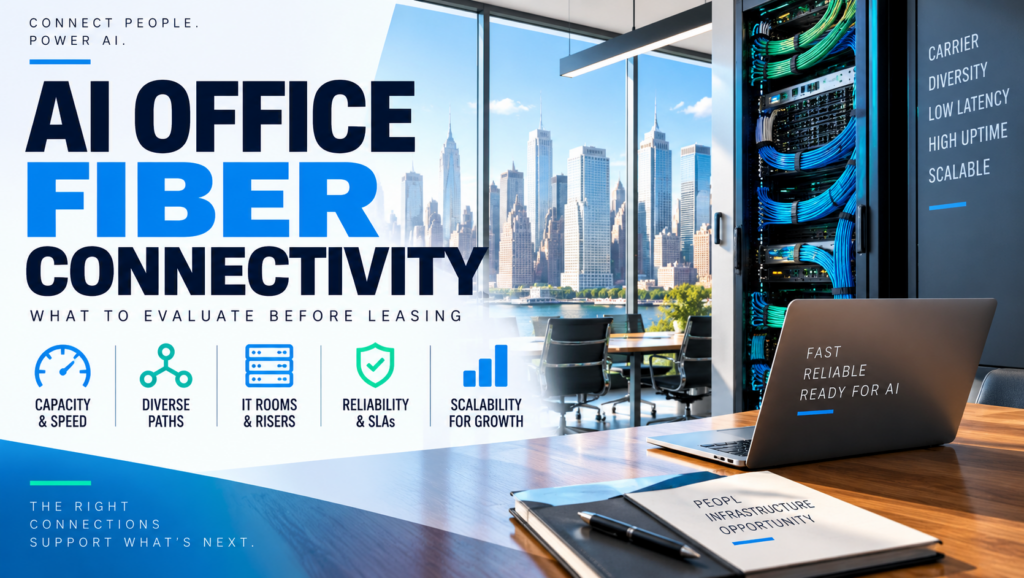
- Day-to-Day Operational Needs: Consider the nature of your team’s daily work. For instance, if you often have all-hands meetings or training sessions, ensure the space can accommodate a big conference room or open area. If privacy is paramount (like for counseling or legal interviews), make sure you can build enough private offices or soundproof rooms. Also evaluate the IT and electrical requirements: FiDi buildings generally have excellent connectivity, but always confirm there is adequate fiber optic service for your bandwidth needs or space for your server racks if you host on-site. Some firms that handle sensitive data might require a backup generator or specific power setups – downtown buildings often excel here because of their experience with financial tenants who demand high resilience. Knowing these requirements in advance will help your broker find a compatible space.
- Future Growth: The very name “Financial District” might imply a fixed, established place, but as we’ve seen, it’s a dynamic neighborhood. Your company should also plan dynamically. If you expect to grow rapidly, discuss expansion options with building management – can you get the right of first refusal on the adjacent suite, or is there a larger space you could move into in a year or two in the same building? The good thing is FiDi has a lot of inventory – you won’t be boxed in with nowhere to go. Many companies start in a smaller downtown office and, as they grow, upgrade to a bigger one just a few blocks away, often staying within the district because they’ve come to appreciate its benefits.
By carefully considering these factors, you can ensure that a move to the Financial District is not just beneficial in theory, but in practice truly enhances your company’s operations and culture. It’s all about aligning FiDi’s offerings with your company’s strategy and needs.
Making the Move: Is the Financial District Right for Your Business?
Relocating an office is a significant decision that impacts your employees, your expenses, and your company’s trajectory. The Financial District of Manhattan offers a compelling case as a destination for many types of businesses. To recap, moving your office to FiDi can provide:
- Cost Savings and Value – Lower rents and generous tenant incentives, allowing you to upgrade space or save money.
- Prestige and Credibility – An address that resonates with clients and partners, associating your brand with New York’s financial legacy.
- Proximity and Convenience – Easy access to clients, partners, courts, and talent, plus unbeatable transit connectivity for your team.
- Modern Facilities – A variety of office buildings ready for modern business needs, from tech startups to traditional firms, often with top-notch amenities.
- Networking and Growth Opportunities – Immersion in a dense business ecosystem that can spark new deals, partnerships, and ideas across industries.
- Quality of Life Improvements – A rejuvenated neighborhood that blends professional focus with livability, services, and after-work options, contributing to employee satisfaction.
The question of who benefits most – finance, tech, law, or startups – comes down to how you leverage these advantages. Financial firms and fintech ventures clearly gain a strategic edge in the Financial District. Law firms serving corporate clients find a supportive home here. Tech companies reap cost and client benefits, especially those bridging into finance. Startups gain legitimacy and networking that can propel them to the next level.
If you see your business reflected in these scenarios, it might be time to seriously consider a move downtown. On the other hand, if your operations are entirely independent of Manhattan’s business networks or your culture thrives in a different setting, you might weigh the pros and cons a bit more. The great thing about New York is its neighborhood diversity – but the unique mix of history, modernization, and opportunity in the Financial District is hard to match.
When should you move? Timing can influence how smooth and beneficial the move is. Commercial lease markets fluctuate, so keep an eye on vacancy rates in FiDi. Currently (as of early 2025), availability in FiDi has been stabilizing and even shrinking as more tenants take advantage of the good value – meaning the best deals are being snapped up. Landlords still offer concessions, but as the downtown market recovers, those incentives might tighten. Moving when you can secure a long-term lease at a favorable rate locks in your occupancy cost advantage for years to come. Also consider your company’s internal timeline: Do you have a lease expiry coming up in Midtown? Is your team mostly remote but planning to come back together soon? These inflection points are opportunities to make a change.
Finally, ensure you have the right help in the process. Navigating Manhattan’s commercial real estate can be complex, especially if you’re exploring a new neighborhood. That’s where experts come in – to identify the right building, negotiate the best terms, and manage the logistics so you can focus on your business.
Find the Perfect FiDi Office Space for Your Company
Every business is unique, and the Financial District has a surprisingly wide array of options to suit that uniqueness. If you’re intrigued by the advantages outlined above, the next step is to find a space that meets your specific needs and vision. This is where we can assist.
We specialize in helping companies discover ideal office spaces in Manhattan’s top neighborhoods – including the Financial District. We understand the downtown market inside and out, from boutique sublet opportunities to entire floors in Class A towers. Whether you’re a finance firm seeking a high-floor suite with sweeping skyline views, a tech startup hunting for a cool loft-style space, or a professional firm needing a polished office near Wall Street, our team is ready to find your perfect match.
Why partner with us? We take a tenant-first approach, meaning your priorities (budget, layout preferences, lease flexibility, and amenities) guide our search. We’ve helped CFOs, office managers, and business owners navigate the leasing process, negotiate favorable terms, and even coordinate seamless moves. Think of us as your strategic partner in this important move – our goal is to secure an office environment that empowers your business to thrive in its new Financial District home.
Ready to explore the possibilities in Manhattan’s Financial District? Contact us for a consultation. We’ll provide you with a curated list of options and expert guidance on every aspect of relocating downtown.
Capitalize on all the Financial District has to offer. With the right office space, your company could be the next success story written in the heart of New York’s most iconic business district. Let’s find you that ideal space and make your move a smart investment in your company’s future.
Interested in moving to the Financial District? Get in touch with us today to jumpstart your search for the perfect Manhattan office. Your business deserves the advantages FiDi can provide – and we’re here to ensure you reap the maximum benefit from your move. Here’s to your next chapter in downtown NYC!
Fill out our 📋 online form or give us a call today 📞 212-967-2061 — let’s find the right office for your business.