Local Law 97: What Office Tenants in Manhattan Need to Know
Understanding Local Law 97
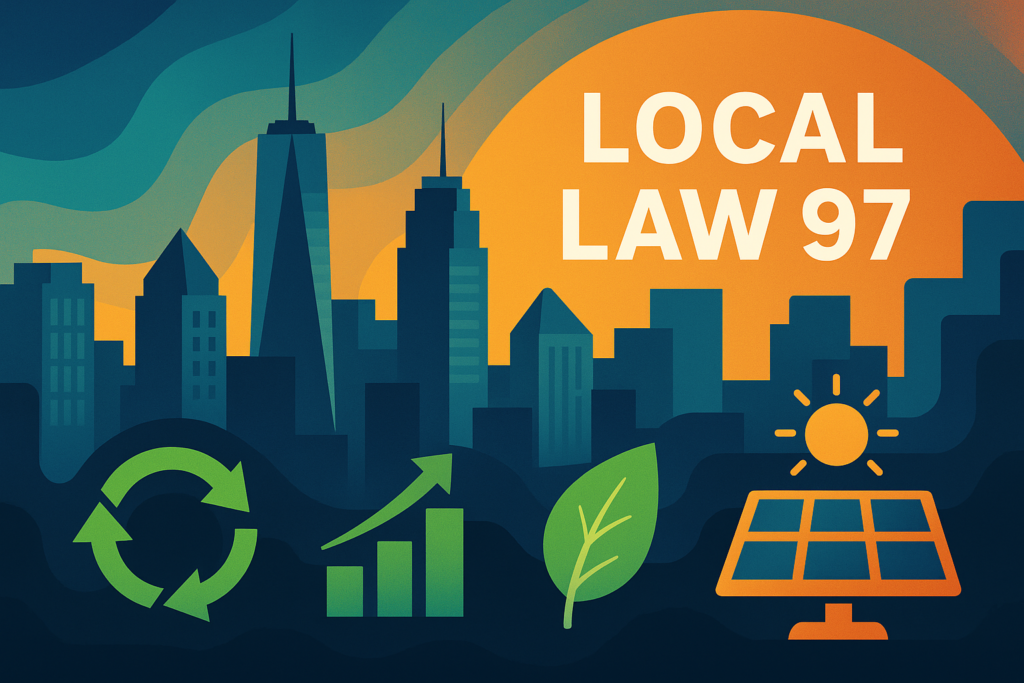
Local Law 97 (LL97) is one of New York City’s most ambitious climate laws, targeting a drastic reduction in greenhouse gas emissions from large buildings—many of which are office towers. Passed in 2019, LL97 mandates that buildings over 25,000 square feet meet specific carbon emissions limits starting in 2024, with escalating requirements over time. The city’s goal is to cut building emissions by 40% by 2030 and reach net-zero by 2050.
For Manhattan office tenants, this law is not just a landlord issue—it can affect operating costs, lease negotiations, and even the image and functionality of the workplace.
Who and What the Law Covers
Scope of LL97
- Size Thresholds: Applies to single buildings over 25,000 SF or groups of buildings on the same tax lot totaling over 50,000 SF.
- Property Types: Most commercial, residential, and mixed-use buildings, including Class A and Class B/C office properties.
- No Age Exemption: Historic or older buildings are not excluded.
Emissions Limits
Each building has an annual emissions cap based on occupancy classification. Office buildings are measured against a carbon intensity limit (metric tons CO₂e per SF per year).
Why LL97 Matters for Office Tenants
While the law is aimed at property owners, its financial and operational impacts often flow down to tenants:
- Budget – If a landlord faces fines for non-compliance ($268 per metric ton of CO₂e over the cap annually), they may try to recover costs through higher rents, operating expenses, or reduced tenant improvement allowances.
- Image – Occupying a building that meets or exceeds LL97 standards supports corporate ESG goals, helps attract talent, and impresses clients.
- Location Strategy – Tenants may choose between buildings not only for transit access or prestige, but also for compliance risk and sustainability profile.
- Class and Quality – Class A buildings are more likely to invest in high-performance systems sooner, offering tenants better comfort and lower utility bills.
- Day-to-Day Functionality – Upgrades to HVAC, lighting, and insulation can improve air quality, thermal comfort, and noise control—benefits that directly affect employee productivity.
When the Law Takes Effect
- 2024: Compliance period begins; emissions are measured against initial limits.
- 2025: Penalties begin for exceeding limits.
- 2030: Stricter limits apply, requiring deeper retrofits.
- 2050: Net-zero building emissions required.
The Department of Buildings has granted a one-time 2025 reporting extension for properties that file by August 30 and submit reports by December 31.
How Compliance Is Achieved
Short-Term Measures (Pre-2030)
- Energy Audits – Identify inefficiencies and prioritize low-cost fixes.
- Lighting Upgrades – LED conversions and occupancy sensors.
- HVAC Optimization – Controls, balancing, and high-efficiency motors.
- Insulation & Sealing – Reduce heating and cooling loads.
These measures often have quick paybacks and can reduce operating expenses—something tenants can negotiate to share in.
Long-Term Measures (2030 and Beyond)
- Electrification – Shifting from fossil-fuel heating to electric heat pumps.
- On-Site Renewables – Solar panels or cogeneration systems.
- Major System Replacements – Chillers, boilers, and ventilation equipment.
Phased or hybrid electrification strategies can help landlords control costs, and tenants can advocate for approaches that minimize disruption to operations.
Tenant Strategies for Leveraging LL97
- Lease Negotiations
- Seek operating expense protections against LL97 fines.
- Request green clauses requiring the landlord to pursue compliance.
- Tie capital improvement contributions to upgrades that benefit tenants (better HVAC, daylighting, noise control).
- Space Planning
- Work with landlords to right-size your space to reduce shared energy intensity.
- Explore shared amenity floors that centralize high-energy uses.
- Budget Forecasting
- Ask for projected LL97 compliance plans and timelines when evaluating buildings.
- Consider the trade-off: a compliant building may have slightly higher base rent but lower pass-through costs and better long-term stability.
- Corporate Image
- Publicize occupancy in an LL97-compliant building to bolster sustainability reporting.
Risks of Non-Compliance for Tenants
Even if your company is not directly responsible for building-wide emissions:
- Cost Pass-Throughs – Landlords may seek to recover fines through lease mechanisms.
- Reputational Risk – Occupying a non-compliant building could clash with ESG commitments.
- Operational Disruption – Last-minute retrofits in non-compliant buildings could cause noise, dust, and downtime.
The Tenant Advantage
When used strategically, LL97 can become a tenant’s ally:
- Leverage Landlord Upgrades to get higher-quality systems without direct capital outlay.
- Negotiate for Fit-Out Synergy, combining LL97-driven renovations with your own build-out to reduce downtime.
- Select Future-Proof Locations that avoid compliance risk and position your company as environmentally responsible.
Final Thoughts
Local Law 97 is here to stay. While its primary burden falls on landlords, Manhattan office tenants have both risk exposure and strategic opportunities. Choosing a building with a proactive compliance plan can protect your budget, enhance your company’s image, and deliver a better workplace environment.
If your lease is coming up for renewal or you’re considering a move, this is the moment to factor LL97 compliance into your decision-making. The right office in the right building can mean more predictable costs, better employee satisfaction, and alignment with long-term sustainability goals.
Looking for LL97-compliant office space in Manhattan?
NewYorkOffices.com can identify buildings that meet your budget, location, image, and compliance requirements—often within 24 hours—so you can make a confident, future-proof choice. Call us or use our online form to get started.
Fill out our 📋 online form or give us a call today 📞 212-967-2061 — let’s find the right office for your business.