Class A vs. Class B/C Office Rents in Manhattan
What’s Happening With Manhattan Office Rents?
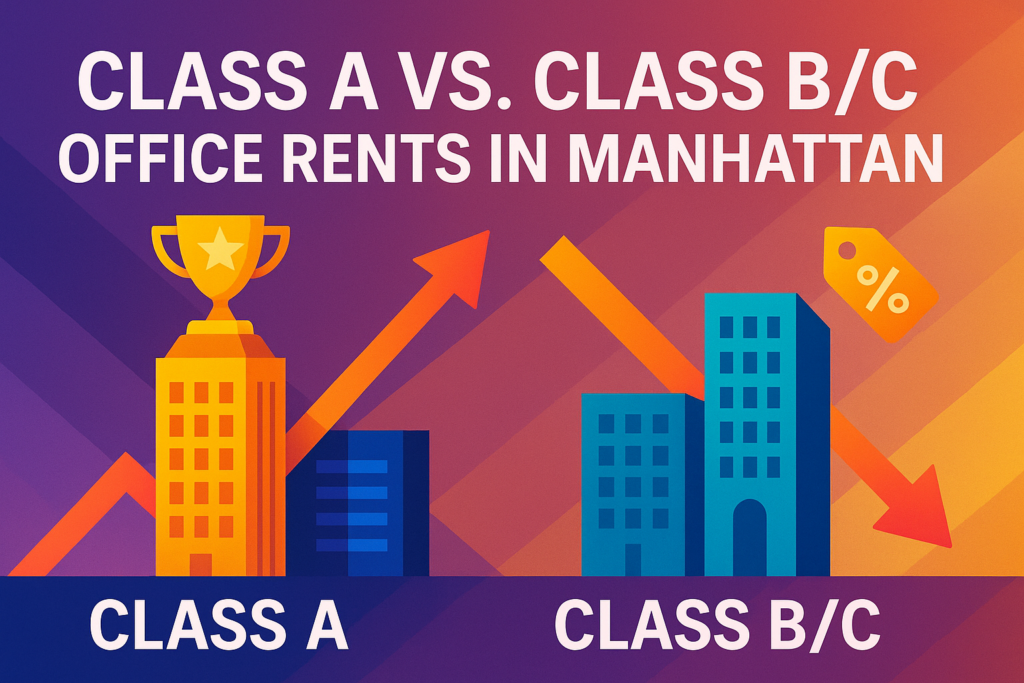
Manhattan’s office market in 2025 feels like a study in contrasts. On one end, Class A trophy towers in Midtown and Hudson Yards are setting records, with some newly built or fully repositioned properties quoting rents north of $200 per square foot. On the other end, Class B and C buildings are struggling to stay relevant, often asking rents in the $40s or $50s and offering unusually large concession packages to secure tenants.
This divergence is reshaping the leasing landscape, especially for small and midsize tenants who need to balance budget, image, and operational needs.
Why Are Class A Rents Rising?
The demand for trophy properties is driven by tenants who can afford to pay for quality. Law firms, private equity shops, and blue-chip corporates are fueling absorption in Midtown trophy corridors. For these firms, the premium buys more than space — it secures:
- Prestige addresses that reinforce client confidence.
- State-of-the-art infrastructure, including high-speed connectivity, sustainability certifications, and advanced security.
- Amenity-rich environments with lounges, conferencing centers, and fitness facilities.
With very little vacancy in top-tier towers, landlords are emboldened to push asking rents even higher. Some recent deals have closed at rates that rival — or exceed — luxury residential pricing on a per-foot basis.
Why Are Class B and C Buildings Offering Concessions?
At the same time, older stock without modern upgrades is under pressure. These buildings can’t compete on image or amenities, so they compete on price and flexibility. Common incentives include:
- Free rent periods stretching well beyond 12 months.
- Generous tenant improvement (TI) allowances that cover build-out costs.
- Shorter lease terms designed to attract tenants wary of long commitments.
For cost-sensitive businesses, Class B and C space presents an opportunity to secure favorable terms and allocate budget toward furniture, technology, or staff growth rather than rent.
Who Benefits From the Divergence?
- Established firms chasing prestige benefit from Class A towers, where occupancy reinforces their brand and talent strategy.
- Small and midsize businesses can leverage Class B/C concessions to secure larger footprints or higher-quality prebuilts than their budget might normally allow.
- Hybrid and flexible workplace adopters can use incentives to negotiate shorter, more adaptable leases.
Where Is the Divide Most Noticeable?
- Plaza District and Grand Central: Trophy buildings command some of the highest rents in the country.
- Hudson Yards: New construction with premium amenity packages continues to attract finance and tech firms.
- Financial District and Murray Hill: Older inventory trades at nearly half the price of Midtown trophy space, with landlords leaning heavily on concessions to fill floors.
Class A vs. Class B/C Office Space in Manhattan
To make sense of the widening gap in Manhattan’s office market, it helps to see the differences side by side. Class A towers and Class B/C buildings operate on very different pricing and incentive models, and each comes with its own strengths and risks. The table below breaks down how rents, concessions, and best-use cases compare, giving tenants a clear framework for deciding which option aligns best with their budget, image, and day-to-day needs.
| Category | Class A Trophy Towers | Class B/C Buildings |
|---|---|---|
| Typical Rents | $100–$200+ per square foot (some new/redeveloped towers exceed $250) | $40–$70 per square foot (often less than half the cost of Class A) |
| Concessions | Limited free rent, moderate tenant improvement (TI) allowances; landlords rely on prestige to drive demand | Oversized free rent periods, generous TI allowances, flexible lease terms; designed to attract tenants |
| Risks | High budget commitment; less negotiating leverage; limited availability of smaller suites | Outdated infrastructure; fewer amenities; risk of obsolescence if landlords fail to reinvest |
| Best Use Cases | Law firms, finance, and corporates prioritizing image, client-facing prestige, and talent recruitment | Startups, nonprofits, and cost-conscious firms seeking maximum square footage, budget efficiency, or short-term flexibility |
| Tenant Advantage | Reinforces brand credibility and secures best-in-class infrastructure and amenities | Provides value through lower rents and heavy concessions, freeing budget for growth, staff, or upgrades |
How Tenants Should Respond
The key is not to chase rent alone, but to balance budget, image, location, and daily operations:
- If your business relies on a prestigious address to impress clients, Class A may be worth the premium.
- If cost efficiency is paramount, Class B/C buildings can deliver value — especially when factoring in concessions and build-out savings.
- If flexibility is critical, explore options where landlords are motivated to customize terms.
Conclusion: Two Markets, One Opportunity
Manhattan’s office market has effectively split into two realities: premium towers with record-breaking rents and older buildings competing through incentives. For tenants, this isn’t just market trivia — it’s a chance to leverage conditions to your advantage. Whether your firm seeks prestige or cost efficiency, the gap between Class A and Class B/C rents creates negotiating power that can be turned into savings, flexibility, or upgrades.
We represent tenants exclusively. Our role is to help you determine which path — trophy tower or value-driven concession package — aligns with your company’s goals and negotiate terms that maximize your advantage.
Fill out our 📋 online form or give us a call today 📞 212-967-2061 — let’s find the right office for your business.