AI-Ready Offices in Manhattan: How Generative Tech Is Changing Tenant Requirements
Manhattan’s office market has always evolved alongside technology. From the era of typewriters and trading floors to the rise of fintech and digital media, each wave of innovation reshaped what tenants expect from their workspace. In 2025, a new transformation is underway: generative AI and related tech. Fast-growing AI startups and tech firms are quickly scooping up blocks of New York office space, signaling that the AI boom is bolstering Manhattan’s office market. This surge of interest in artificial intelligence is not limited to tech companies; it’s also changing how all tenants evaluate offices in terms of infrastructure, layout, and amenities. The critical question many are now asking is: How will GenAI integration physically and culturally transform the workplace?.
While recent AI adoption has mostly happened in software and cloud systems, its effects are now spilling over into the physical workspace. In Manhattan, that means both landlords and tenants are rethinking office design—from massive Midtown towers to creative lofts in SoHo—to accommodate the demands of AI-driven work. This article explores what an “AI-ready” office entails, which features and building types support generative tech, and how mid-size tenants (10–50,000 sq. ft.) can leverage these trends to their advantage in today’s market.
What Is an “AI-Ready” Office?
An AI-ready office is a workspace built or retrofitted to support the advanced technologies, collaboration patterns, and infrastructure needs that come with artificial intelligence integration. In practical terms, it means the office has the digital capacity, physical layout, and smart systems to seamlessly blend traditional human work with AI tools and “digital coworkers.” Developing effective collaboration between AI and humans will go hand in hand with how office spaces are designed to enable both to do their best work. In other words, the physical workplace itself must evolve so that employees and AI systems can co-create and interact efficiently.
Key aspects of an AI-ready office include robust connectivity (for cloud computing and data-hungry applications), spaces for new kinds of work (like algorithm training or content creation with AI), and adaptive environments that can change as rapidly as the technology does. One thing is clear: GenAI integration will lead to strategic shifts in workplace design, from adding new facility types (for example, AI labs or innovation studios) to upgrading everyday spaces with smart, interactive tools. Even seemingly mundane areas like meeting rooms or break zones are being reimagined with AI in mind. For instance, companies are starting to install “generative whiteboards” and voice-activated controls in conference rooms to enable real-time collaboration with AI systems. At the same time, some firms plan for AI-free quiet zones where employees can detach from tech when they need focus or rest, much like wellness rooms in modern offices.
In Manhattan, being “AI-ready” is also a competitive consideration. Major banks and financial firms (historically not the earliest adopters of trendy office layouts) are now investing heavily in AI and are likely to lead the push for seamless GenAI workplace design. Tech startups and creative companies, long accustomed to open layouts and high-tech perks, are likewise raising the bar. The result is that tenants across industries are beginning to require features in their offices that would have been afterthoughts a decade ago. Below, we break down those key features and design elements that define an AI-ready office.
Key Features of AI-Ready Workplaces
Modern AI-enabled offices share a few common features that set them apart from traditional workspaces. These features ensure that the environment can handle intensive digital workloads, support new ways of collaboration, and remain comfortable and efficient for people. Here are the top AI-adaptive features tenants are prioritizing:
- Flexible Layouts & Modular Spaces: Adaptability is crucial in the age of AI. Tenants may need to reconfigure teams or project areas quickly as workflows evolve, especially when integrating new AI-driven processes. Offices with wide, unobstructed floor plates or movable walls allow for rapid changes in layout. For example, a mid-size firm might convert part of an open bullpen into a dedicated “AI lab” or training studio as their data science team grows. Flexible layouts also mean having a mix of collaborative zones and private nooks. Generative AI can facilitate creative work, but employees still need quiet focus areas for tasks like prompt engineering or deep analysis. Design elements like demountable partitions, movable furniture, and multi-purpose rooms make it easier to shift between brainstorming sessions, heads-down work, or even training sessions with AI systems.
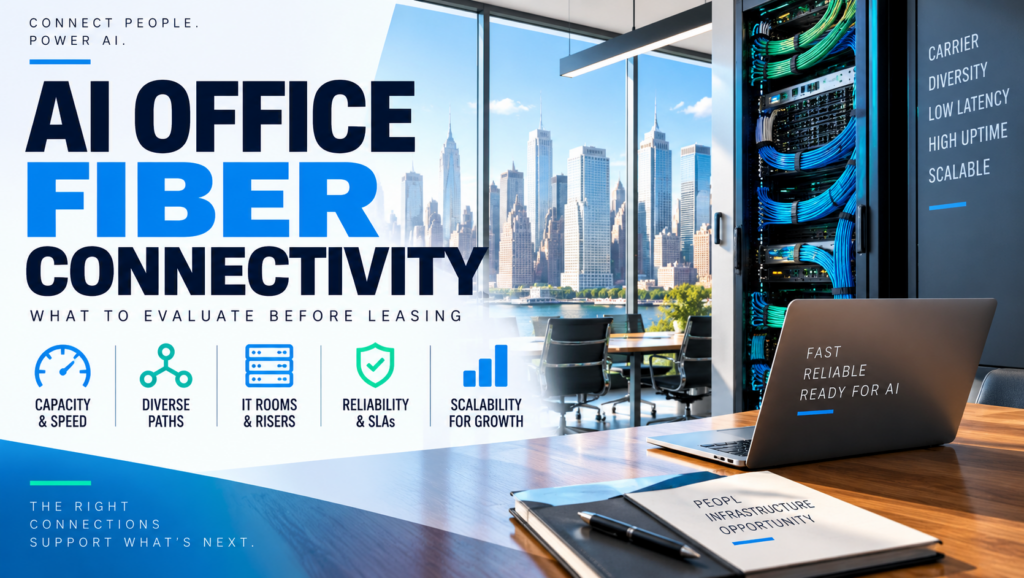
- Robust Data Infrastructure: Behind the scenes, an AI-ready office requires enterprise-grade digital infrastructure. This includes high-speed fiber optic connectivity, abundant bandwidth (wired and wireless), and secure network systems to handle everything from daily video calls to training machine learning models on cloud servers. IT infrastructure is no longer a secondary consideration for office space – it’s now core to evaluating a location. Many Manhattan buildings are responding by upgrading their riser cables, adding 5G antennas and Wi-Fi overlays, and even offering direct links to cloud service providers. Tenants focused on AI or big data also look for buildings with space for on-site server rooms or at least convenient access to nearby data centers. Power capacity and cooling go hand-in-hand with data needs – a floor full of AI engineers might require higher wattage per square foot and supplemental cooling for server racks or dense computer clusters. For this reason, offices advertised as “AI-ready” often boast features like redundant power feeds, backup generators, and enhanced HVAC to ensure servers (and people) stay up and running without overheating.
- Acoustic Design & Privacy: As AI becomes more embedded in work, offices are grappling with new kinds of noise and privacy challenges. Employees might be engaging with voice-activated assistants or participating in frequent video meetings with AI transcription tools. Open-plan layouts, while great for collaboration, can amplify distractions in these scenarios. Acoustic treatments are thus a key feature of AI-ready spaces. This can mean soundproof phone booths and focus pods, noise-dampening wall panels, high-quality ceiling insulation, and smart sound masking systems. The goal is to enable people to have a conversation with an AI tool or concentrate on complex problem-solving without disrupting (or being disrupted by) colleagues nearby. Good acoustics also enhance the performance of voice recognition technologies and ensure clarity during hybrid meetings. In essence, an AI-ready office acknowledges that human productivity and comfort are still paramount – features like quiet rooms, configurable lighting, and even no-tech relaxation areas help maintain wellbeing amid a high-tech environment.
- Smart Energy & Environmental Controls: Many next-generation offices leverage AI on the building operations side as well, turning the workspace itself into a smart environment. Landlords in Manhattan’s top buildings are deploying AI-driven systems for HVAC optimization, lighting, and predictive maintenance. For tenants, this translates into more consistent comfort (AI can learn and adjust to usage patterns) and potential cost savings through energy efficiency. Smart thermostats, automated window shades, and intelligent lighting that adapts to natural light levels are becoming standard in Class A “AI-integrated” buildings. These features not only reduce the carbon footprint (crucial in NYC with strict Local Law 97 emissions rules) but can also lower a tenant’s utility expenses over time. Some leases are now starting to address this, with tenants negotiating for transparency into energy usage data and even a share of the savings if the building’s AI systems significantly cut costs. In addition, environmental sensors tied to AI can monitor air quality, occupancy, or even sanitation needs (prompting “predictive cleaning” when a conference room has high usage). All of these controls make an office more responsive and resilient – an advantage for tenants who prioritize sustainability and employee health alongside tech prowess.
These features collectively create a workspace where people and generative AI tools can thrive together. For instance, imagine a conference room in an AI-ready Manhattan office: it might have an interactive screen that uses a generative AI to turn spoken ideas into visuals on the fly, microphones that intelligently filter noise, and a climate system that adjusts airflow because it knows six people are brainstorming inside. Meanwhile, down the hall, there could be a quiet zone where an analyst is using an AI assistant to parse data, free from distractions. Achieving this level of integration requires the right kind of building and design. Next, we’ll look at how different types of Manhattan office properties – from shiny new towers to vintage lofts – are incorporating these AI-ready features.
Class A Towers: High-Tech by Design
Class A office towers in Manhattan, especially the newest developments and recently renovated buildings, are leading the charge in offering AI-ready workplaces. These are the skyline-defining buildings in areas like Midtown West (e.g. Hudson Yards, Penn Station vicinity) and Midtown South, which boast state-of-the-art infrastructure. Landlords of trophy towers have embraced technology as a selling point: many advertise high-capacity digital infrastructure and AI-enabled amenities in their marketing materials.
In practice, what does that mean? First, these buildings come with robust base building systems – think enormous electrical capacity, brand-new HVAC plants, and multiple high-speed fiber providers pre-wired in the building. A tenant moving into such a tower can be confident that they can install a dense server room or run dozens of data-heavy workstations without taxing the system. For example, some newer towers are offering dedicated watts per square foot well above older standards and the ability for tenants to run 24/7 climate control for tech-heavy departments. Additionally, Class A landlords often provide server-friendly features like access to cooling towers or ventilation shafts in case a tenant needs to set up supplemental AC for a lab or equipment room.
Another hallmark of these top-tier buildings is the integration of smart building technology at the operational level. Building management systems use AI algorithms to adjust heating, cooling, and lighting in real time, optimizing comfort and energy use simultaneously. Tenants in such buildings might experience fewer complaints about temperatures, faster elevator dispatch (some high-rises use AI to reduce wait times), and even conveniences like AI-driven visitor check-in systems in the lobby. In a competitive market, these features enhance employee experience and can be a prestige factor – a modern, tech-forward office can help attract talent who want to work in a cutting-edge environment. There’s also a direct financial angle: an AI-integrated tower can lower a tenant’s operating costs via efficiency, partially offsetting the higher rent. For instance, if the building’s smart systems reduce electricity usage, those savings trickle down to tenants paying utility bills.
Security is another area where AI is evident. High-end buildings are now using AI-enhanced security cameras and even weapons detection systems to keep occupants safe, alongside increased human security presence (a trend accelerated by high-profile incidents). While these security measures might not be top-of-mind when we say “AI-ready,” they contribute to an overall environment where tenants feel protected and tech-enabled.
Who benefits most from Class A AI-ready towers? Traditionally, financial institutions, large law firms, and big tech companies gravitate to Class A properties. Many of these firms are exactly the ones now pushing AI initiatives internally. For example, some of the largest Manhattan bank employers have begun integrating “digital employees” (AI-driven assistants) into their workforce, and they require seamless connectivity and reliability for those systems. These firms are also competing for top tech talent, and having a futuristic office with AI-enhanced amenities is part of the appeal in recruiting. Even mid-size companies in finance or tech may find it worth paying a premium for such a location if it means no compromises on infrastructure or innovation.
However, not every tenant in a fancy tower is a tech giant. As AI tools become commonplace in everyday business (from AI-powered CRMs to automated accounting software), even companies in marketing, consulting, or media might decide that a smart, AI-capable building is a smart choice. Manhattan’s newest towers are essentially offering a glimpse of the future workplace: human-centric design boosted by powerful technology. For tenants who want to be at the forefront of that trend, Class A buildings are the natural option – as long as the budget allows.
Creative Lofts: New Tech in Old Spaces
Not all AI-ready offices are in shiny new skyscrapers. Manhattan’s creative loft buildings – think converted factories, pre-war commercial buildings, and other vintage properties especially in neighborhoods like SoHo, Hudson Square, and parts of Tribeca – are also adapting to the AI era. These buildings often attract startups, design firms, and creative industries, many of whom are now also experimenting with generative AI in their work. The challenge (and opportunity) is to bring 21st-century tech infrastructure into early 20th-century structures.
Landlords of older Class B or Class A- historic buildings have been upgrading mechanical systems and connectivity to meet modern tenant demands. For example, an owner of a 1920s loft might invest in new electrical risers, high-capacity Internet cabling, and HVAC improvements so that an AI-focused tenant can run their equipment without issues. Buildings that once had basic 100 amp electrical service might be refitted for substantially more power. We’re also seeing more creative buildings advertise features like dedicated IDF/MDF closets on tenant floors (for networking gear) or partnerships with colocation data centers nearby. In essence, they aim to offer some of the robustness of a new tower, while retaining the character and cost advantages of older space.
One advantage many loft-style buildings naturally have is open floor plates with flexible layouts. Large former industrial spaces often feature wide column spacing and high ceilings, which can be great for laying out collaborative tech offices. A company can set up an open plan engineering bullpen, then carve out a section for a specialized purpose (like a small machine-learning model training room or a media studio) without structural constraints. In fact, some tenants may prioritize buildings with wide column grids and deep floor plates specifically because they allow modular planning to support rapid changes in technology. Interestingly, deep floor plates – which sometimes struggled to attract tenants due to natural light concerns in the core – can become an asset for AI teams that want interior sections for things like server racks, experimentation zones, or immersive VR/AR labs that don’t need windows. Essentially, the less traditional a floor plan, the more a forward-thinking tenant can customize it for new tech uses.
Location plays a role here as well. Many creative loft buildings in Manhattan are in older tech corridors that have strong connectivity. For instance, the Hudson Square area (west of SoHo) historically had a lot of telecom infrastructure; it’s now a media-tech hub benefiting from those edge data connections and appealing to AI-driven creative companies. Similarly, buildings in Chelsea and the Flatiron District sit near major Internet exchange points like 60 Hudson Street or 111 8th Avenue, meaning tenants can get ultra-fast connections with minimal latency. An AI startup dealing with real-time data might choose a charming Flatiron loft not just for the brick and timber aesthetics, but because they know the building is one or two hops from a major fiber node – every millisecond counts for certain applications.
For mid-size tenants, the appeal of these adapted older spaces is often cost and character. Rents in a Class B loft will generally be lower than a brand-new Midtown tower, yet if the landlord has invested in tech upgrades, the tenant doesn’t necessarily sacrifice on capability. In fact, a wise tenant can negotiate for additional improvements as part of their lease (for example, asking the landlord for an allowance to add a supplemental cooling unit or to improve sound insulation in a historic building). The result can be a best-of-both-worlds scenario: a unique, inspiring workspace that is nonetheless AI-ready under the hood. It’s worth noting that some of the city’s biggest tech successes started in such spaces – and as they grow, they often leave behind fully built, wired offices. This has created a secondary benefit: pre-fitted sublease spaces (discussed more below) that come with modern IT infrastructure already in place, available in many loft buildings when larger firms relocate.
Flexible Suites and Co-Working: Immediate Solutions
The flexible office space sector – including co-working centers, serviced offices, and pre-built “spec” suites – provides another path to an AI-ready workplace, especially for small and mid-sized companies that need agility. These plug-and-play offices are typically offered by providers who outfit the space with furniture, decor, and technology upfront. In Manhattan, many flexible space providers are embracing AI-related amenities as a way to differentiate their offerings and cater to the growing wave of startups.
If a tenant opts for a co-working space or a short-term managed suite, they can often tap into enterprise-grade tech amenities from day one. For example, it’s common to have access to fully equipped conference rooms with video conferencing (sometimes enhanced by AI tools for transcription or translation), communal areas with smart presentation boards, and robust Wi-Fi 6 networks and secure enterprise VPNs throughout the floor. The individual private offices or suites come ready with desks, ergonomic chairs, and sometimes even desktop monitors or other hardware, so a team can literally move in and start working the same day. This immediate operability is crucial for fast-moving AI companies or project teams – they don’t lose momentum waiting for an office build-out. A recent trend even includes co-working hubs specifically marketed to AI and robotics startups, offering things like small lab spaces or higher power capacity within a shared environment.
Flexible office providers also use AI on the operations side to enhance tenant experience. Mobile apps allow tenants to book meeting rooms or check occupancy in real time, often powered by AI for optimizing space usage. Some are experimenting with AI chatbots for instant support requests or using sensors to automatically adjust comfort settings in a private office before you arrive. In high-end co-working spaces, you might encounter amenities like AI-driven coffee baristas or personalized climate and lighting settings that adjust to each team’s schedule. While these perks can border on novelty, they underscore how even small spaces can be “smart” spaces.
For mid-size tenants, a big advantage of the flex model is minimal upfront cost and commitment. If you’re unsure how quickly your AI venture will grow (or how your space needs might change as you adopt new technology), taking a 1-2 year flex office lease is far less risky than committing to a 10-year traditional lease. It also shifts the burden of maintaining an AI-ready environment to the provider – they handle the internet contracts, the electric bills, the cleaning robots, etc., and you pay one inclusive fee. However, tenants should still do their homework: ensure the building containing the co-working space has reliable infrastructure (some are in Class B buildings that may not have top-tier connectivity or power backup). The good news is many flex offices in Manhattan are located in prime buildings or newly upgraded floors, because providers themselves know the value of good infrastructure to attract customers.
In short, flexible and serviced offices can serve as an “AI-ready office in a box.” You get the benefit of cutting-edge office tech without having to set it all up yourself. The trade-off is usually higher rent per square foot and less control over the space’s customization. Yet for numerous mid-sized companies – especially those in growth mode or those testing the New York market – this trade-off is worthwhile to avoid delays and capital expenditures. It’s an instant solution that keeps focus on the business instead of on real estate logistics.
New Requirements for Tenants in the AI Era
With AI driving changes in how offices function, tenant requirements and priorities in lease negotiations are evolving as well. Whether a company is hunting for a new Manhattan office or renegotiating an existing lease, there are new questions to ask and provisions to seek. Here are some of the ways mid-size tenants in particular are adjusting their office space strategy in the generative tech era:
1. Infrastructure & Connectivity Demands
Tenants are now including detailed IT infrastructure needs in their RFPs for office space, right alongside traditional asks like renovation allowances or rent abatement. For example, a mid-size firm might require that a building offer multiple fiber internet providers, modern CAT6A or fiber cabling in place up the risers, and 5G DAS (Distributed Antenna System) for strong mobile coverage. Asking about wireless overlays, dedicated server room space, and building-wide Wi-Fi is becoming common. The reason is simple: if a space cannot handle current (and future) data demands, it could stunt a company’s technological growth. Tenants are even touring buildings with their IT consultants in tow to inspect server closets and telecom rooms, which was rare in the past. In Manhattan, certain buildings stand out for connectivity – for instance, ones near carrier hotels (like 60 Hudson) or wired certified buildings command a premium because they check these infrastructure boxes.
Tenant tip: If your company heavily uses AI or cloud tools, treat connectivity as a make-or-break factor. Don’t just trust a marketing brochure that says “high-speed internet available” – verify the bandwidth caps, redundancy (is there a backup line if one fails?), and latency if you rely on specific networks. It’s much easier to build AI solutions in an office that’s already digitally robust than to retrofit later.
2. Power, Cooling & Electrical Provisions
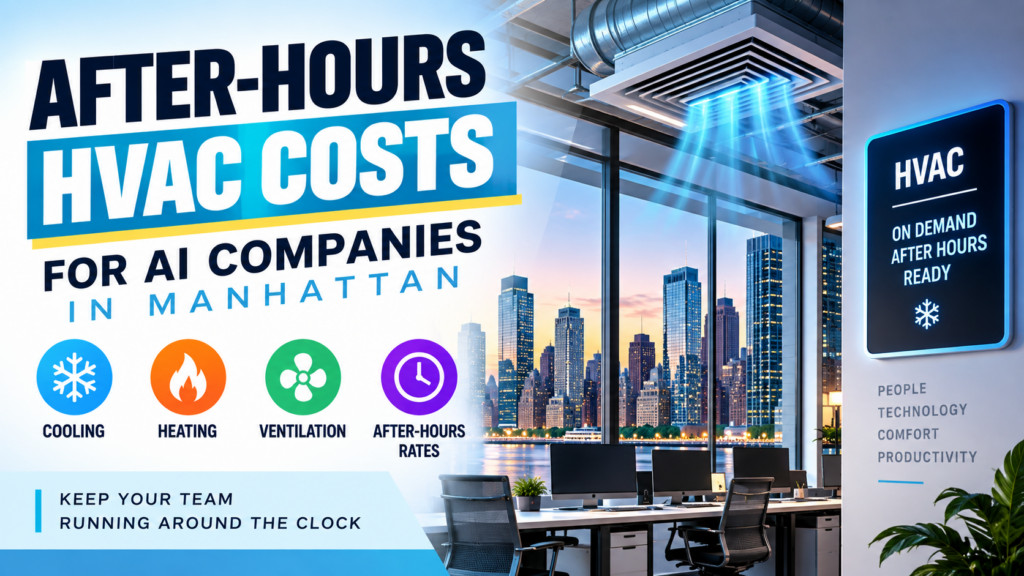
In the AI age, even a mid-size office might draw power like a small data center. Training AI models or running continuous simulations can require a lot of computing hardware. As a result, tenants are negotiating for guaranteed power capacity and cooling rights in their leases. This could mean stipulating a certain wattage per square foot delivered to the premises, agreeing on allowable hours for HVAC (for example, ensuring overnight A/C is available if needed for equipment), and getting permission to install supplemental cooling units (like a spot cooler or dedicated AC for a server closet). If a building already has high power capacity and modern HVAC, these may be non-issues; but in older or multi-tenant buildings, it’s wise to lock in these details. No one wants a surprise like tripping the breakers because your floor’s power allotment was too low for your rows of GPU machines.
Some tenants also look for backup power arrangements. If uninterrupted operation is critical (say you’re an AI-driven trading firm), you might require access to the building’s emergency generator or plan to install an Uninterruptible Power Supply (UPS) for your suite. These provisions should be clearly outlined in the lease or rider. Landlords are increasingly aware of these needs – many are open to upgrading electrical service or allowing generator hookup for tenants who request it, especially if it means attracting a high-value AI or tech company. From the tenant perspective, ensuring electrical resilience is part of future-proofing the office. It ties back to reliability: all the fancy AI tools are useless if the power goes out or systems overheat. So, savvy tenants are proactive in securing the infrastructure that keeps their tech running smoothly.
3. Flexible Use & Expansion Options
Generative tech is a fast-evolving field. A company might double its headcount after a big funding round or shift its business model, which could require reconfiguring the office (adding a development lab, creating more collaborative space, etc.). To accommodate this uncertainty, tenants are pushing for flexibility in how they can use and alter their space. This might take the form of a more lenient use clause in the lease, allowing, say, a mix of standard office use with a portion of space for light lab or research activities (important for AI companies that might do hardware prototyping or device testing on-site). Likewise, tenants seek rights to make alterations that support tech needs – for example, installing raised floor sections for better cable management or building an interior glass wall to section off a team area.
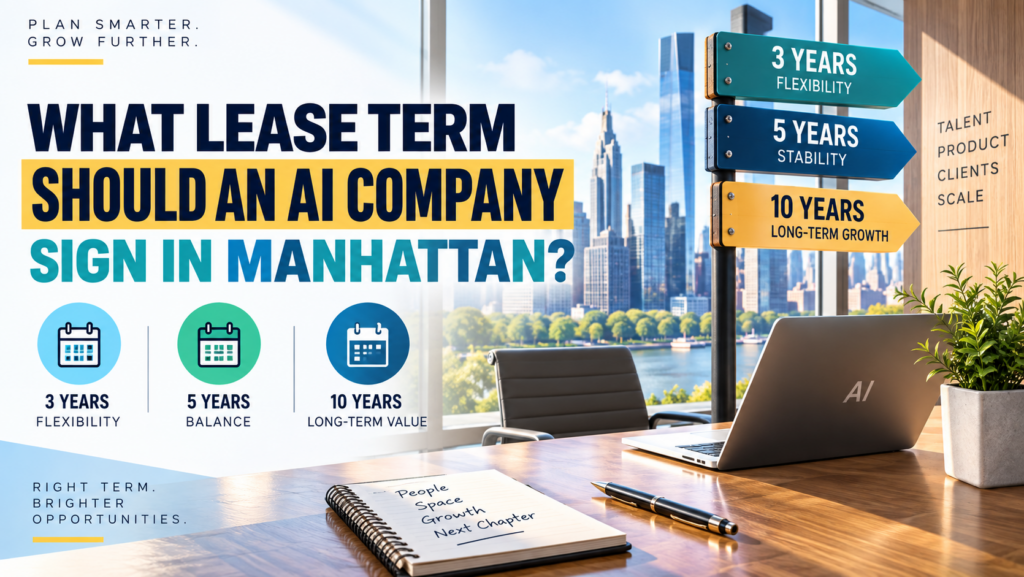
Mid-size tenants also value flexibility in lease term and expansion. Many negotiate for a right of first offer or refusal on adjacent space, anticipating growth if their AI initiatives succeed. Others opt for shorter lease terms or more frequent termination options (with penalties) as an escape hatch, given the uncertainty of how their space requirements might change in a few years. Landlords historically prefer stable, long-term deals, but in the current market – with lots of vacant space – they are more open to creative arrangements. The key for tenants is to avoid being locked into a configuration that could become obsolete. For instance, a law firm may have been fine with all private offices pre-AI; now if they’re adopting AI that automates administrative tasks, they might shrink support staff and repurpose some offices into collaborative zones. A rigid lease shouldn’t prevent them from doing that. In summary, build in as much flexibility as you can, so your office can evolve with your company and technology.
4. Transparency on Smart Building Benefits
When a building is marketed as “smart” or AI-enhanced, tenants should seek clear information on what that means for them – and even try to capture some benefits contractually. For example, if a landlord has installed AI-driven energy management that reduces the building’s energy usage by 20%, will the tenant’s utility bill (often passed through in expenses) be proportionally lower? If yes, that’s a great advantage – possibly lower operating costs in the long run. Tenants are starting to inquire about energy analytics data, asking landlords to provide reports on how efficient the building is and how upgrades might save them money or improve comfort. It’s also reasonable to request that if the building receives some incentive (like a rebate for reducing usage at peak times using AI), tenants get a fair share if they were instrumental in making it possible (for instance by agreeing to reduced HVAC after hours).
Additionally, tenants value tech amenities that actually work for them, not just look good on a brochure. If a building offers an AI-based tenant experience app (to book amenities, report issues, etc.), tenants might want to know: is there training for staff to use it? Is there support if it doesn’t work? Essentially, they are asking landlords to commit to maintaining these high-tech features, not letting them fall into disrepair after the lease is signed. In some cases, firms are even negotiating service level agreements (SLAs) for critical systems – for instance, requiring that the building’s internet connectivity or HVAC have certain uptime percentages, with remedies if those aren’t met. While this level of detail is still more common in data center leases than office leases, it shows the growing influence of tech expectations on real estate deals. Tenants who understand the value of these AI-era features will be diligent in making sure they reap the benefits promised by an AI-ready office, whether that’s cost savings, improved productivity, or both.
5. Plug-and-Play Spaces as a Shortcut
One often-overlooked strategy for tenants seeking an AI-ready office is to consider furnished or pre-built spaces, including subleases from larger companies. Many mid-size tenants have found great value in taking over a space that’s already outfitted with modern furniture, fixtures, and IT infrastructure. For example, when a big tech firm downsizes or relocates, they might leave behind a fully cabled floor with high-end workstations, conference room AV systems, and even a small data room complete with cooling and racks. By negotiating an assignment or sublease, a new tenant can step into an “instant” AI-ready setup without the initial capital expenditure. In fact, furnished subleases can cut months off your move-in schedule and save hundreds of thousands of dollars on build-out costs, since the previous tenant’s investment becomes your gain. We’ve seen scenarios where a media company or professional services firm subleasing space from a tech giant inherits not just desks and chairs, but also advanced network equipment, security systems, and collaborative tech tools that would have been expensive to install from scratch.
If going this route, tenants should still perform due diligence: test the equipment and connections, ensure the building’s base infrastructure can support your specific needs, and clarify responsibilities. Often it’s wise to bake in protections in the sublease agreement, such as caps on restoration costs (so you’re not on the hook for removing all that cabling later) and data security measures if using the former tenant’s wiring. Nonetheless, for companies on a tight budget or timeline, plug-and-play spaces provide a quick entry into AI-enabled offices. Many sublease opportunities in Manhattan’s market today come from tech-forward companies, given the recent downsizing in the tech sector, so it’s a fertile hunting ground for hidden gems that are AI-ready.
Where Are Manhattan’s AI-Ready Offices?
As we’ve hinted, certain neighborhoods and building types in Manhattan are at the forefront of this AI-ready office movement. Geography can influence both the infrastructure available and the kind of tenants clustering there:
- Midtown West & Hudson Yards: This area, including the new Hudson Yards district and the Penn Station vicinity, features many of the newest Class A towers. Buildings here were constructed with massive infrastructure capacity and are often marketed as smart buildings with cutting-edge amenities. They attract finance and tech companies willing to pay premium rents for top quality. For example, One Manhattan West and the revamped Farley Building (across from Penn Station) boast things like mega-watt power supplies, destination-dispatch elevators, and rooftop event spaces with all the tech trimmings. These towers position themselves as AI-integrated workplaces where everything from the lobby to the HVAC is optimized by algorithms. A tenant in this submarket can expect to find $100+ per sq. ft. rents but also enjoy features like ultra-fast elevators and possibly even robotic parking or drone-ready rooftops in some cases. It’s the high end of AI-ready in NYC.
- Hudson Square & SoHo: In contrast to Midtown’s glass towers, the Hudson Square area (west of Soho) and nearby SoHo itself have a stock of former printing presses and warehouses now serving as creative offices. This district has turned into a media and tech corridor, home to design firms, ad agencies, and AI-driven startups alike. The buildings may be lower-rise and historic, but as mentioned earlier, they benefit from strong connectivity (some are near major internet junctions) and a creative vibe. AI companies that work in fields like generative design, multimedia, or marketing tech find this area attractive. The vibe is more “loft with a fiber backbone” – you might get exposed brick and big windows, and just down the block sits a data switching center or a building Google owns. Rents here vary widely, but a well-outfitted loft might run in the $70s-$80s per sq. ft., a relative bargain for the tech capabilities you get. We also see interesting hybrid spaces here, like new construction boutique buildings that blend high ceilings and terraces with brand-new infrastructure to lure tenants who want something different from a Midtown high-rise.
- Downtown & FiDi (Financial District): Lower Manhattan has a mix of aging office towers and thoroughly modernized ones, plus some new developments. A key advantage downtown is proximity to telecom hubs – 60 Hudson Street (a famous carrier hotel with internet exchanges) is in Tribeca, and 32 Avenue of the Americas (another telecom building) is in SoHo bordering FiDi. Tenants that need ultra-low latency or direct connections to exchanges (like certain fintech or algorithmic trading firms) often cluster in this end of town. Additionally, the Downtown market has been more depressed rent-wise, so a mid-size firm might snag a high-spec space for less cost than Midtown. Buildings around the World Trade Center and Fulton Center, for instance, are quite modern and offer strong infrastructure, but rents can be 20-30% lower than equivalent Midtown buildings. FiDi also has conversions – some older offices turning to residential or mixed-use – but those that remain office are trying hard to attract new tenants, often by adding amenities and tech upgrades. If you’re a tenant who values connectivity and cost savings over prestigious address, parts of Downtown can provide a very solid, AI-friendly home base.
- Other Notables: Chelsea & Flatiron deserve a mention given their importance in the tech scene (Google’s campus at 111 8th, IBM’s new Watsonx lab at One Madison in Flatiron, etc.). These areas are essentially extensions of Midtown South’s tech hub, mixing new and old buildings. Many buildings here are boutique tech havens, and the neighborhood is popular for AI startups and established tech companies alike. Also, Brooklyn and Long Island City in the outer boroughs are emerging as satellite options for AI companies (with developers pitching AI-focused co-working hubs there), but that’s another story – our focus is Manhattan, which remains the primary draw for its talent pool and infrastructure density.
In summary, Manhattan’s AI-ready offices aren’t confined to one spot – they range from Uptown towers to Downtown lofts. However, a common thread is that tech-oriented firms are gravitating to places that either have cutting-edge new construction or have seen significant retrofits for tech infrastructure. Tenants should consider not just the building, but its location’s ecosystem: Are you near like-minded companies and relevant resources (data centers, universities, talent)? For many, being in a growing “AI cluster” can spark collaborations and give access to specialized services. For example, a robotics startup in a Brooklyn Navy Yard co-working space might benefit from a shared lab; similarly, an AI finance startup near Wall Street might plug into the fintech networking scene. Manhattan offers several such clusters, and the smart bet is to align with an area that complements your industry and tech needs.
Balancing Innovation with Budget: The Mid-Size Tenant’s Dilemma
Mid-size tenants (roughly 10,000–50,000 RSF of space) have a unique challenge. They are large enough to need sophisticated office features but often have budget constraints and growth uncertainty that large corporations don’t. Navigating the AI-ready office trend requires them to strike a balance between embracing innovation and keeping costs sustainable.
From a cost perspective, not every company can afford the newest smart building in Hudson Yards – and not every company needs to. For some businesses, a traditional office space (with basic infrastructure and lower rent) might suffice if their AI use is limited to typical cloud software. For instance, a nonprofit or a lean professional firm might opt for a Class B building in the Financial District at $50/sq. ft., deciding that fancy AI features are unnecessary for their work. The savings on rent can then be invested in their core mission or hiring more staff. On the flip side, a mid-size fintech or media company might determine that a smarter, tech-rich environment provides returns in productivity and talent retention that justify a higher rent. If AI is central to your business model, the last thing you want is an office that hampers your progress (be it through slow internet, power outages, or an uninspiring environment that makes it hard to recruit top engineers).
One way to conceptualize this is to compare the value proposition of different building types:
- A traditional older building = lowest cost, adequate for basic needs, but limited tech capacity (good for budget-first decisions).
- An AI-integrated modern building = moderate to high cost, but comes with efficiency gains, prestige, and ready-to-use tech (ideal for those who want a middle ground of image and innovation).
- A data-center grade or tech hub building = highest cost (premium rents) but offers mission-critical infrastructure like ultra-redundant power and direct fiber access (necessary for companies where milliseconds or 100% uptime is life-or-death).
Many mid-size firms will fall in the middle category: they want some of the benefits of the newest tech-forward buildings without breaking the bank. To achieve this, they often:
- Pick a secondary location that’s improving (e.g., west Chelsea instead of Plaza District) to get a modern space at slightly lower cost.
- Take slightly smaller space but in a better building – prioritizing quality over quantity of square footage (since AI might help them use space more efficiently, this can work).
- Leverage subleases or pre-built spaces to save on upfront costs, as discussed earlier, effectively getting a high-tech fit-out at a discount.
- Negotiate extras: A tenant might agree to a somewhat higher rent if the landlord throws in additional tenant improvement dollars for, say, installing a specialized AI demo room or extra soundproofing. Or negotiate a free rent period that frees up budget to invest in internal tech infrastructure once moved in.
It’s also worth noting that mid-size tenants have more options now than a few years ago. The soft office market in NYC means even some Class A landlords are keen to fill space and may be willing to deal on terms that were previously non-negotiable. This can include things like shorter leases, more renewal options, or helping finance tech upgrades in the space. Mid-sized firms should seize this moment to lock in favorable deals that equip their offices for the future.
Finally, mid-size companies should stay forward-looking but pragmatic: plan for growth of AI in your operations (you might need that extra server closet sooner than you think), but also remain flexible. The AI field is evolving quickly; today’s must-have (e.g., a certain data visualization wall) might be obsolete in five years, replaced by something we can’t yet predict. By creating an office environment that is fundamentally adaptable and negotiating leases that allow change, tenants can ensure they won’t be stuck with yesterday’s tech tomorrow.
Conclusion: Navigating Manhattan’s AI-Driven Office Future
Generative AI is not a passing fad – it’s becoming a core component of how we work and compete in nearly every industry. In Manhattan’s office market, this translates into tangible changes: from the design and retrofitting of buildings to the fine print of lease agreements, AI is influencing decisions at every level. Tenants who embrace these changes can gain a competitive edge, whether through improved employee productivity, lower operating costs, or simply by projecting a cutting-edge image. Landlords, for their part, are actively reinventing properties to meet the rising demand for AI-ready features, ensuring that Manhattan remains at the forefront as a global business hub.
For tenants, especially those in the mid-size range, the key is to be informed and proactive. Identify which AI-related features matter most for your business and seek out spaces that provide them, directly or via negotiation. Don’t be afraid to ask questions about a building’s tech capabilities – in this era, it’s as important as asking about the nearest subway line or the quality of the lobby. Also, think holistically: an AI-ready office isn’t just about tech specs, but about empowering your people to work better. Sometimes that means high-tech solutions (like intelligent video conferencing), and sometimes it means human-centric touches (like a quiet room free from digital distraction). The ultimate goal is a workplace where emerging technology and human creativity amplify each other.
Manhattan offers a vast landscape of office possibilities, from cloud-connected skyscrapers to adaptive lofts filled with potential. The common thread is that the most sought-after spaces will be those that can adapt to whatever the future holds. As one industry strategist noted, everyone might be back in the office now, but they’ve brought their robots with them. In other words, the modern office is becoming a cohabited space for humans and AI assistants. Preparing for that reality is not just prudent – it’s essential for any tenant planning to thrive in the coming decade.
We are here to help. As Manhattan’s workplaces evolve with generative tech, our team stays on top of these trends to guide you. Whether you need a turnkey smart suite or advice on negotiating for better tech amenities, we have the expertise to match you with an office space that meets both your business requirements and your budget. The AI revolution in the workplace is exciting and fast-paced – and with the right space, you can harness its full potential. Contact us today to explore AI-ready offices in Manhattan and take your next step into the future of work.
Fill out our 📋 online form or give us a call today 📞 212-967-2061 — let’s find the right office for your business.