110 East 42nd Street
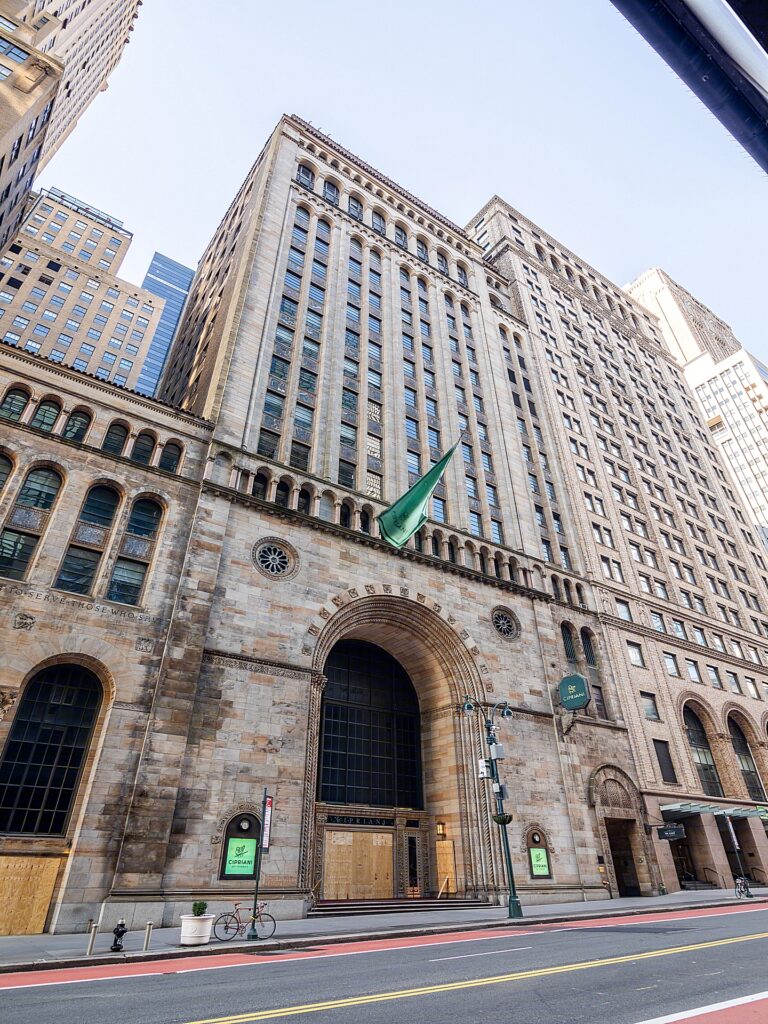
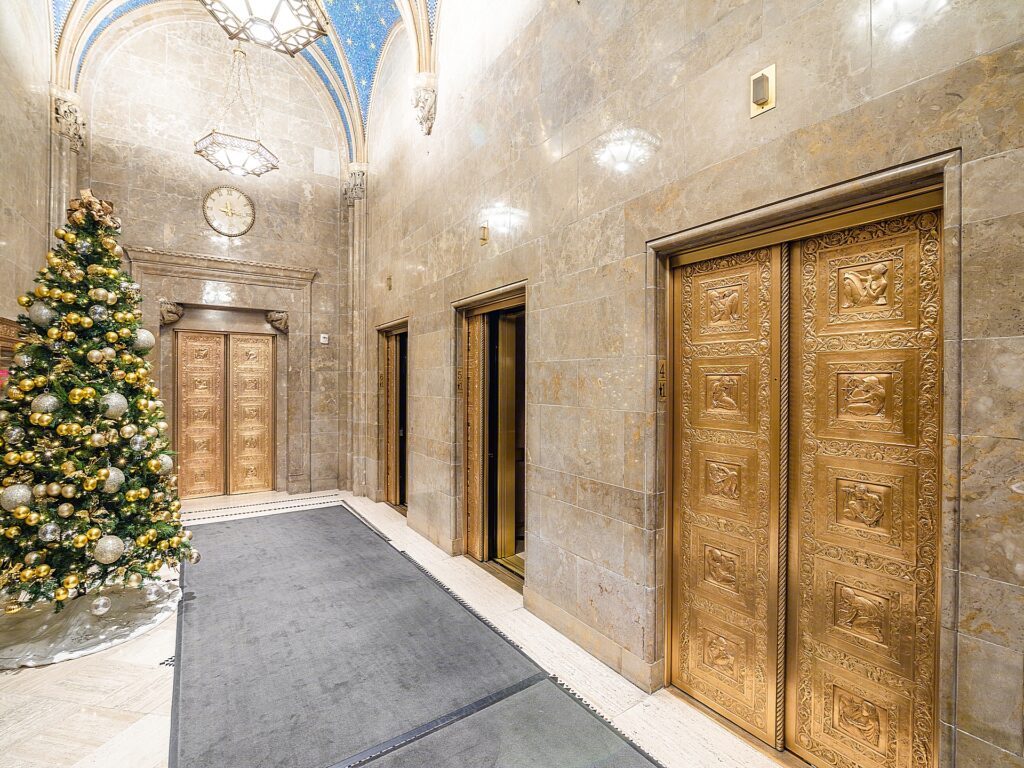
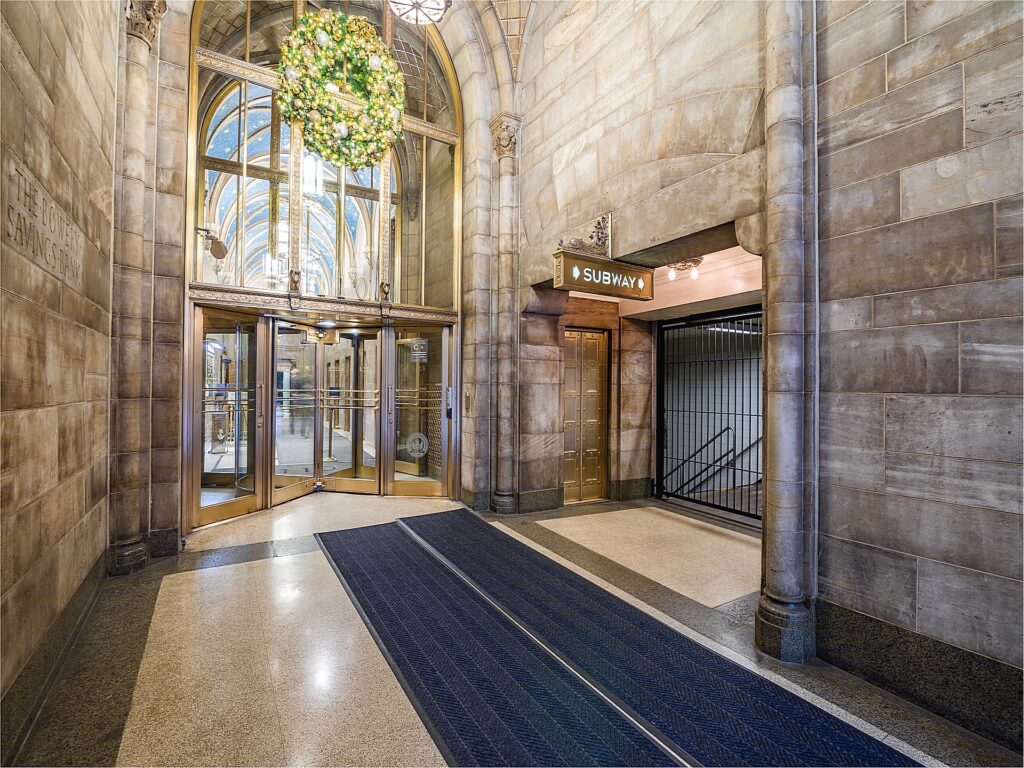
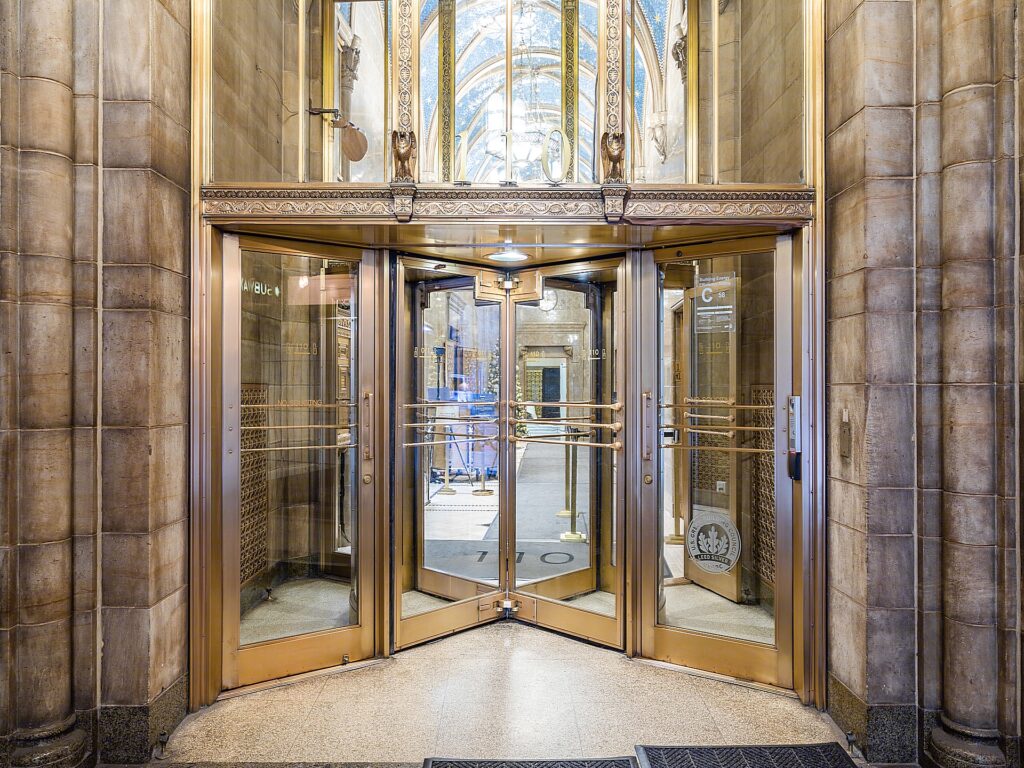
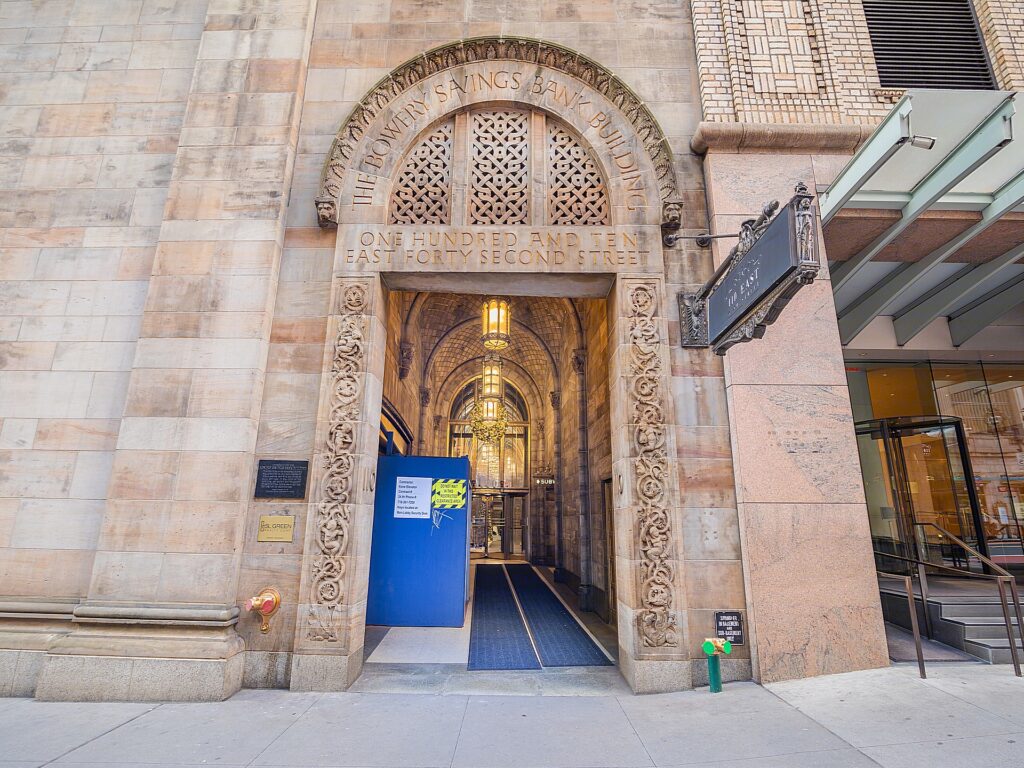
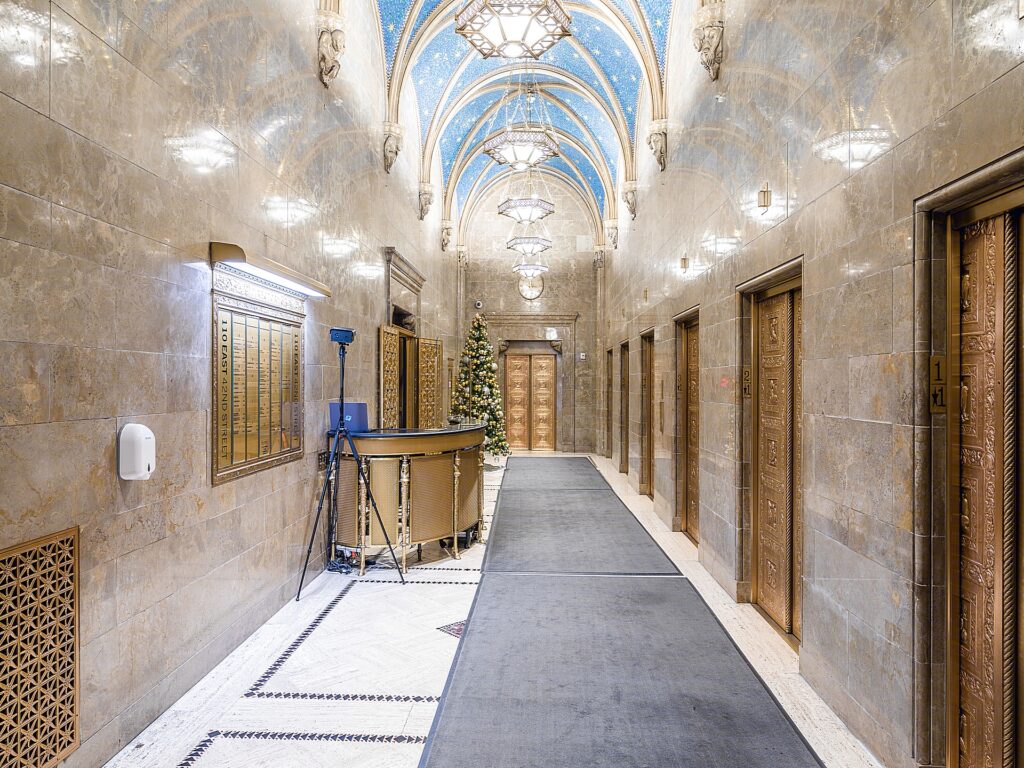
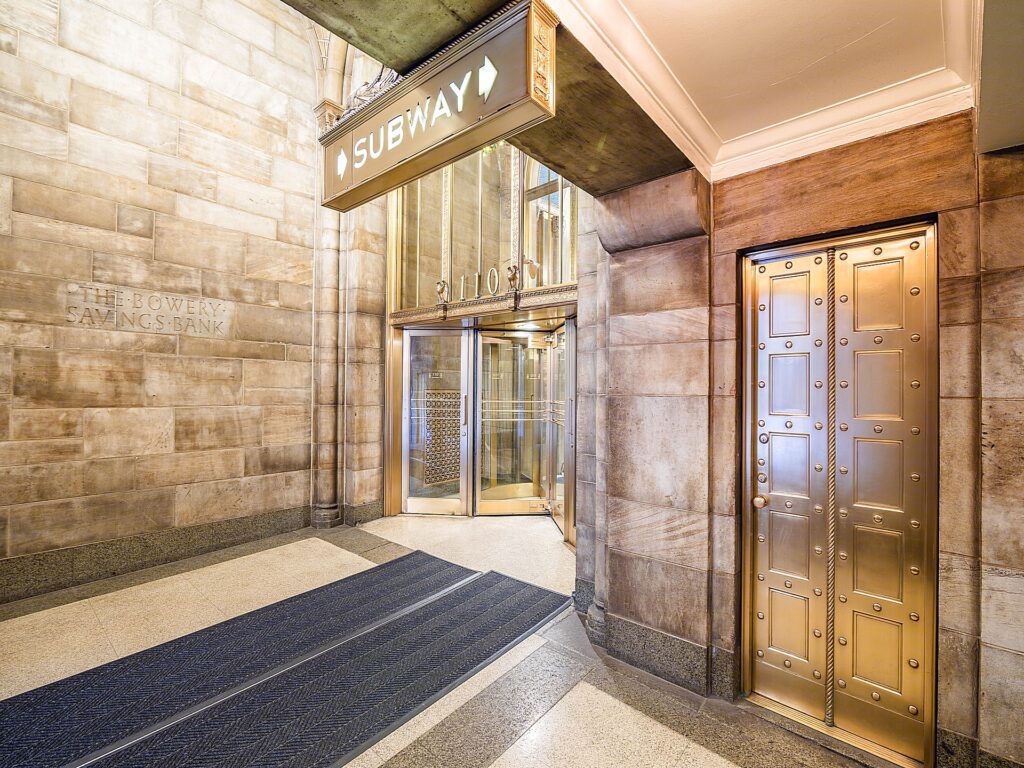
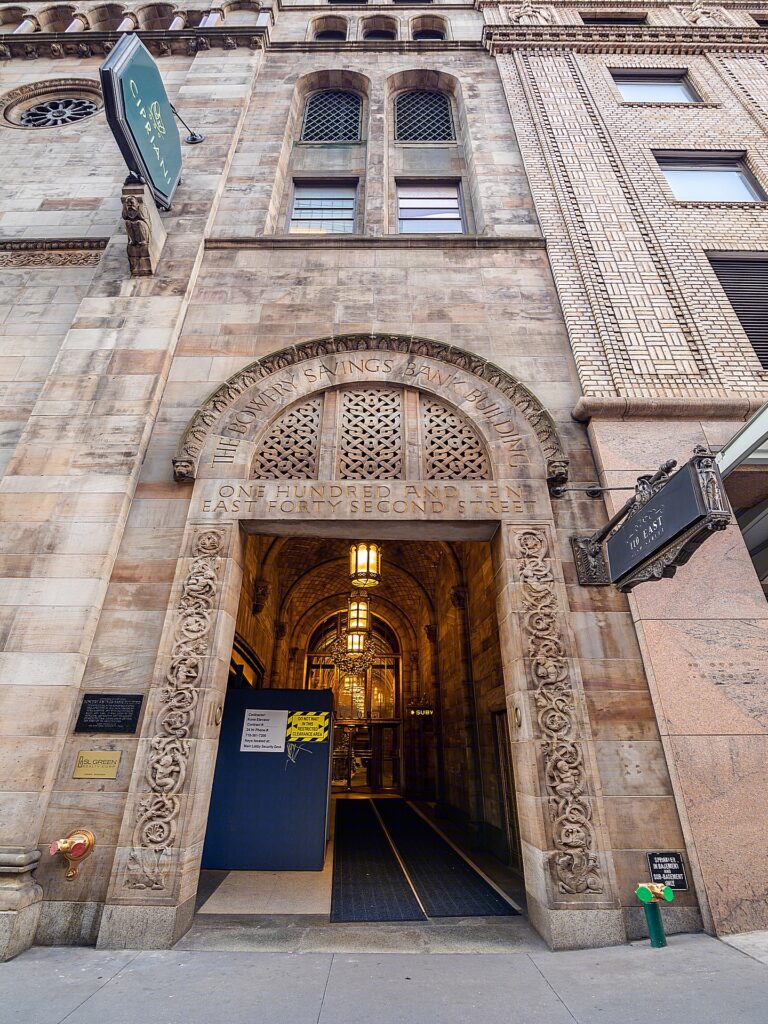
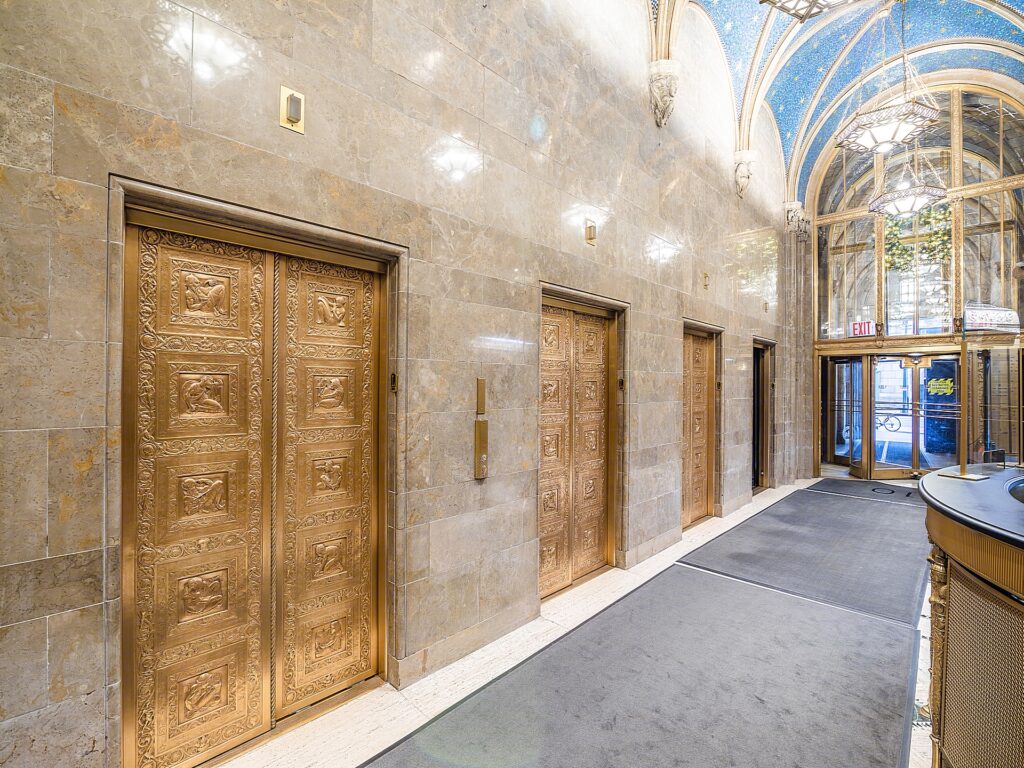
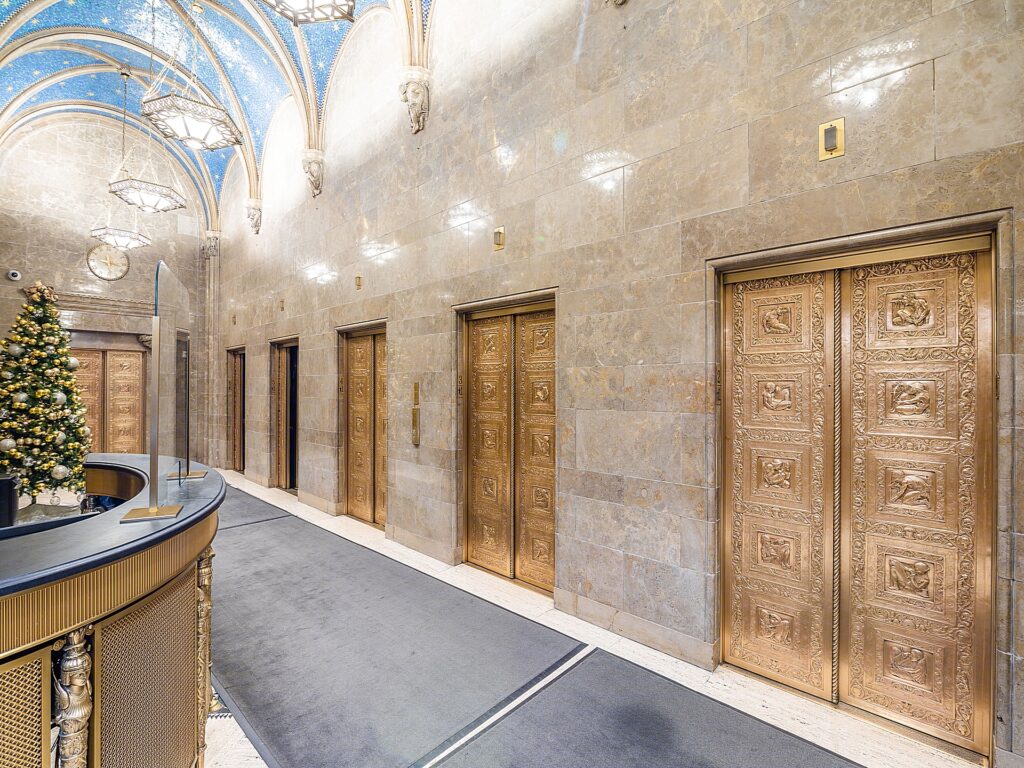
110 East 42nd Street is one of Midtown Manhattan’s most architecturally distinctive office buildings, positioned directly in the Grand Central submarket—arguably the most transit-connected office location in New York City. Originally completed in 1923 as the Bowery Savings Bank building, the property blends historic landmark character with modern office functionality, making it a unique option for tenants who value image, access, and presence.
Location & Accessibility
Situated between Park and Lexington Avenues, the building sits steps from Grand Central Terminal, providing immediate access to the 4, 5, 6, 7, and Shuttle subway lines, Metro-North Railroad, and the expanding One Vanderbilt transit concourse. For companies prioritizing employee commute efficiency, client accessibility, and regional connectivity, this location consistently ranks among the most strategic in Manhattan.
Architecture & Identity
The building is best known for its grand, Romanesque Revival design, featuring a monumental limestone façade and one of the most dramatic interior spaces in the city. The former banking hall—now operated as Cipriani 42nd Street—is a soaring, cathedral-like space with marble columns, vaulted ceilings, and ornate detailing. While this portion serves as an event venue, it significantly elevates the building’s brand identity, offering tenants a level of prestige and visual recognition rarely found in typical office assets.
Office Space Profile
Above the landmarked base, the building offers boutique-style office floors that appeal to firms seeking character over commodity space. Layouts tend to favor perimeter offices and windowed work areas due to the building’s classic construction, with opportunities for creative buildouts that blend prewar aesthetics with modern workplace design. This makes the property particularly attractive to professional services firms, boutique financial groups, family offices, and design-forward companies.
Tenant Experience & Positioning
Unlike large-scale glass tower developments, 110 East 42nd Street delivers a more intimate tenant experience with a strong sense of identity. The presence of a globally recognized event venue within the building enhances its profile for hosting client functions, corporate events, and brand-driven gatherings. Additionally, tenants benefit from immediate proximity to Midtown East’s dense concentration of restaurants, hotels, and corporate headquarters.
Why Tenants Consider 110 East 42nd Street
For tenants evaluating office space in Midtown Manhattan, this building stands out for three primary reasons: its unmatched proximity to Grand Central, its architectural prestige, and its boutique office environment within a landmark structure. It is not a commodity Class A glass tower, but rather a differentiated asset that offers character, branding value, and a sense of permanence—qualities that can be critical for firms focused on image and long-term positioning in New York City.
Core Building Metrics
110 East 42nd Street, historically known as the Bowery Savings Bank Building, is a mid-rise office property with a strong prewar structural profile and a landmarked base. The building rises approximately 21 stories and reaches an estimated height of around 300 feet, placing it within the mid-scale tier of Midtown East assets rather than the supertall glass tower category.
The property contains approximately 300,000 to 325,000 rentable square feet, with floor plates that vary depending on the level due to the building’s historic base and stepped massing. Typical upper floors are generally in the range of 10,000 to 18,000 square feet, making them well-suited for boutique full-floor users or mid-sized tenants rather than large corporate headquarters requiring expansive contiguous blocks.
Floorplate & Layout Characteristics
Because of its 1920s construction, the building features thicker structural walls and a higher window ratio along the perimeter, which translates into strong natural light penetration and a layout that favors perimeter offices and windowed workspaces. Unlike modern column-free glass towers, tenants should expect interior columns and a more compartmentalized planning grid, which can be advantageous for law firms, financial services, and professional users that prioritize private offices.
The lower portion of the building includes the landmarked banking hall, which spans a significant footprint and features soaring ceiling heights exceeding 60 feet. While this portion is not typical office space, it materially impacts the building’s overall massing and identity.
Construction & Systems
The building is constructed with a steel frame and masonry exterior, typical of early 20th-century New York office assets. The façade is composed primarily of limestone and stone detailing, contributing to both durability and landmark status.
Mechanical systems have been upgraded over time to support modern tenancy, though they may not match the redundancy levels of newly built Class A towers. Tenants can expect standard commercial HVAC distribution, with potential for supplemental systems depending on buildout requirements.
Vertical Transportation
The property is served by a bank of passenger elevators scaled to its mid-rise height. While not as numerous as in larger towers, elevator service is generally efficient due to smaller floor populations and boutique tenancy sizes.
Building Class & Positioning
110 East 42nd Street is typically classified as a Class B+/A- hybrid asset, depending on the specific floor and level of renovation. Its landmark status, architectural detail, and Grand Central proximity elevate it beyond standard Class B stock, while its prewar infrastructure differentiates it from newly constructed Class A towers.
Structural Identity & Tenant Fit
From a technical standpoint, the building is best suited for tenants in the 5,000 to 20,000 square foot range, especially those that can leverage its full-floor identity, strong perimeter light, and branding presence tied to a historic structure. Large-scale users seeking 50,000+ square feet on contiguous floors would typically look elsewhere in Midtown East.
Summary for Tenants
Technically, 110 East 42nd Street delivers a mid-rise, mid-size office environment with efficient boutique floor plates, strong light lines, and historic construction quality. Its specifications align best with tenants who value identity, location, and layout character over sheer scale and modern glass tower uniformity—a key distinction when comparing options in the Grand Central submarket.