Where Are Most Hedge Funds Located in NYC Offices?
Hedge funds in New York are not randomly distributed across Manhattan. They cluster with precision—around capital, talent, infrastructure, and image. If you understand where they concentrate (and why), you gain a strategic advantage not just in location—but in how your firm is perceived, staffed, and scaled.
This guide does two things:
- Defines exactly where hedge funds are located in NYC (with real buildings and tenants)
- Explains how that geography applies to a hedge fund searching for office space today
The Core Answer (Geography First)
Most hedge funds in New York City are concentrated in three primary office corridors:
1. Plaza District (57th Street to 42nd Street, Park & Madison Avenues)
2. Grand Central / Midtown East
3. Select Park Avenue South / Flatiron pockets
Downtown Manhattan plays a secondary role, with very few true hedge fund clusters compared to Midtown.
1. The Plaza District (Primary Hedge Fund Corridor)
This is the epicenter of hedge fund office space in NYC.

Why hedge funds cluster here:
- Proximity to institutional capital
- Prestige and signaling to investors
- Trophy buildings with top-tier infrastructure
- Privacy and controlled access environments
Notable Buildings + Tenants
• 9 West 57th Street (Solow Building)
- Paulson & Co.
- Third Point (historically)
- Hedge fund-heavy tenant roster
• 375 Park Avenue (Seagram Building)
- BlueMountain Capital (historically)
- Private investment firms and capital groups
• 280 Park Avenue
- D. E. Shaw
- Major financial firms and asset managers
• 767 Fifth Avenue (General Motors Building)
- Appaloosa Management
- High-profile investment tenants
• 432 Park Avenue (office component / nearby cluster influence)
- Ultra-high-net-worth adjacency and capital proximity
What This Means
If a hedge fund says:
“We want to be in the right place”
They are usually referring to this exact corridor.
This is not about convenience.
It is about alignment with capital and credibility.
2. Grand Central / Midtown East (Operational Core)
This is the second major hedge fund cluster, offering a balance of access and prestige.
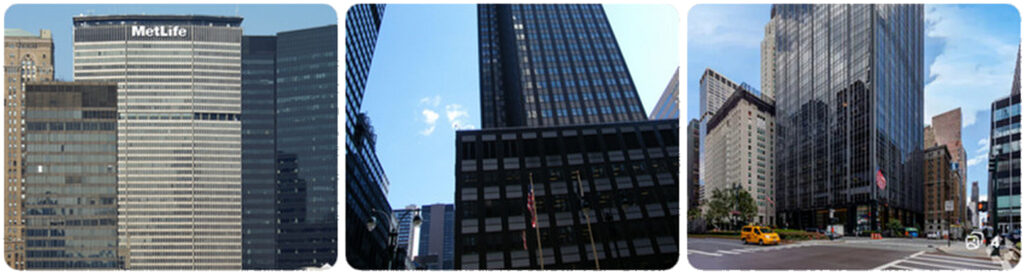
Why hedge funds choose this area:
- Direct access to Grand Central (commuter advantage)
- Slightly better pricing than Plaza District
- Institutional-grade buildings
- Strong infrastructure for trading operations
Notable Buildings + Tenants
• 245 Park Avenue
- Major financial tenants
- Hedge fund and asset management presence
• 299 Park Avenue
- Multiple investment firms
- High-end Midtown East tower
• 277 Park Avenue
- Global financial firms
- Strong institutional ecosystem
• MetLife Building (200 Park Avenue)
- Large-scale financial tenants
- Direct Grand Central integration
What This Means
This submarket attracts hedge funds that want:
- Prestige—but not at peak pricing
- Accessibility for teams commuting from suburbs
- Efficient, scalable office layouts
3. Park Avenue South / Flatiron (Selective, Strategic)
This is a smaller but notable pocket—especially for newer or differentiated funds.
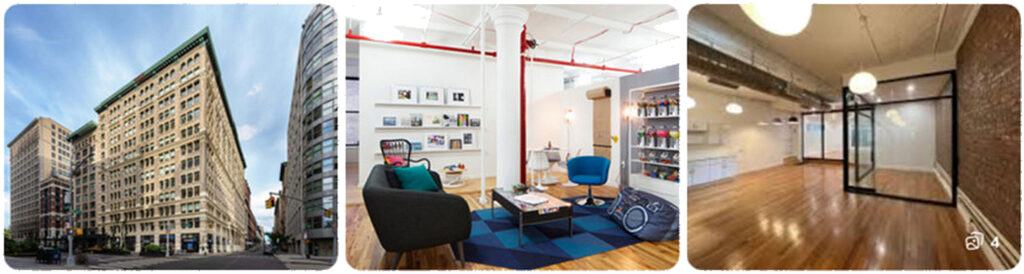
Why some hedge funds choose this area:
- Creative office environments
- Slightly less rigid corporate feel
- Pricing flexibility
- Appeal to younger teams or hybrid strategies
Notable Buildings + Tenants
• 250 Park Avenue South
- Investment firms and family offices
• 215 Park Avenue South
- Boutique financial firms
• Flatiron / NoMad loft buildings
- Smaller funds
- Emerging managers
- Hybrid investment/tech strategies
What This Means
This is not the “default” hedge fund location—but it is growing for firms that want:
- Identity over tradition
- Flexibility over formality
4. Downtown Manhattan (Limited Hedge Fund Presence)

Downtown (Financial District, World Trade Center) has:
- Large financial institutions
- Banks and legacy finance firms
- Some asset managers
But very few hedge fund clusters compared to Midtown.
Why?
- Distance from Midtown capital networks
- Less alignment with hedge fund branding
- Historically institutional—not boutique or fund-driven
The Real Insight (Why This Pattern Exists)
Hedge funds are not just choosing offices—they are choosing:
• Who they are near (investors, allocators, peers)
• How they are perceived (institutional vs emerging)
• How they operate (team structure, trading, privacy)
Location is a signaling mechanism.
Now Shift: What This Means If You Are a Hedge Fund Looking for Office Space Today
This is where most content stops—but this is where your decision actually begins.
1. Your Location Signals Your Strategy
Before you even look at space, your location answers:
• Are you institutional or emerging?
• Are you raising capital or managing it?
• Are you competing for talent—or optimizing cost?
Plaza District → “We are established”
Midtown East → “We are scaling”
Flatiron / South → “We are different”
2. Hiring Is a Location Decision
If your team lives in:
- Connecticut / Westchester → Grand Central matters
- Manhattan → flexibility across Midtown
- Brooklyn / Downtown → Midtown South or Penn proximity matters
A mismatch here creates daily friction.
3. Layout Matters More Than Neighborhood
Hedge funds require specific infrastructure:
• Trading floors or dense workstation areas
• Private offices for partners
• Conference rooms for investor meetings
• Secure IT and data environments
Not every “nice building” supports this.
4. Privacy vs Exposure
Some hedge funds want:
- Discreet entrances
- Minimal branding
- Controlled access
Others want:
- Visible presence
- Recognizable addresses
- Investor-facing environments
Your building choice determines this—not just your suite.
5. The Market Right Now (Opportunity Window)
The current Manhattan office market offers:
• Increased availability in top-tier buildings
• Negotiable lease structures
• High-end prebuilt spaces
• Sublease opportunities from financial firms
This creates a rare moment where hedge funds can:
- Enter buildings that were previously inaccessible
- Upgrade image without full cost exposure
- Lock in long-term positioning
6. The Mistake Most Hedge Funds Make
They search like this:
“Office space near Park Avenue”
Instead of asking:
• What building aligns with our investors?
• What layout supports our trading operations?
• Where will our next hires come from?
• What image do we need to project in 2 years?
The result is often a mismatch between:
- space
- team
- growth
Final Takeaway
Most hedge funds in NYC are located in:
• The Plaza District (core)
• Grand Central / Midtown East (operational expansion)
• Select Midtown South pockets (strategic alternatives)
But copying that pattern blindly is not strategy.
The real advantage comes from understanding:
- why those firms chose those locations
- and whether those same reasons apply to you
If You Are Evaluating Hedge Fund Office Space in NYC
The right answer is not a neighborhood—it is a combination of building, layout, access, and positioning.
There are spaces right now in:
- Park Avenue towers
- Grand Central-adjacent buildings
- Off-market and sublease inventory
that align very differently depending on your fund’s structure.
Seeing those side-by-side—against your hiring plan, investor profile, and operational needs—is what turns this from a search into a decision.
That is where the advantage is.
Fill out our 📋 online form or give us a call today 📞 212-967-2061 — let’s find the right office for your business.