Terms of the Lease
The Clauses That Define Cost, Control, and Risk in a Manhattan Office Lease
The most important part of any office lease is not the space itself—it is the terms that govern how much you pay, how long you are committed, and what happens when circumstances change. In Manhattan, these terms can vary widely by building, landlord, and market cycle, which makes understanding them essential before signing.
This section breaks down the core lease terms that have the greatest impact on a tenant’s financial exposure and operational flexibility.
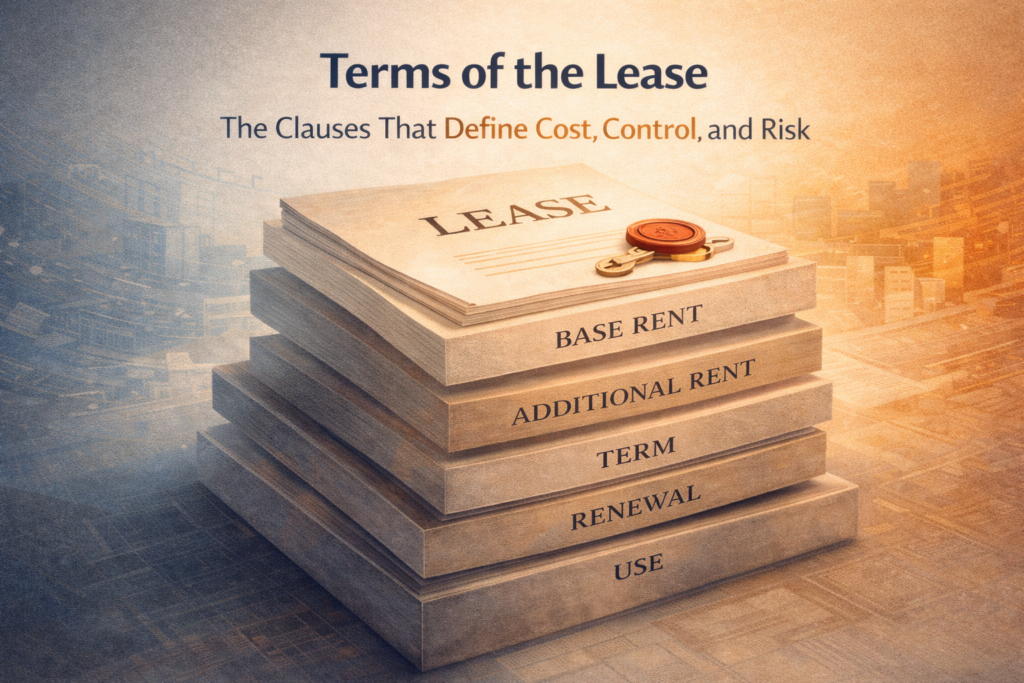
Base Rent
How Office Rent Is Actually Calculated
Base rent is the minimum rent you owe for occupying the space. It is typically quoted as an annual dollar amount per rentable square foot, even though payments are made monthly.
Base rent is calculated by multiplying:
- The rentable square footage of the space
- By the agreed rent per square foot
This means base rent is directly affected by how a building calculates rentable versus usable area, which is why understanding loss factor is critical before agreeing to pricing.
In Manhattan, base rent is determined by market conditions—what comparable buildings are achieving for similar space in the same submarket. Two spaces with identical layouts can command different rents based on building class, location, and landlord strategy.
Additional Rent
The Costs That Increase Over Time
Base rent is rarely the full cost of occupancy. Most Manhattan office leases require tenants to pay additional rent, which covers a share of the landlord’s operating costs.
Additional rent may include:
- A share of building operating expenses
- A share of real estate tax increases
- Fixed annual rent escalations
- Other pass-through costs tied to building operations
These expenses often increase annually, which means tenants should evaluate future cost exposure, not just first-year rent.
Experienced tenants request historical operating expense and tax data to understand how these costs have trended over time. A space with lower base rent but aggressive escalations can become more expensive than a higher-priced alternative within a few years.
Lease Term
Balancing Stability and Flexibility
The lease term defines how long you are legally obligated to occupy—and pay for—the space.
Shorter-term leases provide flexibility but less security. Longer-term leases offer stability but increase long-term risk if business needs change.
In Manhattan office leasing:
- Shorter terms are often favored by newer or fast-evolving businesses
- Longer terms are common for established companies seeking rent predictability
Tenants investing heavily in build-out often prefer longer terms to amortize costs, while tenants prioritizing agility may accept higher rent in exchange for flexibility.
Renewal Options
Protecting Your Future Position
Commercial landlords are not required to renew leases. Without a renewal option, a tenant may face a significant rent increase—or displacement—at the end of the term.
A renewal option gives the tenant the right to extend the lease under predefined conditions. These options typically specify how renewal rent will be determined, such as:
- A fixed percentage increase
- Fair market rent based on comparable properties
Savvy tenants negotiate caps or limits on renewal rent increases to avoid pricing surprises. If fair market rent is used, the lease should outline a clear process for resolving disputes, often involving neutral brokers or appraisers.
Permitted Use
What You Are Legally Allowed to Do in the Space
The permitted use clause defines how the space may be used. For office tenants, this clause should be drafted broadly enough to allow operational flexibility.
A narrowly written permitted use can:
- Restrict future business expansion
- Complicate subleasing or assignment
- Trigger lease violations unintentionally
Most office tenants seek language that allows general office use rather than a narrowly defined business activity. This provides flexibility if the company evolves or if the space is later subleased.
Utilities and Building Services
What Is Included—and What Costs Extra
A landlord is only required to provide utilities and services explicitly stated in the lease. These typically include:
- Electricity
- Heating and air conditioning
- Water and sewer
- Elevator service
Many Manhattan buildings limit HVAC service to standard business hours. After-hours usage often incurs overtime charges, which can materially affect operating costs for teams that work late or across time zones.
Tenants should also understand whether utilities are direct-metered or submetered, as this affects transparency and cost control.
Utility Interruptions and Remedies
What Happens When Systems Fail
Leases often specify how quickly a landlord must respond to service interruptions and what remedies are available if issues persist.
In larger leases, tenants may negotiate:
- Defined response timeframes
- Rent abatements for prolonged interruptions
- Termination rights if disruptions continue beyond a set period
These protections are rarely automatic and must be negotiated explicitly.
Security Deposit
Cash, Letters of Credit, and Negotiation Leverage
Most landlords require a security deposit to protect against default. The amount is typically based on:
- Base rent level
- Tenant financial strength
- Whether a guaranty is provided
Security deposits are commonly equal to several months’ rent. In some cases, landlords accept letters of credit instead of cash, which can preserve liquidity but introduce banking costs.
Tenants with strong financials or a successful operating history may negotiate reductions or partial returns of the deposit over time.
Tenant Takeaways
Lease terms define your financial exposure long after move-in day. Understanding how base rent, additional rent, lease length, renewal options, and operational clauses interact allows tenants to:
- Budget accurately
- Avoid hidden cost escalations
- Preserve flexibility
- Reduce downside risk
The most expensive lease mistakes are rarely obvious at signing—they reveal themselves years later.
Fill out our 📋 online form or give us a call today 📞 212-967-2061 — let’s find the right office for your business.
Source Acknowledgment
Portions of this Commercial Lease Guide are informed by publicly available educational materials published by the New York City Department of Small Business Services. This website is not affiliated with, endorsed by, or acting on behalf of the City of New York or any government agency. All interpretations, explanations, and market commentary reflect independent analysis focused on Manhattan office tenants.