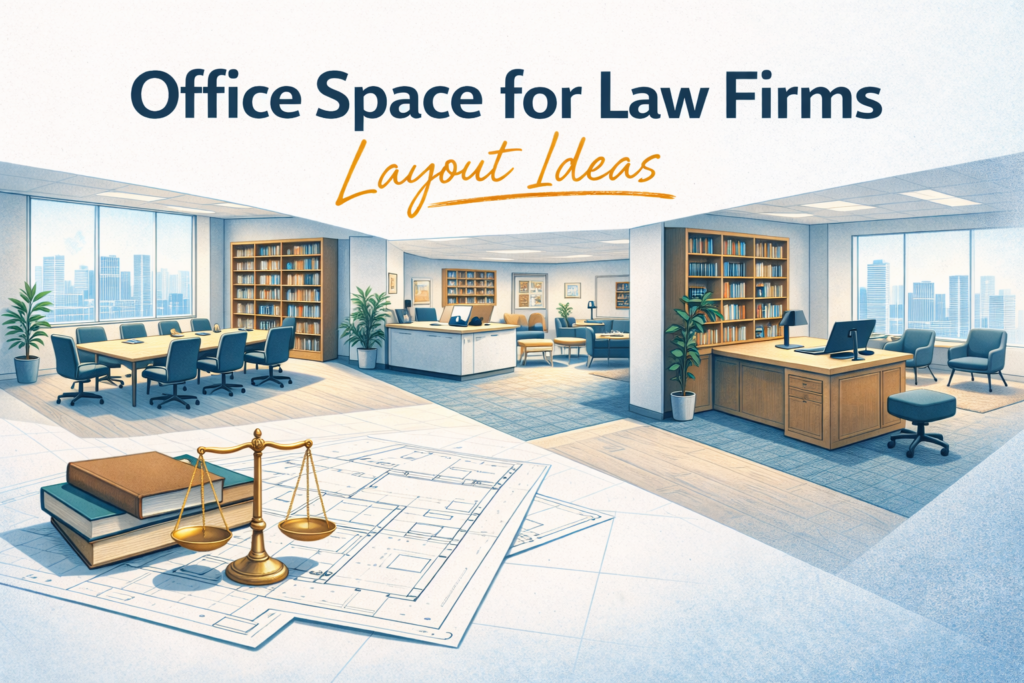
Office Space for Law Firms: Layout Ideas That Actually Work
Designing office space for a law firm in NYC is not about aesthetics—it is about privacy, hierarchy, workflow, and client experience.
Law firms operate differently than startups, tech companies, or general office users. The layout must support:
• Confidential conversations
• Focused individual work
• Structured team collaboration
• A strong client-facing image
Most firms get this wrong by either:
- copying outdated layouts
- or overcorrecting into open-office concepts that do not fit legal work
This guide breaks down the most effective law firm office layouts, how they function, and how to choose the right one based on your firm’s size and strategy.
The Short Answer (If You Need It Fast)
The best law firm layouts in NYC typically include:
• Perimeter private offices for attorneys
• Interior support areas for staff
• Multiple conference rooms (varied sizes)
• A defined reception and waiting area
• Soundproofing and confidentiality measures
👉 The exact mix depends on:
- firm size
- practice type
- client interaction level
1. The Core Principle: Privacy Drives Everything
Unlike most office users, law firms require:
👉 Acoustic privacy + visual separation
Why This Matters:
• Client confidentiality
• Sensitive legal discussions
• Attorney productivity
Strategic Insight:
Any layout that compromises privacy—even slightly—will create operational friction.
2. Classic Law Firm Layout (Still Dominant)
This is the traditional—and still highly effective—layout.
Structure:
• Private offices along the perimeter (window line)
• Interior corridor system
• Staff workstations inboard
• Conference rooms distributed throughout
Why It Works:
• Maximizes natural light for attorneys
• Maintains hierarchy
• Ensures privacy
• Supports focused work
When to Use It:
• Mid-size to large firms
• Litigation-heavy practices
• Firms with frequent client meetings
3. Modern Hybrid Layout (Evolving Model)
Many firms are adapting—but not abandoning tradition.
Structure:
• Mix of private offices + shared offices
• Smaller individual offices
• More collaborative areas
• Flexible conference rooms
Why It Works:
• Reduces footprint
• Supports hybrid work
• Maintains necessary privacy
Strategic Insight:
This is the current direction of many NYC law firms
4. Open Office (Use Carefully)
Some firms experiment with open layouts—but this comes with risk.
Where It Works:
• Junior staff areas
• Paralegal teams
• Administrative zones
Where It Fails:
• Attorney offices
• Confidential discussions
• Client-facing work
Strategic Insight:
Open office is a partial solution—not a full layout strategy for law firms
5. Conference Room Strategy (More Important Than You Think)
Law firms require multiple types of meeting spaces.
Typical Mix:
• Large boardroom (client meetings, presentations)
• Mid-size conference rooms
• Small meeting rooms / breakout rooms
Key Insight:
👉 You need more conference rooms than most office users
Why:
• Simultaneous client meetings
• Internal strategy sessions
• Depositions and legal prep
6. Reception & Client Experience
Your reception area is your firm’s first impression.
Must Include:
• Professional reception desk
• Comfortable waiting area
• Clear separation from work zones
Strategic Insight:
This space communicates:
• credibility
• professionalism
• trust
7. Office Size & Density Planning
Law firms typically use more space per person than other industries.
General Guidelines:
• Attorneys → private offices
• Support staff → shared or open workstations
• Higher square footage per employee vs tech/startups
Why:
• Privacy requirements
• Paper storage (in some practices)
• Larger office footprints
8. Storage & File Management
Even in digital environments, law firms still require storage.
Includes:
• File rooms
• Records storage
• Secure document areas
Strategic Insight:
Ignoring storage needs leads to inefficient layouts later.
9. Soundproofing & Acoustics (Critical Detail)
This is often overlooked—and costly to fix later.
What to Consider:
• Wall construction
• Door seals
• Ceiling treatments
• White noise systems
Why It Matters:
Confidentiality is not optional—it is operational.
10. Practice Type Matters
Different legal practices require different layouts.
Litigation Firms:
• More offices
• More conference rooms
• War rooms / strategy spaces
Corporate / Transactional:
• Balanced office + meeting space
• Less litigation-heavy infrastructure
Boutique Firms:
• Smaller footprint
• More flexibility
• Often hybrid layouts
Strategic Insight:
Layout should reflect how your firm actually works—not industry averages
11. Prebuilt vs Custom Layout
Prebuilt Space:
• Faster move-in
• Lower upfront cost
• Limited customization
Custom Build:
• Fully tailored layout
• Higher cost
• Longer timeline
Strategic Insight:
Many NYC landlords now offer law firm-style prebuilts, reducing the need for full custom builds.
12. The Biggest Mistake Law Firms Make
They either:
• Stay stuck in outdated layouts
OR
• Over-modernize into inefficient designs
The Result:
• Poor space utilization
• Reduced productivity
• Client experience issues
The Right Approach:
👉 Balance tradition with efficiency
The Real Insight (What Actually Drives a Good Layout)
A successful law firm office layout balances:
• Privacy
• Functionality
• Client experience
• Cost efficiency
It is not about:
• copying another firm
• following trends
• maximizing density
How This Applies to You Today
In the current NYC office market:
• High-quality prebuilts exist for law firms
• Larger blocks of space are more negotiable
• Layout flexibility is higher than in prior cycles
What This Means:
You can:
• Upgrade layout quality
• Improve efficiency
• Reduce long-term costs
Final Takeaway
The best law firm office layout is not one-size-fits-all.
It is defined by:
• Your practice type
• Your team structure
• Your client interaction level
• Your growth plans
If You Are Planning a Law Firm Office
The layout decision is one of the most important parts of your lease.
It affects:
• how your team works
• how clients perceive you
• how efficiently you operate
Looking at real spaces—side by side—with layouts that match your firm’s needs is what turns this from theory into a smart decision.
That is where the advantage is.
Fill out our 📋 online form or give us a call today 📞 212-967-2061 — let’s find the right office for your business.