Office Building Security: What NYC Tenants Must Know to Stay Safe and Lease Smart
When Building Security Becomes the Deciding Factor
Security has always mattered. But after the recent tragic lone gunman attack at 345 Park Avenue—the deadliest office building shooting in New York in over two decades—security is no longer just an amenity. It’s now a decisive factor in how, where, and why companies lease office space in Manhattan.
Tenants across industries are asking: Are we safe in our building? Should we relocate to a more secure property? Which NYC neighborhoods offer not just prestige—but protection? This guide answers those questions with a comprehensive, no-nonsense look at what building security really means today, what features matter most, and how tenants can use security to gain peace of mind—without sacrificing budget, image, or location.
What Does “Building Security” Mean in Office Leasing?
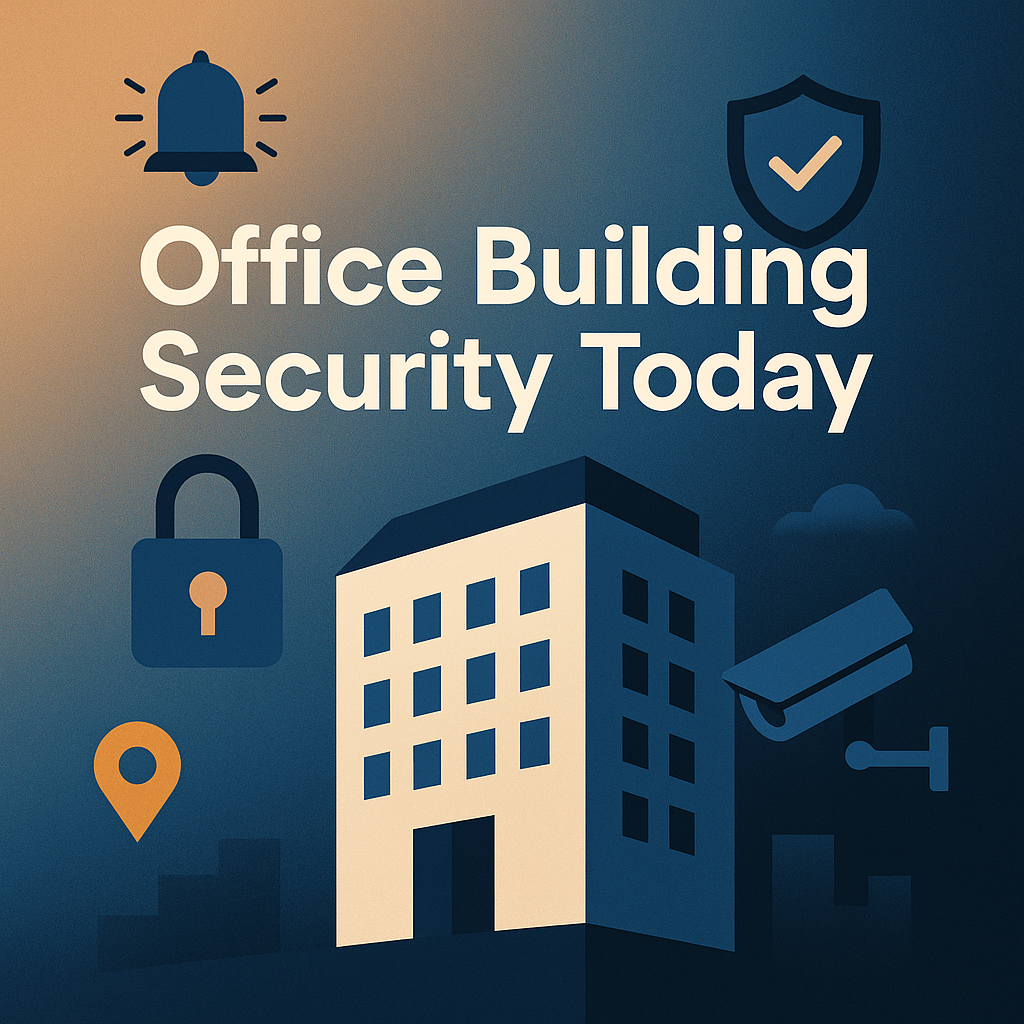
In the context of commercial real estate, building security refers to the integrated systems, technologies, personnel, and protocols in place to protect tenants, employees, visitors, and assets inside an office building. The goal isn’t just to prevent theft—it’s to deter violent incidents, respond rapidly to threats, and create a work environment where your team feels safe at any hour.
Security as an office amenity includes:
- Controlled Access: Keycard turnstiles, facial recognition, and mobile credential systems keep unauthorized individuals out of the building, elevators, and tenant floors.
- 24/7 Monitoring: Live CCTV coverage with AI-driven behavior detection, coupled with security patrols and staffed lobbies.
- Emergency Protocols: Lockdown capabilities, mass notification systems, and coordinated evacuation plans with city responders.
- Visitor Management: Digital check-in platforms and real-time access control to screen and track guests.
- Secure Deliveries: Smart lockers and monitored mailrooms protect against theft and unauthorized entry.
- Cybersecurity Integration: In buildings offering shared networks or smart systems, secure infrastructure is a must.
- Peace of Mind: Just as ergonomic chairs support physical health, robust security supports mental focus and retention—particularly for late-night teams or high-profile executives.
Why Office Building Security Now Ranks Among the Top Tenant Priorities
Security used to be an afterthought. Now, it’s top of mind—right alongside WiFi reliability and HVAC performance. Here’s why:
1. Hybrid Work and the 8 PM Problem
With staggered schedules and unpredictable hours, many employees work well past sunset. Women, in particular, report significantly higher anxiety around safety after 8 PM. Tenants leasing in buildings with weak or nonexistent night protocols face silent liability.
2. Tailgating and Package Theft
Modern criminals don’t smash windows—they walk in behind someone distracted. Tailgating and internal theft have surged in buildings without visitor ID scanning or secure delivery areas.
3. Recruiting and Retention
Top-tier candidates ask about building access controls and safety. In high-competition industries—tech, finance, media—a secure building isn’t a bonus, it’s expected.
4. Insurance and Legal Exposure
Law firms, hedge funds, and private wealth advisors increasingly lease in buildings with access logs, surveillance backups, and AI-triggered alerts because insurance premiums and compliance depend on it.
Who Needs the Highest Level of Office Building Security?
Security expectations vary by industry and function. Here’s how to assess risk:
| Tenant Type | Security Priority | Common Features Needed |
|---|---|---|
| Law Firms & Hedge Funds | Very High | 24/7 access logs, smart surveillance, doorman |
| Tech Startups & Fintech Firms | High | Encrypted mobile access, biometric locks |
| Medical & Healthcare Tenants | Very High | HIPAA-compliant access, private storage, patient privacy controls |
| Creative Agencies & Studios | Medium | Smart delivery lockers, visitor control |
| Nonprofits, Gov Contractors | High | Visitor vetting, lobby attendant, secure data zones |
| Traditional Corporate Tenants | Medium–High | Professional security staff, emergency readiness |
What Modern Building Security Looks Like in NYC (2025 Update)
Let’s break down the security spectrum across building classes.
Class A Office Buildings: Built Like Bunkers
Top-tier buildings like One Vanderbilt, 7 World Trade Center, or Hudson Yards towers offer:
- AI-monitored access gates with facial recognition
- Lobby attendants with law enforcement experience
- Full-floor tenant badge systems and bullet-resistant safe rooms
- Multi-agency response coordination (often including NYPD detail)
- Mobile apps to grant or revoke visitor access remotely
Cost Tradeoff: Class A space in Midtown averages $80–$90/SF. But for financial institutions and law firms, it’s often worth the premium.
Class B/B+ Buildings: Smart Tech on a Budget
You’ll now find powerful, modern systems in Class B spaces—especially in Midtown South and the Flatiron District:
- ButterflyMX and Latch systems with video intercom and cloud credentials
- Smart lockers for secure deliveries
- AI-powered lobby cameras to detect loitering or door-pushing behavior
- Remote access management for hybrid teams
Cost Advantage: Often $30–$50/SF cheaper than Class A buildings—and with similar security outcomes.
Boutique and Loft Spaces: Small Footprint, Big Potential
Some creative buildings in Tribeca or Chelsea now rival larger towers in security thanks to:
- Strategic camera placement
- Motion detection AI
- Tenant-led initiatives like shared mobile access controls
Downside: Without a full-time staff presence, security depends heavily on systems—and tenant discipline.
What Are the Most Secure Office Buildings in Manhattan?
Here are some buildings repeatedly cited for elite-level security:
- One World Trade Center – NYPD collaboration, blast-proof core, integrated ID access
- 7 World Trade Center – Designed post-9/11 with reinforced structure and high-tech surveillance
- 345 Park Avenue – Despite recent tragedy, includes safe rooms, active shooter protocols, and NYPD overtime presence
- AT&T Long Lines Building (33 Thomas St) – Windowless, nuclear-blast resistant, and among the most fortified telecom structures in the world
- Empire State Building – Multi-tiered access, modern scanner tech, and elite private security
- Tower 45 (120 W 45th St) – Kastle Systems, facial recognition, and staff with law enforcement backgrounds
- Federal Reserve Bank of New York (33 Liberty St) – Widely regarded as one of the world’s most secure buildings
What Are the Most Secure Office Buildings in Manhattan?
In a city where security is both a necessity and a differentiator, certain buildings stand out for offering unmatched physical protection, technological systems, and crisis-readiness infrastructure. These properties are repeatedly cited by real estate experts, law enforcement, and global risk consultants as the gold standard for office security in New York.
One World Trade Center (285 Fulton Street)
As the tallest building in the Western Hemisphere and a symbolic beacon of American resilience, One World Trade Center is one of the most heavily secured commercial office buildings on earth. The building features:
- Blast-proof concrete core designed to remain structurally intact in extreme conditions.
- Integrated ID access systems, including biometric and RFID credentialing at multiple layers—from lobby turnstiles to tenant floor access.
- Direct collaboration with the NYPD and federal agencies, including on-site patrols and rapid response protocols.
- Vehicular screening beneath the complex, preventing unauthorized delivery or approach by street level.
- Controlled elevator destination dispatch to mitigate access gaps between lobby and tenant floors.
For law firms, financial firms, or multinational tenants requiring the highest levels of both deterrence and emergency response, One WTC offers a fortress-level office address.
7 World Trade Center (250 Greenwich Street)
This 52-story tower was the first building to be rebuilt following the 9/11 attacks—and it was designed explicitly with next-generation safety in mind. Security features include:
- Reinforced steel and concrete structure with redundant stairwells and emergency exits.
- Advanced surveillance systems, integrated throughout the building and exterior perimeter.
- Elevator recall and lockdown capabilities for tenant-specific isolation during incidents.
- LEED Gold Certification, proving that security and sustainability can coexist in high-performance office environments.
Despite being one of Manhattan’s most environmentally progressive towers, 7 WTC never compromises on security—making it popular among data-heavy tenants and public sector contractors.
345 Park Avenue (at 51st Street)
The tragic 2025 shooting that took place at this high-profile tower exposed the limits of even world-class security—but it also confirmed the depth of preparedness the building had in place:
- Bulletproof safe rooms on each tenant floor, doubling as restrooms, allowed many occupants to shelter in place safely.
- Active shooter drills and training protocols conducted quarterly with tenant participation.
- On-site NYPD presence via the city’s overtime police detail program, combined with full-time lobby security.
- Layered badge access systems and controlled elevator banks prevent tailgating or unrestricted movement.
- Post-incident response upgrades, including AI surveillance improvements and trauma-informed tenant support.
Despite the tragic event, 345 Park Avenue remains a prime Midtown Class A address. Its layered security protocols and tenant education programs set a modern benchmark for resilience-focused buildings.
AT&T Long Lines Building (33 Thomas Street)
Perhaps the most mysterious commercial building in Manhattan, this Brutalist telecommunications hub is legendary for its security. Tenants don’t lease traditional office space here—it is primarily a data and communications facility—but its design sets the high bar:
- Windowless exterior crafted from solid concrete, eliminating traditional access vulnerabilities.
- Blast-proof construction meant to withstand nuclear fallout, electromagnetic pulses, and other catastrophic threats.
- Self-sustaining infrastructure, including its own water and power supply, for up to two weeks.
- No human access to core systems without multilayered clearance, making it functionally airtight to external threats.
Though rarely accessible to traditional tenants, this building is a reference point for what physical data security can look like at its absolute peak.
Empire State Building (350 Fifth Avenue)
The Empire State Building has evolved from historic landmark to high-security modern office destination. Today, its security features rival much newer construction:
- Manned lobby checkpoints, with ID screening for all visitors and vendors.
- Controlled elevator systems with turnstiles and floor-specific access for tenants and guests.
- Full-body scanners at public entrances, including to the observatory floors.
- On-site security staff trained in counterterrorism, with years of experience handling public and private crowd safety.
Tenants in media, broadcasting, and global commerce benefit from the prestige of the building’s name—backed by a security infrastructure designed for today’s risks.
Tower 45 (120 West 45th Street)
This Class A Midtown tower doesn’t just market itself on prestige—it’s actively upgraded to meet modern threats:
- Kastle Systems building security, known for integrating smart access controls, tenant-level permissions, and centralized emergency management.
- Facial recognition at key access points, reducing reliance on physical keycards or codes.
- Security staff with law enforcement and military backgrounds, providing a trained response layer beyond ordinary private security.
- Interior and perimeter camera coverage monitored in real-time by building management and 24/7 security command centers.
Tower 45 is a top choice for midsize firms seeking elite-level security without the footprint (or pricing) of the city’s most massive towers.
Federal Reserve Bank of New York (33 Liberty Street)
Though not accessible to commercial tenants, this building is so secure it sets the baseline for what institutional-grade security should look like:
- Houses the world’s largest gold vault, located 80 feet below street level and built directly into Manhattan’s bedrock.
- Only robots are allowed inside the vault; no individual knows the full access combination, and all movement is monitored by multiple redundant teams.
- 90-ton steel cylinder entry mechanism, creating an airtight seal protected by time-locked systems and 24-hour surveillance.
- Armed Federal Reserve Police patrol the exterior and interior with rapid response capabilities.
Many security consultants benchmark commercial building security against the Fed’s infrastructure—not because tenants need Fort Knox, but because the principles (redundancy, physical design, procedural discipline) are universal.
Honorable Mentions
Several other Manhattan office buildings combine strong tenant amenities with above-average security measures:
- 10 Hudson Yards – Full-floor turnstile access and layered delivery controls
- 32 Avenue of the Americas – Biometric upgrades and 24/7 data center security protocols
- 61 Broadway – Underwent a recent security modernization with cloud-based access control
- 7 Bryant Park – Minimal street access and tenant badge recall options
- 601 Lexington Avenue – Connected to Citi’s corporate headquarters with embedded private security layers
Safest NYC Neighborhoods for Office Tenants
Some areas simply have better street-level safety, which supports secure building environments. Based on NYPD crime maps and tenant reports:
| Neighborhood | Crime Rate (Low = Safer) | Notable Features |
|---|---|---|
| Battery Park City | Very Low | Mostly residential, 24/7 security in most buildings |
| Flatiron District | Low | Pedestrian-heavy, safe after hours |
| Tribeca | Very Low | Pricey but offers loft-style space with premium security |
| Midtown East (Lex–FDR) | Very Low | 17th precinct, low incidents, many Class A towers |
| Hudson Yards | Low–Moderate | New construction, modern systems, heavy patrols |
Areas with elevated concerns (tailgating, vandalism, late-night crime) include Koreatown, Penn Station, and some parts of the Garment District.
Five Questions Tenants Should Ask Before Signing a Lease
Who responds to security alerts—and how fast?
On-site guards in top buildings arrive within 30–60 seconds; remote centers dispatch help in 2–5 minutes.
Can I control access permissions remotely?
Yes—most modern systems let admins add or revoke credentials instantly via a phone or web app.
Are packages locked, tracked, and tamper-proof?
If the building uses smart lockers or a staffed mailroom, each delivery is PIN/QR logged and inaccessible to others.
What physical drills and active shooter protocols are in place?
Quarterly evacuation and lockdown drills, plus annual active-shooter training for tenants and staff.
How is building access managed after 6 PM?
Badge-only turnstiles and locked elevators restrict entry; visitors require pre-registration and guard escort.
Final Word: Building Security Isn’t Optional Anymore—It’s Foundational
The chilling truth is that even buildings with top-tier defenses, like 345 Park Avenue, are not invulnerable. But there’s a difference between risk reduction and risk denial.
You owe it to your team, your clients, and your mission to choose an office space where security isn’t an afterthought—it’s baked into the foundation.
From entry systems and surveillance to neighborhood crime stats and after-hours access, building security defines the future of workplace viability. Your talent will notice. So will your board. So will your insurance carrier.
Let Us Help You Find Safer Office Space in Manhattan
At NewYorkOffices.com, we help tenants secure more than space—we help them secure peace of mind.
Whether you’re reassessing your current lease, seeking safer neighborhoods, or simply want to understand what security features are possible within your budget, we’re here to guide you.
Speak with one of our tenant advisors today to tour the most secure buildings in Manhattan—or to plan a strategic relocation that protects your people, your data, and your business future.
Fill out our 📋 online form or give us a call today 📞 212-967-2061 — let’s find a more secure office building for your business.
Resources
Common Related Topics