Altering the Space
How Office Build-Outs Work, Who Pays, and Where Tenants Get Burned
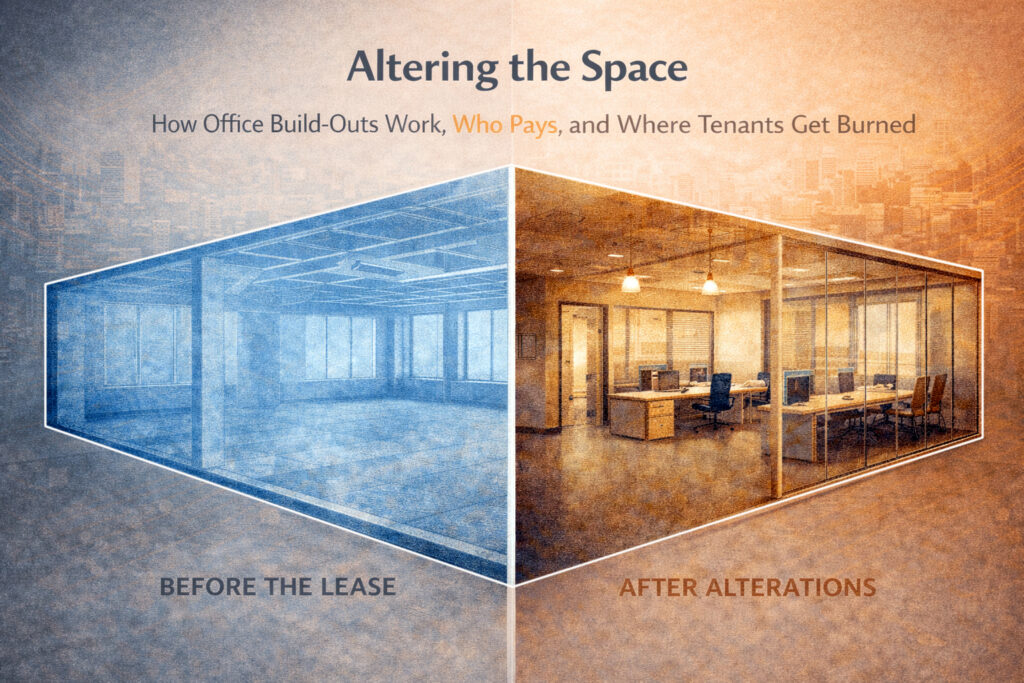
Very few Manhattan office spaces are move-in ready without some level of alteration. Even so-called “prebuilt” offices often require changes to layout, finishes, infrastructure, or branding before they function properly for a specific business. Understanding how alterations are handled—and how they are governed by the lease—is critical to controlling cost, timing, and risk.
This section explains how office alterations are typically structured, who performs the work, who pays for it, and what tenants need to lock down before signing the lease.
Initial Alterations: Setting Expectations Early
When evaluating an office space, tenants should assume that some level of alteration will be required. The real questions are how much, how long, and who controls the process.
Before committing to a space, tenants should evaluate:
- The estimated cost of alterations
- When construction can realistically begin
- How long design, approvals, and construction will take
- Whether the business can operate on a fixed opening timeline
- What happens if construction is delayed
In Manhattan, approvals—not construction—are often the biggest source of delay. Landlord review, building management requirements, permits, and third-party approvals can add weeks or months if not anticipated.
Who Performs the Work—and Who Pays
Office build-outs generally fall into one of three structures.
Landlord-Performed Work
In some cases, the landlord agrees to perform basic alterations before delivery. This is more common when:
- A large floor is being subdivided
- Base building systems need repair
- The landlord is delivering a standardized prebuilt space
Landlord work is usually limited in scope. Tenants should not assume finishes, layouts, or branding will be included unless explicitly stated.
Tenant-Performed Work
More commonly, the tenant performs the alterations and coordinates architects, engineers, and contractors. In these cases, the landlord typically retains approval rights over plans, methods, and contractors.
Tenant Improvement Allowance (TI)
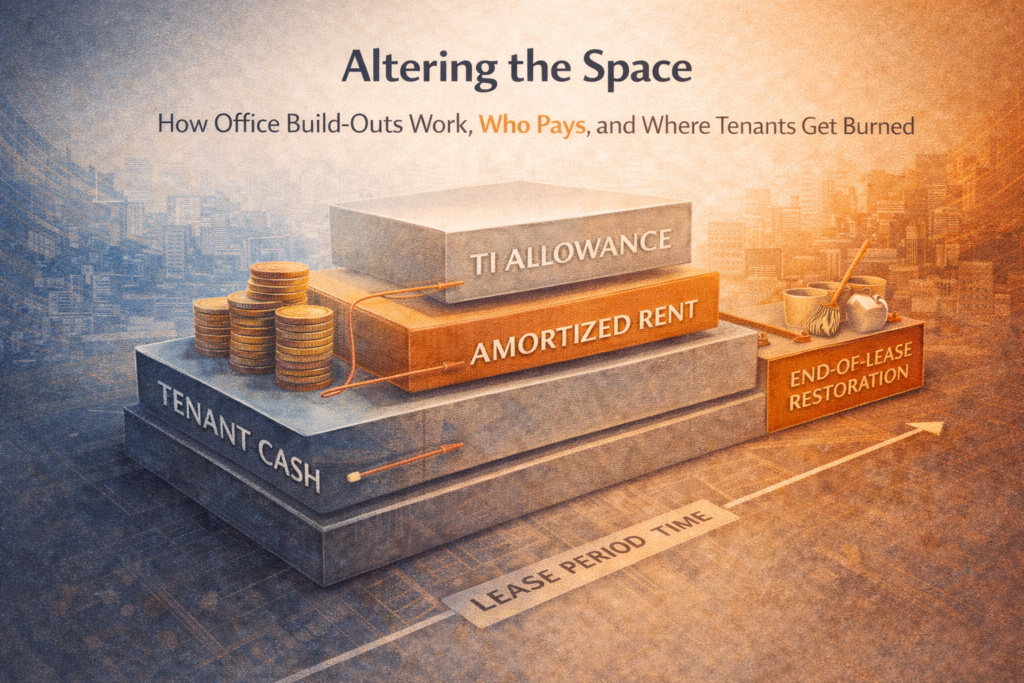
To offset build-out costs, landlords may offer a tenant improvement allowance, which is a contribution toward construction expenses. TI allowances vary widely based on:
- Lease length
- Market conditions
- Building class
- Tenant credit strength
TI is rarely free money. It is often amortized into rent or conditioned on lease performance.
Plan Review and Landlord Control
Regardless of who performs the work, landlords almost always require:
- Review and approval of architectural and engineering plans
- Compliance with building standards and house rules
- Use of licensed and insured contractors
Some landlords charge review or supervision fees. These fees should be capped and subject to reasonable timeframes. Delayed approvals can derail opening schedules, so tenants should negotiate response deadlines where possible.
Rent Abatement During Construction
If alterations prevent immediate occupancy, tenants should negotiate rent abatement—a period at the beginning of the lease during which rent is not due.
Rent abatement is common in Manhattan office leases and should be addressed at the term-sheet stage. Without it, tenants may be required to pay rent on space they cannot yet use.
Abatement periods should realistically account for:
- Design and permitting time
- Construction duration
- Final inspections
- Move-in and operational setup
Permits, Licenses, and Approvals
Significant alterations often require permits and approvals from government agencies. Architects and engineers typically determine which permits are required and manage submissions.
Tenants should also consider whether additional approvals are needed, such as:
- Landmark Preservation Commission approval
- Condominium or co-op board consent
- Building ownership or lender sign-off
These approvals can materially extend timelines and should be identified early.
Building Codes and Accessibility
Any alteration must comply with applicable building codes. In many cases, a space must already be code-compliant before new permits are issued.
Offices open to the public may need to comply with accessibility requirements under federal and local law. An architect can assess whether alterations trigger additional compliance obligations.
Certain business types—such as medical, educational, or childcare uses—may face stricter code requirements that affect layout and cost.
Alterations During the Lease Term
Most leases allow tenants to make minor cosmetic changes without landlord approval, within defined limits. Painting and finish updates are often permitted, while alterations affecting:
- Building systems
- Structural elements
- Permitted use
almost always require prior approval.
These rights should be clearly written into the lease to avoid disputes later.
End-of-Lease Obligations: Giving the Space Back
Alteration decisions made at move-in can create significant costs at move-out.
Most leases require the space to be returned:
- In good condition
- Free of personal property
- “Broom-clean”
- Subject to reasonable wear and tear
Some landlords require removal of specific “specialty alterations,” such as kitchens, showers, or internal staircases. Tenants should avoid broad restoration obligations and ensure removal requirements are tied only to alterations that were explicitly required to be removed when approved.
Fixtures and trade fixtures should be clearly defined in the lease. Anything left behind may become the landlord’s property—or result in removal charges.
Tenant Takeaways
Office alterations are not just a construction issue—they are a lease issue. Decisions about who builds, who pays, and who approves affect:
- Opening timelines
- Cash flow
- Long-term flexibility
- Exit costs
Tenants who address alteration terms early maintain control. Those who do not often discover too late that the space they signed for is not the space they can afford to occupy.
Fill out our 📋 online form or give us a call today 📞 212-967-2061 — let’s find the right office for your business.
Source Acknowledgment
Portions of this Commercial Lease Guide are informed by publicly available educational materials published by the New York City Department of Small Business Services. This website is not affiliated with, endorsed by, or acting on behalf of the City of New York or any government agency. All interpretations, explanations, and market commentary reflect independent analysis focused on Manhattan office tenants.