Luxury Office Space NYC
Luxury office space in NYC is not a synonym for quality, performance, or business success. It is a deliberate positioning choice—one that carries specific benefits, visible tradeoffs, and long-term cost implications that many tenants misunderstand.
In the New York office market, luxury office space refers to environments designed to signal status, permanence, and brand elevation, often through premium finishes, amenity layering, and architectural presentation. These spaces are expensive by design and selective by intent.
This page exists to explain what luxury office space in NYC actually represents, who it is designed for, when it delivers real value, and when it quietly becomes an operational liability.
This is not a showcase page.
It is a decision page.
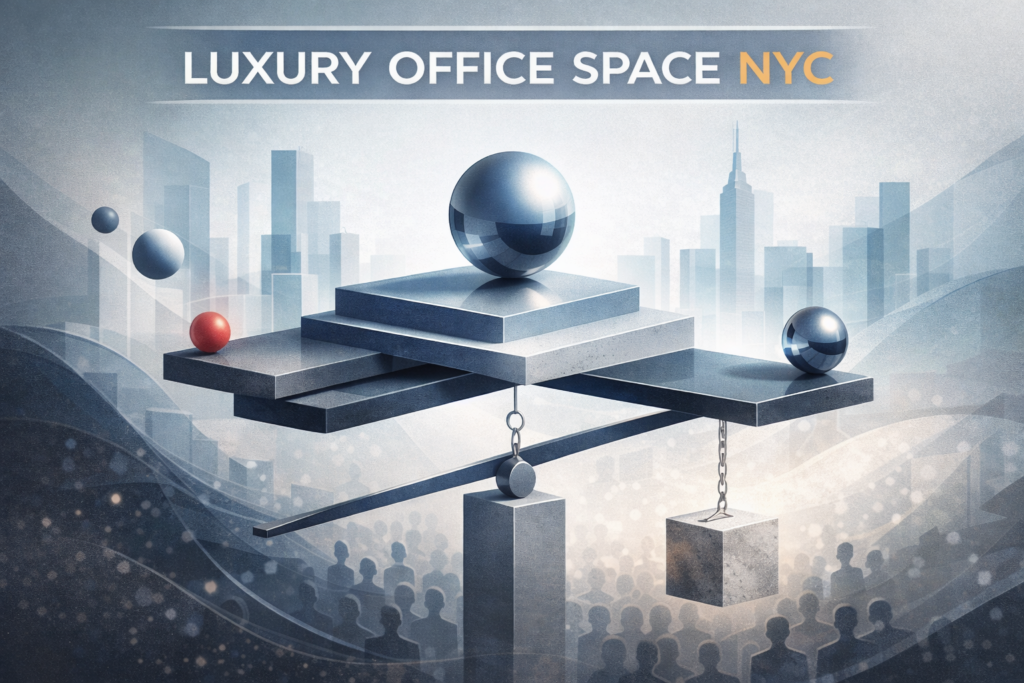
What Luxury Office Space Means in New York
Luxury office space in NYC describes offices that prioritize aesthetic distinction and experiential impact above baseline functionality. These spaces are typically located in top-tier buildings or recently repositioned assets where finishes, materials, and shared amenities exceed standard expectations.
Luxury offices often feature custom millwork, premium flooring, high-end lighting, curated common areas, and branded arrival experiences. Buildings may include concierge services, hospitality-style lobbies, tenant lounges, fitness facilities, and event-ready spaces.
Luxury is not a building class.
Luxury is a design and positioning layer applied on top of a building.
Luxury Office Space Manhattan: High-End Design and Leasing
An in-depth guide explaining what luxury office space means in Manhattan, including trophy buildings, premium amenities, and the leasing strategies tenants use to secure high-end workplaces.
Penthouse Office
Explores the most exclusive tier of luxury workspace—top-floor penthouse offices that combine prestige, skyline views, and executive-level amenities.
Billionaires’ Row Office Space
Examines office opportunities in the Billionaires’ Row corridor, where companies pursue prestige addresses, Central Park views, and high-end tower environments.
Plaza District Offices
Details Manhattan’s most prestigious office district, where trophy Class A towers and legacy corporate headquarters define the city’s luxury office market.
Luxury Office Space Versus Class A Office Space
Luxury office space and Class A office space are frequently conflated, but they are not the same.
Class A describes institutional quality, systems reliability, and asset management standards. Luxury describes how a space looks, feels, and presents itself to occupants and visitors.
A Class A building may contain luxury space, standard space, or both. Conversely, a luxury office can exist inside a non-trophy building if enough capital has been invested in finishes and experience.
Understanding this distinction prevents tenants from paying for attributes they do not actually need.
Why Tenants Choose Luxury Office Space
Tenants choose luxury office space in NYC when external perception materially affects business outcomes.
Luxury offices matter most for organizations where client impressions, investor signaling, or brand positioning influence trust, pricing power, or deal velocity. In these cases, the office functions as an extension of the brand rather than a neutral operating environment.
Luxury space can also support executive recruitment, retention, and internal signaling in organizations where hierarchy and prestige play a role in culture.
For the right tenant, luxury space does not just house the business.
It communicates the business.
The Hidden Cost Structure of Luxury Office Space
Luxury office space in NYC carries costs that extend beyond headline rent.
Premium finishes increase build-out costs, repair obligations, and restoration exposure at lease end. Operating expenses tend to be higher due to staffing levels, amenity maintenance, and hospitality-style services. Custom layouts often reduce flexibility and increase the cost of reconfiguration.
Luxury spaces are also less forgiving of change. What feels aligned today can become misaligned quickly if headcount, workflow, or brand strategy evolves.
Luxury space assumes stability. When that assumption fails, costs compound.
When Luxury Office Space Makes Sense
Luxury office space works best for businesses with clear brand identity, stable operations, and predictable growth trajectories.
It makes sense when:
- Client experience is a competitive differentiator
- Brand perception directly affects revenue or trust
- Leadership expects long-term occupancy
- Space requirements are unlikely to change materially
In these cases, luxury space reinforces strategic intent rather than distracting from it.
When Luxury Office Space Becomes a Liability
Luxury office space becomes problematic when perception outpaces necessity.
Early-stage companies, growth-phase firms, and operationally fluid organizations often discover that luxury environments constrain flexibility and magnify risk. High costs reduce optionality. Rigid layouts resist adaptation. Prestige features do not compensate for operational mismatch.
Luxury space does not fix uncertainty.
It amplifies it.
Luxury Versus Modern Office Space
Luxury office space is often mistaken for modern office space, but the two serve different purposes.
Modern office space focuses on performance, flexibility, and usability. Luxury office space focuses on presentation, experience, and signaling. A space can be modern without being luxury. It can be luxury without being modern.
Tenants seeking efficiency frequently overpay for luxury when modernity would better support their needs.
This confusion is one of the most common causes of misaligned office leases in NYC.
Market Reality: Luxury Is a Narrow Use Case
Despite its visibility, luxury office space represents a small slice of the New York office market.
Most businesses do not need it. Many actively suffer from choosing it. Luxury exists to serve specific strategic goals, not as a default upgrade path.
Understanding that reality allows tenants to evaluate luxury space objectively rather than emotionally.
Making the Right Decision About Luxury Office Space NYC
Choosing luxury office space in NYC should never be aspirational. It should be intentional.
The correct question is not whether luxury space looks impressive.
The correct question is whether it advances your business strategy enough to justify its cost and constraints.
When aligned correctly, luxury office space reinforces brand, credibility, and positioning. When misaligned, it becomes an expensive distraction with long-term consequences.
This page exists to make that distinction clear before a lease turns image into obligation.
Fill out our 📋 online form or give us a call today 📞 212-967-2061 — let’s find the right office for your business.

How Search Engines Interpret “Luxury Office Space NYC” Across Results
When tenants search for luxury office space in NYC, search engines interpret the phrase as a signaling-driven query, not a functional one.
Unlike modern office space searches—which revolve around performance and usability—luxury searches are treated as expressions of status, perception, and exclusivity. As a result, the rankings combine providers, marketplaces, brokerages, media content, and location-specific showcases that all reinforce image rather than operational necessity.
Understanding why these results appear helps tenants separate symbolic value from practical value before committing to high-cost office environments.
Why Premium Flexible Office Providers Rank for Luxury Searches
Prominent results for this query include premium flexible office providers such as Industrious and Regus, often framed around private offices, concierge services, and upscale interiors.
These providers rank because search engines associate luxury with:
- Furnished, finished environments
- Hospitality-style lobbies and amenities
- Immediate visual polish
- Controlled, branded experiences
From a ranking standpoint, these attributes signal luxury effectively—even though flexible offices are not long-term luxury lease solutions for most Manhattan tenants.
They appear because they communicate luxury quickly, not because they represent ownership, permanence, or architectural distinction.
Why Brokerages and Office Agencies Appear Prominently
Brokerage firms and office agencies surface for this query because luxury office space is frequently searched late in the decision cycle, when tenants are already considering specific buildings, neighborhoods, or image outcomes.
Companies such as Metro Manhattan Office Space appear because they publish curated inventories and narrative framing around prestige locations, views, and trophy assets.
Search engines treat these pages as intent-aligned because luxury tenants are often seeking selection and positioning, not education.
This explains why brokerage results appear alongside providers rather than beneath them.
Why Listing Marketplaces Rank for Luxury Office Space NYC
Commercial real estate marketplaces like LoopNet rank because search engines also interpret this query as a high-value browsing behavior.
Luxury filters on marketplaces typically emphasize:
- Trophy buildings
- High floor levels
- Views and landmark addresses
- Premium asking rents
However, luxury labeling on listings reflects marketing language, not operational suitability. Marketplaces rank because they aggregate supply—not because they define what luxury office space actually delivers.
This is why tenants browsing luxury inventory often encounter impressive visuals paired with inflexible layouts or misaligned cost structures.
Why Media, Video, and Lifestyle Content Appears
Luxury office searches frequently surface editorial content, video tours, and aspirational media—including skyline showcases, billionaire-row features, and iconic tower walkthroughs.
Search engines treat these as relevant because luxury searches often include curiosity and aspiration, not just transaction intent.
This content reinforces luxury as a visual and cultural signal, even though it rarely addresses lease structure, operational constraints, or long-term risk.
Its presence reflects how luxury is perceived—not how it performs.
Why Location-Driven Luxury Pages Rank Highly
Search engines strongly associate luxury office space with specific Manhattan submarkets, which is why results frequently emphasize:
- Midtown trophy corridors
- Central business districts
- Landmark avenues and skyline clusters
Luxury, in this context, is treated as geographic signaling. Address prestige substitutes for functional evaluation, and location becomes shorthand for quality.
This is why luxury searches often return neighborhood-centric pages rather than feature-centric ones.
Why Cost Is Implied but Rarely Explained
Although luxury office space in NYC carries significant cost implications, most ranking pages avoid directly addressing total cost exposure.
Search engines prioritize pages that emphasize:
- Experience
- Image
- Exclusivity
- Brand alignment
As a result, operating expenses, build-out rigidity, exit exposure, and long-term inflexibility are underrepresented—despite being central to tenant outcomes.
This imbalance contributes to why luxury office decisions are often made emotionally rather than strategically.
How Tenants Should Interpret These Results Correctly
The mix of flexible offices, brokerages, marketplaces, and aspirational media does not mean luxury office space is a standardized category.
It means tenants are signaling a desire for external validation, not operational optimization.
Luxury office space appears in many forms because it serves a narrow but visible use case: communicating stability, success, and permanence to outside audiences.
Understanding this helps tenants evaluate whether luxury supports their business—or merely decorates it.
What the Search Results Reveal About Luxury Office Space in NYC
Taken together, the rankings confirm a consistent reality:
Luxury office space in NYC is not designed to be flexible, forgiving, or adaptive. It is designed to be seen, recognized, and remembered.
For the right business, this delivers real strategic value.
For the wrong one, it introduces unnecessary cost, rigidity, and risk.
This is why luxury office space continues to attract attention disproportionate to its actual share of the New York office market.
Why This Distinction Matters Before Signing a Lease
Search results reward visibility, polish, and perception. Lease outcomes reward alignment, durability, and operational fit.
Tenants who understand the difference avoid committing to prestige environments that limit future options or amplify uncertainty.
This final layer exists to ensure luxury office space is evaluated intentionally, not aspirationally—before image hardens into obligation.