Green Space: Office Building Amenity
Green Space: The Most Valuable Office Amenity in a Post-Pandemic World
What is Green Space in today’s competitive commercial real estate market, as office buildings must offer more than just location and square footage. Green space—whether a rooftop terrace, landscaped courtyard, or living wall—has become one of the most sought-after amenities by tenants, employees, and corporate decision-makers alike. These natural features deliver measurable benefits in terms of employee wellness, productivity, sustainability, and lease value.
Why Green Space Matters in Office Buildings
Modern companies are prioritizing workplace wellness, environmental responsibility, and flexible environments that support both focused work and informal collaboration. Green spaces satisfy all three, offering tenants a tangible return on their lease investment.
Health and Wellness Benefits
- Stress Reduction: Access to nature has been proven to lower stress levels and improve mood.
- Improved Air Quality: Green walls and rooftop vegetation can filter pollutants and increase oxygen levels indoors.
- Physical Activity: Outdoor walkways, patios, and terraces encourage movement throughout the day.
- Natural Light and Views: Exposure to sunlight and outdoor views improves sleep cycles and employee energy.
Business Performance Advantages
- Boosted Productivity: Harvard research shows cognitive function improves in green-certified buildings.
- Lower Absenteeism: Healthier employees take fewer sick days.
- Employee Retention: A healthier, more enjoyable workplace helps retain talent in competitive industries.
- Enhanced Brand Image: Tenants who lease green-certified or eco-conscious spaces align themselves with ESG and sustainability initiatives.
The Landlord’s Perspective: Higher Rents and Competitive Edge
Green space isn’t just a tenant-facing perk—it’s a landlord’s opportunity to command premium rents and achieve higher occupancy rates. A CBRE study found that Manhattan buildings with terraces rent for 14% more on average than those without. Developers from Hudson Yards to the Flatiron District now integrate terraces, green roofs, and loggia gardens as standard features in Class A projects.
Retrofits are also gaining traction. Historic buildings like 295 Fifth Avenue and 660 Fifth Avenue are adding wraparound terraces, courtyards, and green roofs to appeal to today’s health-conscious tenants.
Common Types of Office Green Space Amenities
- Rooftop Gardens: Create tranquil, elevated spaces for meetings, lunch, or relaxation with skyline views.
- Terraces & Balconies: Offer fresh air access steps from the workspace.
- Interior Green Walls: Bring nature indoors while improving indoor air quality.
- Landscaped Courtyards: Provide social hubs and quiet zones within high-density urban blocks.
- Outdoor Meeting Areas: Foster informal collaboration and reduce reliance on enclosed conference rooms.
- Wellness Paths & Walking Loops: Encourage movement and mindfulness throughout the workday.
Examples from Manhattan’s Office Market
Manhattan’s leading office towers are redefining green amenity space:
- The Spiral (66 Hudson Blvd): Outdoor gardens on every floor create a vertical greenway.
- 3 World Trade Center: Offers an 11,000 SF outdoor terrace.
- Hudson Commons: Features a 12,000 SF wraparound terrace and 14 additional outdoor spaces.
- 512 W 22nd St: Offers nearly 17,000 SF of landscaped outdoor space in the heart of Chelsea.
- One Manhattan West: Incorporates outdoor recreational elements like skating and seating plazas.
Even legacy properties like 1271 Avenue of the Americas and the James A. Farley Building (now home to Meta/Facebook) are leveraging new terrace spaces to attract high-profile tenants.
Leasing Considerations for Green Office Space
Before signing a lease, tenants should consider:
- LEED or WELL Certifications: Indicators of environmental and wellness standards.
- Location and Exposure: South-facing terraces with natural light may be more valuable than shaded areas.
- Maintenance and Access Policies: Clarify who maintains the space and how it’s accessed.
- Usage Options: Can the space be used for private events, meetings, or fitness?
- Shared vs. Private: Determine whether the green space is tenant-exclusive or shared with the building.
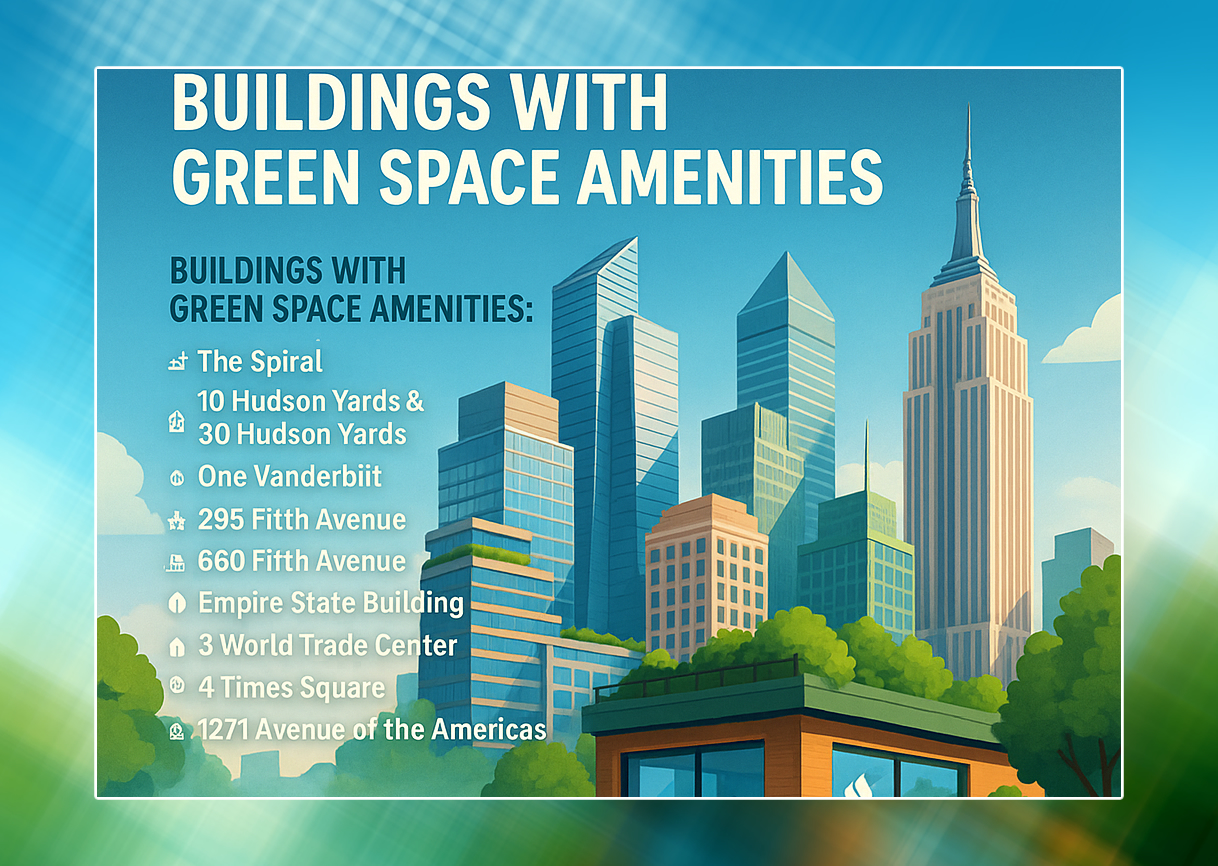
Buildings with Green Space Amenities in Manhattan
Across Manhattan, green space is becoming a defining feature of premium office buildings. New developments and repositioned assets alike are prioritizing terraces, gardens, and eco-conscious design to meet the rising demand for healthier, more sustainable workplaces. From cutting-edge skyscrapers to historic renovations, green space is not only enhancing tenant experience but also increasing lease value.
Leading Manhattan Office Buildings with Green Space Amenities
The Spiral (66 Hudson Blvd)
Located in Hudson Yards, The Spiral is one of Manhattan’s most ambitious green office towers. It features cascading outdoor terraces on every floor, creating a continuous, spiraling ribbon of green space that wraps around the building—offering tenants a rare blend of biophilic design and panoramic city views.
10 & 30 Hudson Yards
As part of the Hudson Yards development, these towers are known for their modern architecture, smart building systems, and incorporation of outdoor spaces. Their terraces and sustainability-first approach reflect the future of Class A office development.
3 World Trade Center
This Lower Manhattan skyscraper includes an 11,000-square-foot outdoor terrace, seamlessly integrated with collaborative tenant space and designed to accommodate events, meetings, and open-air breaks.
One Vanderbilt
Rising beside Grand Central Terminal, One Vanderbilt offers a 30,000-square-foot amenity floor that includes an outdoor terrace and wellness-focused common areas.
295 Fifth Avenue
Tribeca Investment Group has retrofitted this century-old NoMad building with an activated inner courtyard and two wrap-around terraces, bringing contemporary green space to a historic Midtown asset.
660 Fifth Avenue
In partnership with KPF, Brookfield Properties transformed this Midtown office building by adding expansive terraces on three sides—an example of adaptive reuse for outdoor access in existing towers.
Empire State Building
Beyond its iconic status, the Empire State Building features the Club Level: a tenant-exclusive floor with over 65,000 square feet of amenities, including outdoor lounges and seating areas.
100 Park Avenue
This LEED Gold-certified building incorporates green roofs and high-efficiency HVAC systems, as well as recycling and energy-reduction initiatives aligned with sustainable operations.
4 Times Square
The Durst Organization redesigned this landmark tower with 11 new terraces ranging in size, creating flexible outdoor options for multiple tenants.
399 Park Avenue & 1271 Avenue of the Americas
Both buildings are repositioning upper-level setbacks into landscaped terraces, responding to demand for fresh-air options and wellness amenities.
280 Park Avenue
An SL Green asset, this property continues to modernize with upgraded outdoor and wellness spaces, tailored to the expectations of large corporate tenants.
One World Trade Center
This globally recognized tower integrates advanced water efficiency systems, daylighting strategies, and renewable energy—complemented by exterior spaces that promote sustainability.
The New York Times Building (620 Eighth Avenue)
Designed with a commitment to green standards, this Midtown landmark incorporates ceramic screen facades, interior gardens, and energy-efficient systems to reduce environmental impact.
Bank of America Tower (One Bryant Park)
One of the first skyscrapers in NYC to achieve LEED Platinum certification, it features a green roof, greywater system, and underfloor air distribution—all steps toward a healthier, greener office environment.
The Green Space Conclusion
Green space is no longer a luxury amenity—it’s a fundamental component of what makes an office building competitive in today’s market. For tenants, these features provide a healthier, more appealing workspace. For landlords, they offer a tangible way to differentiate properties, raise rents, and future-proof asset value. As hybrid work evolves and wellness-driven design takes center stage, green space will continue to shape the future of office buildings across New York City and beyond…
Fill out our 📋 online form or give us a call today 📞 212-967-2061 — let’s find the office for your business.