Compare Class A vs. Class B Office Buildings
Choosing the right office space for your business often starts with understanding the difference between Class A and Class B buildings. While both offer professional environments for a wide range of companies, they differ significantly in amenities, pricing, finishes, and use cases. Here’s a detailed breakdown to help you make the most informed decision as a tenant.
What is Class A Office Space?
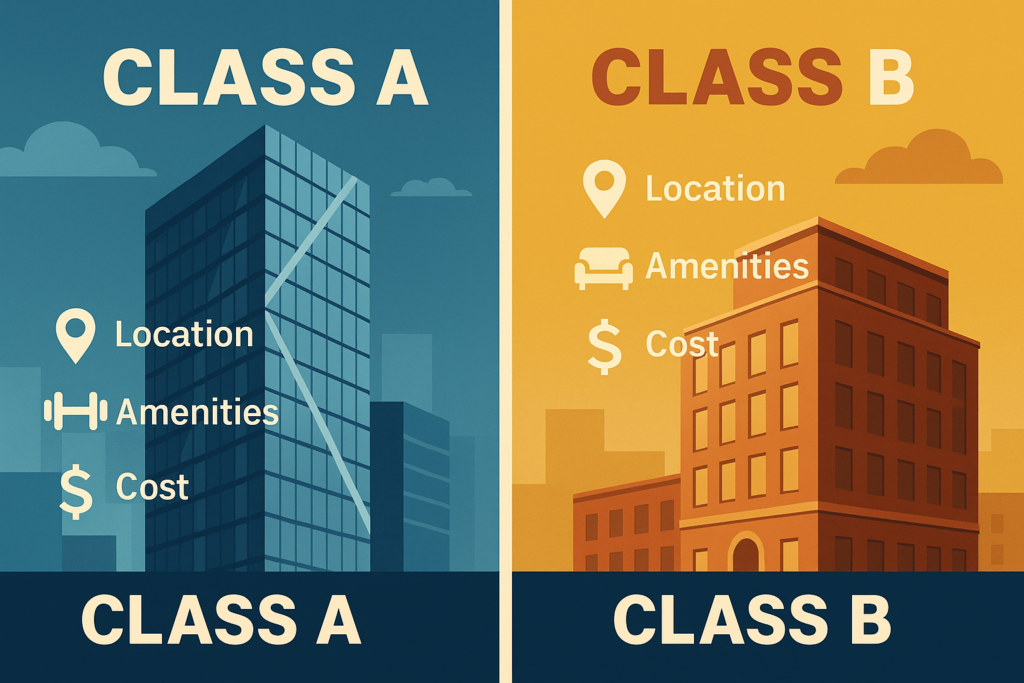
Class A buildings represent the highest quality tier in the commercial real estate market. These are trophy assets—modern, highly visible buildings in prime locations that attract top-tier tenants.
- Location:
Centrally located, often in Manhattan’s Central Business District (CBD), near major transit hubs and flagship destinations. - Age & Condition:
Typically new construction or recently gut-renovated properties featuring modern architecture and Class A infrastructure. - Amenities:
High-end offerings including 24/7 concierge security, state-of-the-art HVAC systems, on-site cafés or restaurants, fitness centers, conference facilities, and even tenant lounges. - Interior Finishes:
Sleek, modern design with premium materials—glass facades, high ceilings, polished stone lobbies, and designer lighting fixtures. - Tenant Profile:
Global law firms, blue-chip corporations, financial institutions, and companies seeking prestige and performance. - Rental Rate:
The highest in the market—premium rent for premium quality.
What is Class B Office Space?
Class B buildings are more affordable, practical alternatives that still offer solid locations and professional environments—ideal for companies who want value without sacrificing professionalism.
- Location:
Often found in Midtown South, the Financial District, and outer-borough commercial districts. Typically well-located but not necessarily on prime corners or trophy corridors. - Age & Condition:
Generally older stock, but still clean, safe, and functional. Many are former manufacturing buildings retrofitted for office use. - Amenities:
Fewer amenities overall. May include a doorman, renovated lobby, or shared conference room, but typically no gyms, lounges, or food halls. - Interior Finishes:
More utilitarian—drop ceilings, standard lighting, and functional layouts. Some may be pre-built or plug-and-play for fast occupancy. - Tenant Profile:
Professional services, creative firms, tech startups, nonprofits, and cost-conscious companies. - Rental Rate:
More moderate and budget-friendly—particularly attractive for companies looking to avoid overspending on real estate.
Class A vs. Class B at a Glance
| Feature | Class A | Class B |
|---|---|---|
| Location | Prime CBD or trophy corridors | Secondary corridors or less central |
| Age/Condition | New or extensively renovated | Older but functional |
| Amenities | Concierge, fitness, lounges, etc. | Basic amenities, fewer tenant perks |
| Finishes | High-end and modern | Professional but standard |
| Tenants | Major corporations, institutions | SMEs, startups, local businesses |
| Price | $$$$ – Premium | $$ – Mid-market |
In summary, understanding the differences between Class A and Class B office buildings is essential when evaluating the best fit for your business needs. Class A offices offer premium finishes, prime locations, and extensive amenities—ideal for companies seeking prestige and top-tier infrastructure. Meanwhile, Class B offices provide a cost-effective alternative, delivering solid functionality in well-maintained spaces without the premium price tag. Whether your priorities lie in image, efficiency, or budget, knowing the distinctions allows you to make a smarter, more strategic real estate decision. When you’re ready, NewYorkOffices is here to help you compare your options and negotiate the best lease—at no cost to you.