35 Hudson Yards
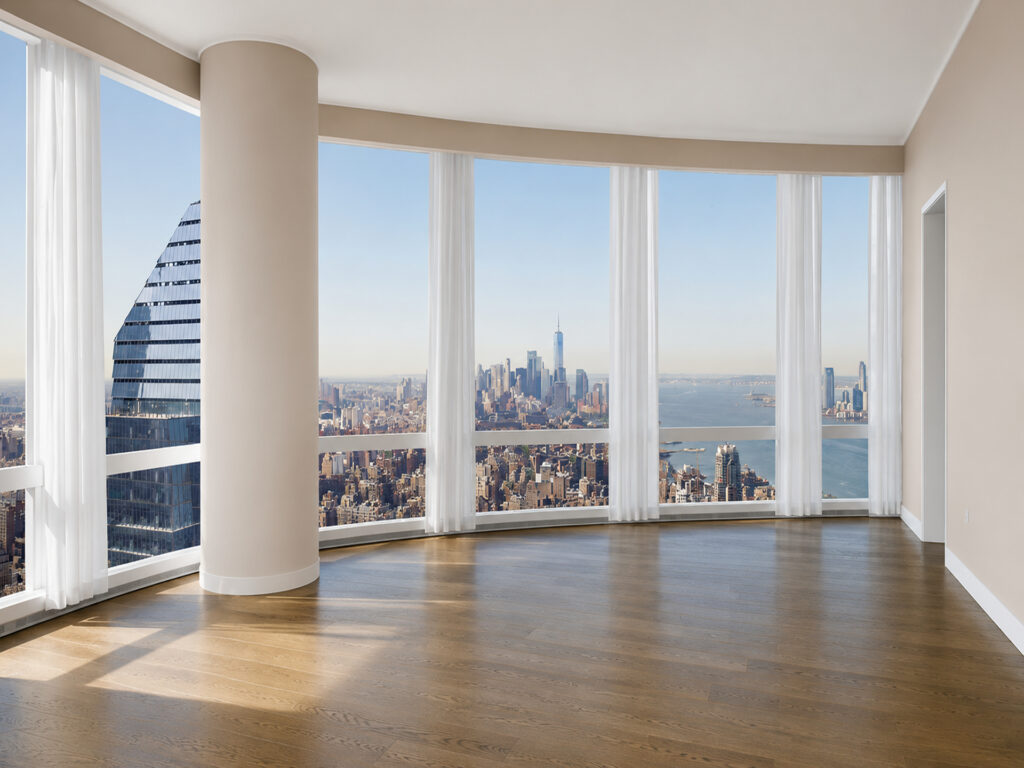
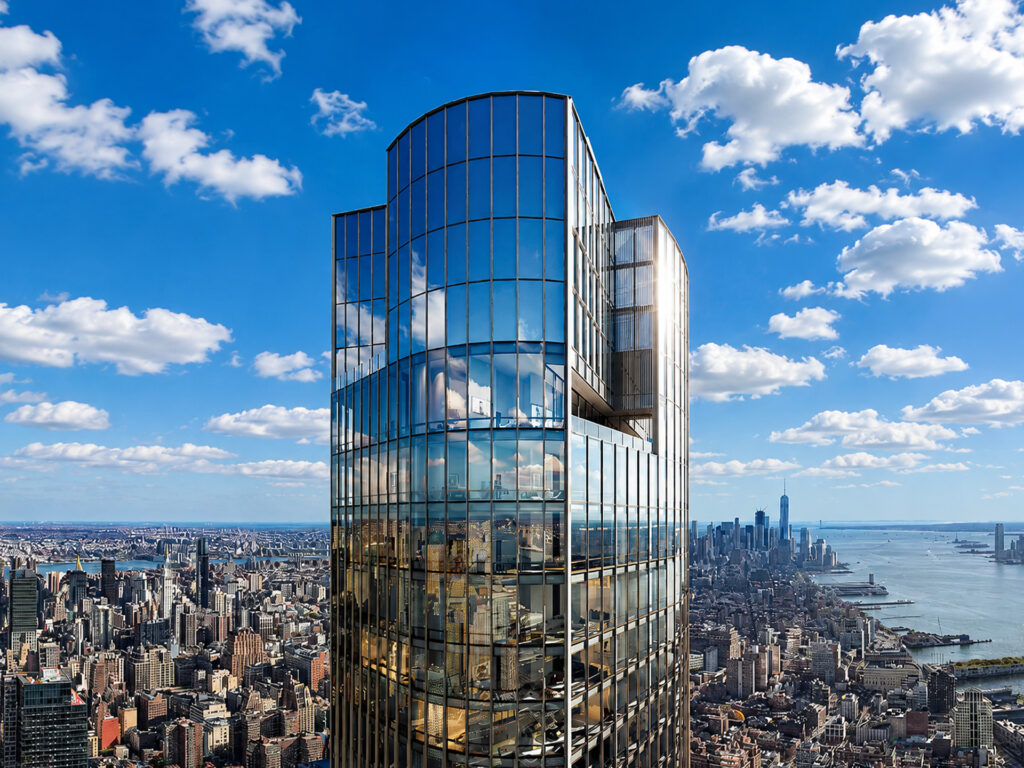
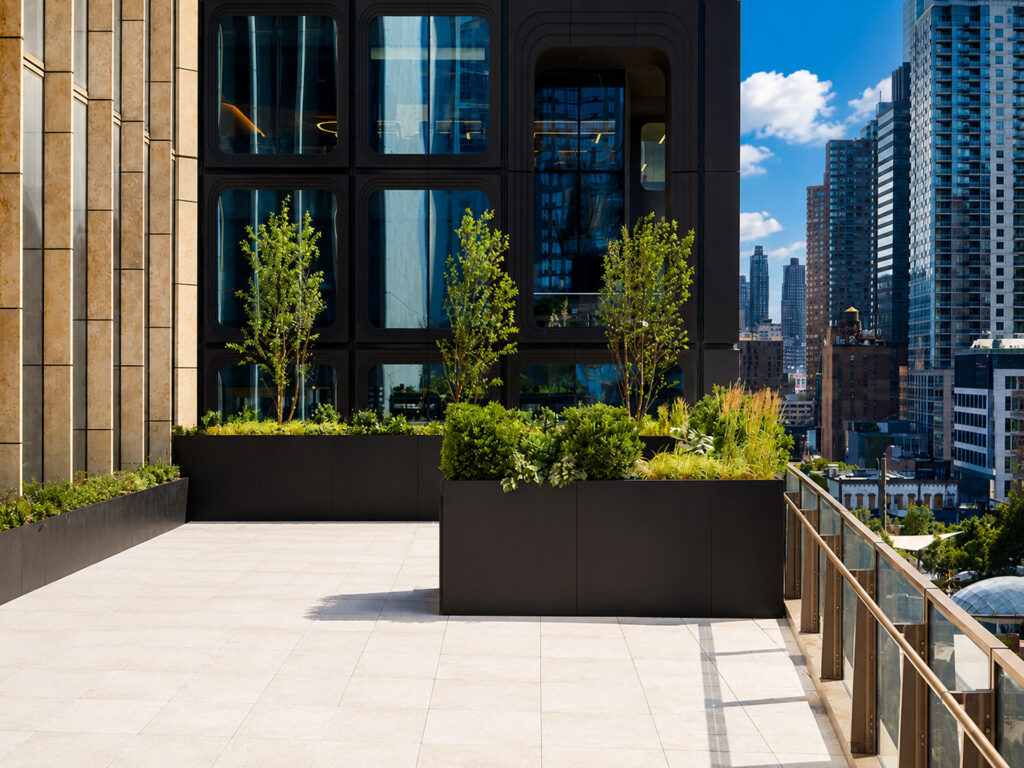
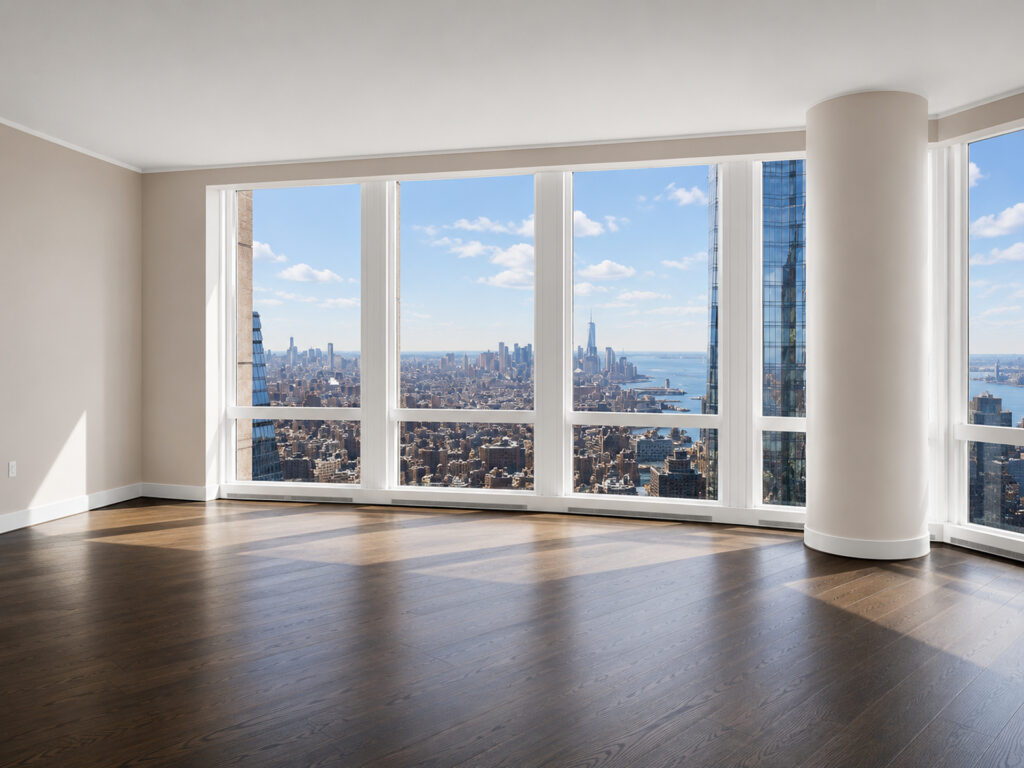
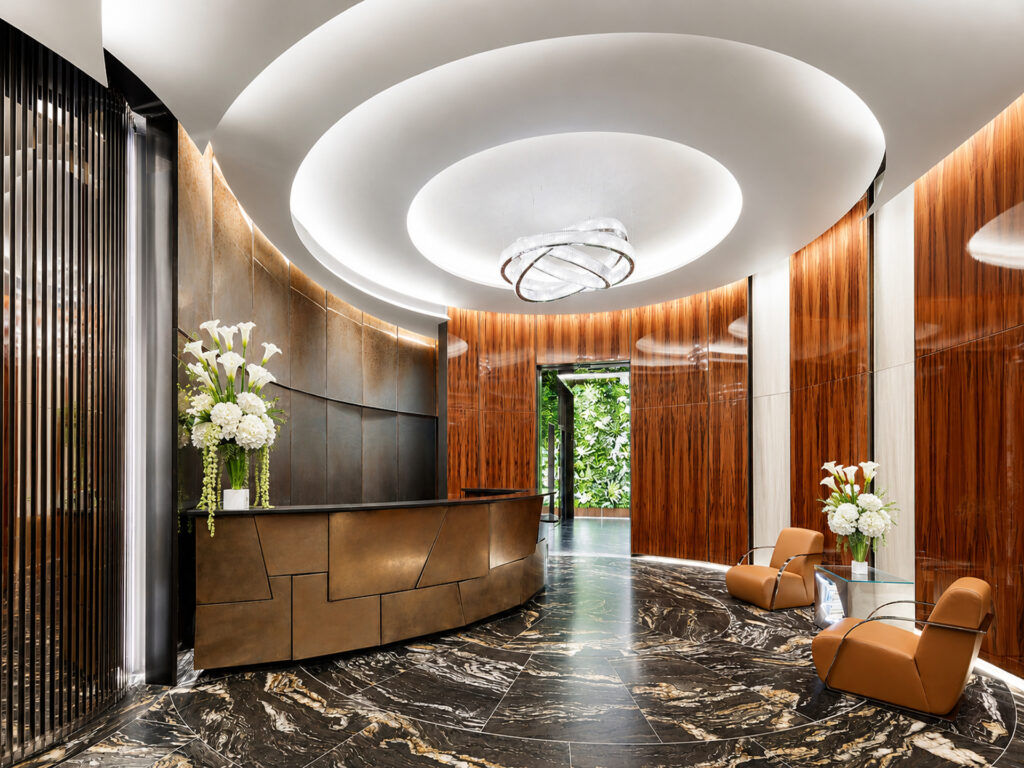
Rising at the northern edge of the Hudson Yards campus, 35 Hudson Yards represents a unique hybrid within Manhattan’s office landscape—combining luxury residential, hospitality, and limited office components into a vertically integrated, high-end environment. Developed by Related Companies in partnership with Oxford Properties, the tower introduces a different value proposition for tenants: one centered less on bulk office scale and more on prestige, lifestyle integration, and exclusivity.
Unlike the larger, pure office towers within Hudson Yards, 35 Hudson Yards is a mixed-use property anchored by the Equinox Hotel, private residences, and high-end amenity spaces. For office users, this creates a distinctly elevated experience—where the building functions more like a private club environment than a traditional corporate tower. Tenants benefit from access to hospitality-driven services, premium finishes, and a level of discretion that is difficult to replicate in conventional Midtown buildings.
From a physical standpoint, the tower is immediately recognizable for its limestone façade—a departure from the all-glass curtain wall aesthetic that defines much of Hudson Yards. This material choice gives the building a more permanent, institutional character, aligning it visually with classic Midtown assets while still delivering fully modern infrastructure. Interiors are finished to a high standard, with strong ceiling heights, refined common areas, and a design language that prioritizes quality over scale.
The office component within 35 Hudson Yards is more limited compared to neighboring towers, which inherently creates scarcity. For certain tenants—particularly boutique financial firms, private equity groups, or family offices—this is a strategic advantage. It allows for occupancy within Hudson Yards without the density and scale of larger corporate buildings, offering instead a quieter, more controlled environment with fewer tenants per floor and a more curated tenant mix.
Location remains a defining strength. Positioned directly along the Hudson River and adjacent to the High Line, the building benefits from immediate access to open space, waterfront views, and the broader Hudson Yards amenity base. Retail, dining, and public space are all within steps, while nearby transit at 34th Street–Hudson Yards and Penn Station ensures connectivity to the rest of Manhattan and the region.
For tenants evaluating office space in Manhattan, 35 Hudson Yards is not a volume play—it is a positioning play. It caters to users who prioritize image, environment, and experience over sheer square footage. In a market dominated by large, efficiency-driven floor plates, this building offers something different: a refined, hospitality-driven workplace within one of New York City’s most modern districts.
Technical Specifications
35 Hudson Yards stands as a mixed-use supertall tower rising approximately one thousand feet, positioning it among the tallest buildings on Manhattan’s West Side and a defining element of the Hudson Yards skyline. The property contains roughly seventy-two floors and encompasses approximately one point one million total square feet, distributed across residential, hospitality, office, and amenity components. Unlike traditional office towers that dedicate the majority of their mass to commercial tenancy, this building allocates a significant portion of its vertical stack to luxury residential units and the Equinox Hotel, with office space integrated into the lower and mid-level sections.
The tower was designed by Skidmore, Owings & Merrill in collaboration with Kohn Pedersen Fox, bringing together two globally recognized architectural practices. Structurally, the building utilizes a reinforced concrete system rather than a traditional all-steel frame, which contributes to its massing, acoustic separation, and residential-grade performance characteristics. This construction method also supports the building’s distinctive limestone façade, a material choice that sets it apart from the predominantly glass curtain wall towers surrounding it.
Floor plates within the office portion are more boutique in scale compared to neighboring Hudson Yards office towers, resulting in a lower-density environment that is attractive to tenants seeking privacy and exclusivity. Ceiling heights are competitive with Class A standards, and the infrastructure supports modern mechanical, electrical, and HVAC systems designed to accommodate both office and hospitality-grade usage. The building incorporates high-speed elevator systems with zoned vertical transportation, separating residential, hotel, and office circulation for efficiency and discretion.
From a systems standpoint, 35 Hudson Yards delivers institutional-grade infrastructure, including advanced climate control, high-capacity electrical distribution, and robust telecommunications pathways suitable for financial, media, and professional users. The building also integrates sustainability considerations consistent with contemporary development standards, although its design prioritizes luxury and performance over purely efficiency-driven metrics seen in some newer office-only towers.
At the base and throughout the tower, significant square footage is dedicated to amenity programming, including fitness, spa, dining, and hospitality services tied to the Equinox brand. This introduces a different operational dynamic compared to traditional office buildings, where amenity space is typically secondary. Here, it is central to the building’s identity and directly influences tenant experience.
In total, 35 Hudson Yards should be understood not as a conventional office tower, but as a vertically integrated mixed-use asset where office space exists within a broader ecosystem of luxury residential and hospitality infrastructure. For tenants, this translates into a technically sophisticated building with lower office density, premium construction quality, and a differentiated positioning within the Manhattan office market.