End of Lease
How to Exit, Renew, or Reposition Without Creating New Liability
The end of a commercial office lease is not a formality—it is a second negotiation. Many tenants focus heavily on signing the lease and far less on how it ends, only to discover that move-out obligations, renewal pricing, or default exposure can be just as costly as the original deal.
This section explains what tenants need to review as a lease approaches expiration, how renewal and default actually work in Manhattan, and how to avoid unintentional liability at the finish line.
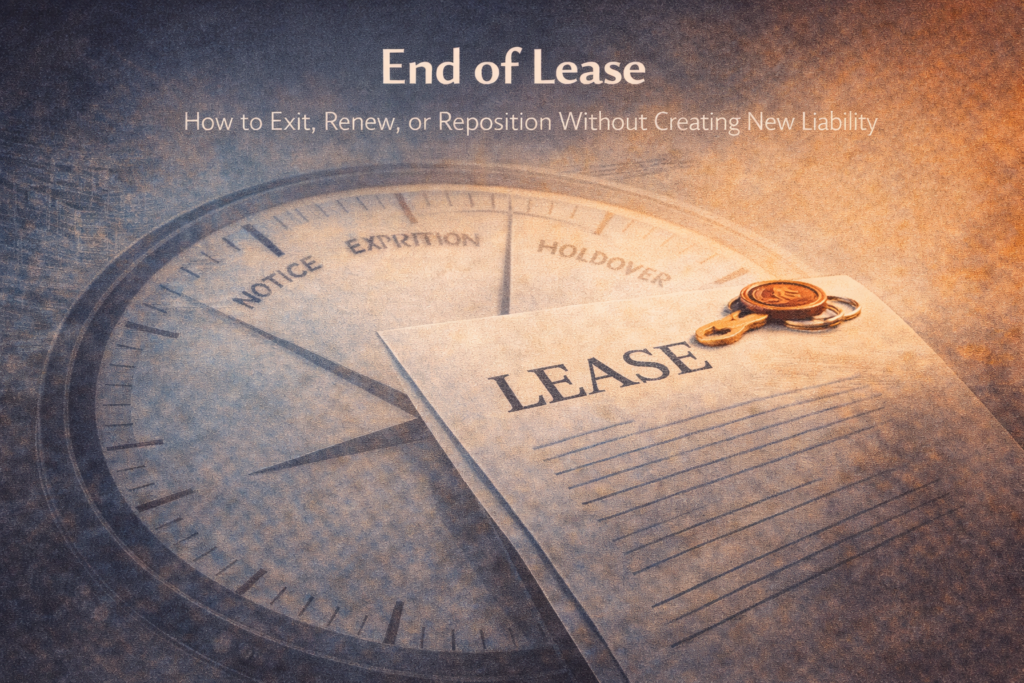
Review the Lease Before the Lease Ends
A tenant’s obligations do not disappear when the lease term expires. In fact, many of the most expensive requirements—restoration, removal of alterations, and final condition standards—only become relevant at the end.
Well before expiration, tenants should confirm:
- What condition the space must be returned in
- Which alterations must be removed
- Whether fixtures, cabling, or specialty installations must stay or go
- When notice deadlines apply
Failure to comply can delay the return of the security deposit or trigger additional charges.
Lease Renewal
No Automatic Right, No Rent Limits
In Manhattan, commercial landlords are not required to renew leases unless the lease explicitly grants that right. There is also no commercial rent regulation. This means a landlord can propose any rent they choose at renewal unless the lease restricts it.
Tenants who want renewal protection must negotiate it at the beginning of the lease, not at the end.
Renewal Options as Leverage
If the lease includes a renewal option, it should clearly define:
- How renewal rent is calculated
- Any caps or limits on increases
- The process for resolving disputes
Without these details, a renewal option may offer less protection than expected.
Tenants without renewal rights should begin discussions early. Landlords are often more flexible when:
- The tenant has paid reliably
- The space is well maintained
- The market favors tenant retention
Waiting too long reduces leverage and increases relocation risk.
Holdover Risk
Staying Past Expiration Is Expensive
If a tenant remains in the space after the lease expires without a signed extension, they may become a holdover tenant. Most leases impose significant rent penalties during holdover periods, often 150% to 200% of the last rent.
Holdover rent is not negotiable after the fact. Tenants should plan move-outs or renewals carefully to avoid this outcome.
Default at the End of the Lease
Where Problems Escalate Quickly
A default occurs when either party violates the lease. At the end of a lease, defaults often arise from:
- Failure to vacate on time
- Incomplete restoration
- Unpaid rent or utilities
- Failure to remove required alterations
Tenants can sometimes negotiate provisions requiring the landlord to give written notice of non-monetary defaults and an opportunity to cure them. These cure periods are especially important for repair or restoration obligations.
Courts generally do not extend commercial leases once they are terminated. If a default notice is received, tenants should consult legal counsel immediately—timing matters.
Security Deposit Return
Timing and Conditions
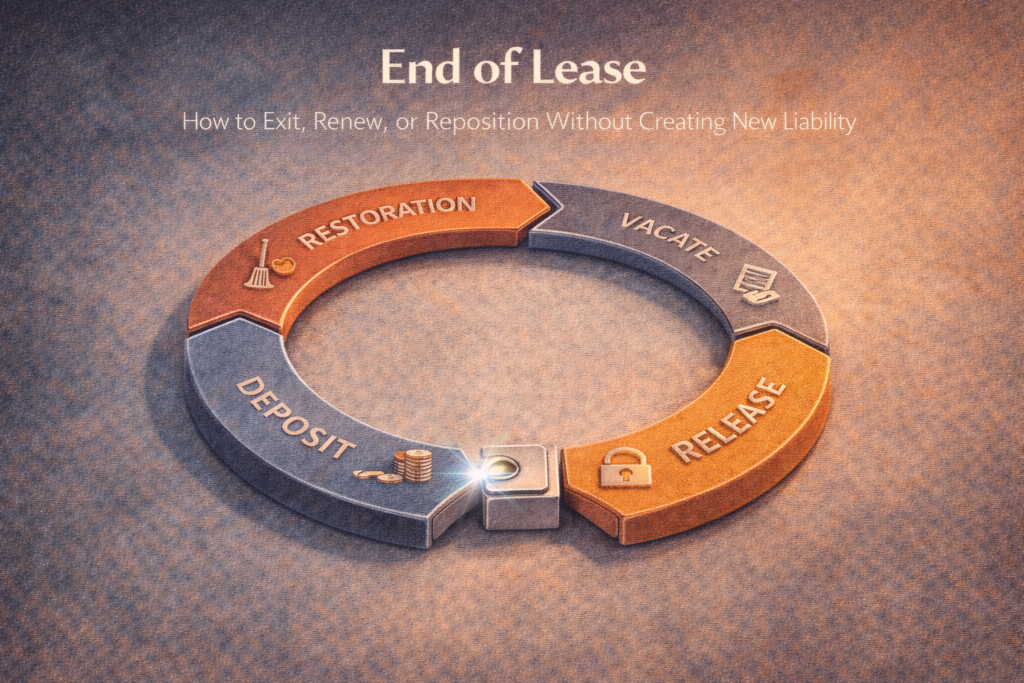
Security deposits are typically returned after the tenant vacates and the landlord confirms compliance with lease obligations. This process often takes 30 to 45 days.
Delays usually stem from:
- Disputes over restoration
- Outstanding invoices
- Damage beyond reasonable wear and tear
Clear documentation and pre-move-out walkthroughs can reduce disputes.
Strategic Exit Planning
The Best Time to Think About the End Is the Beginning
Tenants who plan for the end of the lease from day one make better decisions throughout the term. Choices about build-out, permitted use, and flexibility clauses all affect exit costs later.
An effective exit strategy considers:
- Renewal rights
- Assignment and subleasing options
- Restoration obligations
- Timing of notice requirements
This planning preserves leverage whether the tenant stays, relocates, or restructures.
Tenant Takeaways
The end of a lease is not just a move—it is a legal and financial transition. Tenants who understand their obligations and options can:
- Avoid holdover penalties
- Recover security deposits faster
- Negotiate renewals from a position of strength
- Exit cleanly without lingering liability
The lease does not stop working when you leave. It only stops when every obligation is satisfied.
Fill out our 📋 online form or give us a call today 📞 212-967-2061 — let’s find the right office for your business.
Source Acknowledgment
Portions of this Commercial Lease Guide are informed by publicly available educational materials published by the New York City Department of Small Business Services. This website is not affiliated with, endorsed by, or acting on behalf of the City of New York or any government agency. All interpretations, explanations, and market commentary reflect independent analysis focused on Manhattan office tenants.