Swing Space in Commercial Real Estate
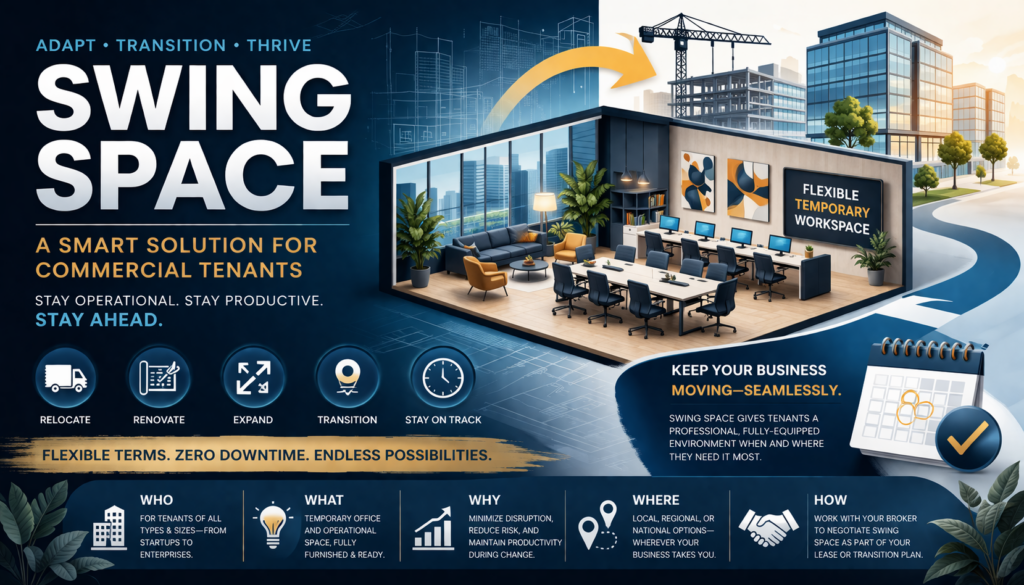
In commercial real estate, swing space refers to temporary office space that businesses use during transitions such as relocations, renovations, expansions, or lease timing gaps. While brokers use the term frequently, most tenants do not realize how powerful this tool can be when structured correctly within a deal.
From a tenant perspective, temporary office space protects operations. It allows companies to continue working without interruption, even when their primary office is unavailable or not yet ready. When negotiated properly, it becomes a strategic advantage rather than a last-minute fix.
Why “swing space” search results are confusing
Search results mix multiple meanings under one term. Some pages describe construction staging space, while others reference flexible coworking or even golf simulator venues. That confusion exists because the phrase is industry jargon.
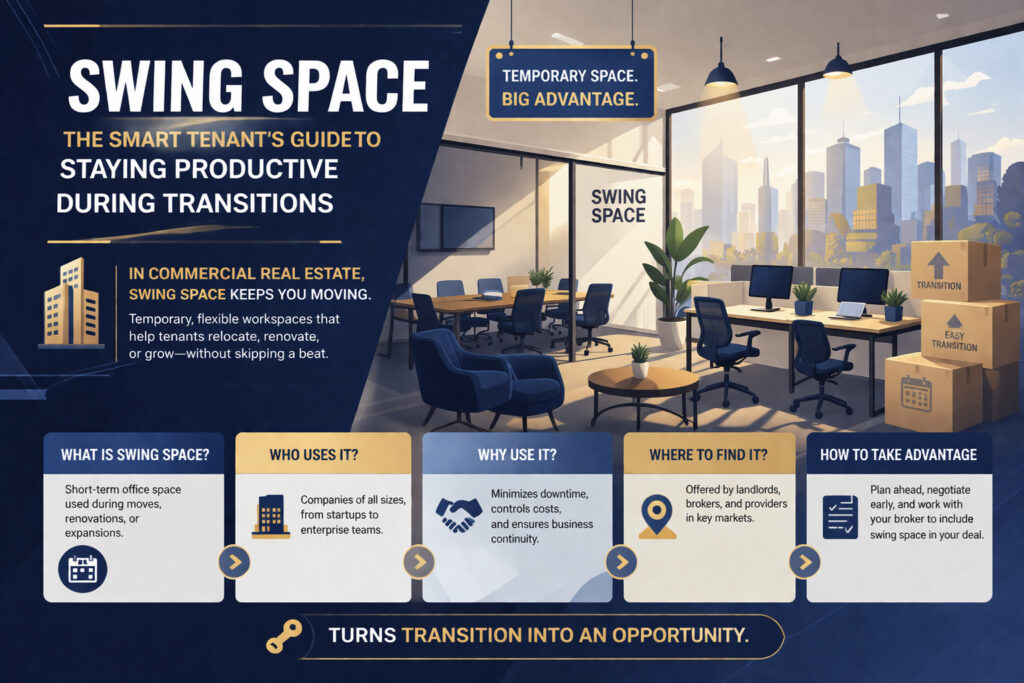
For tenants, the meaning is simple. It refers to short-term, fully usable office space that bridges a gap in occupancy. Instead of shutting down or scrambling for desks, companies move into a temporary setup and keep operating.
This distinction matters. Many online definitions focus on theory, but tenants care about execution—where the space comes from, how it is priced, and how it fits into a lease strategy.
What temporary office space means in commercial real estate
Temporary office solutions exist to solve timing problems. In Manhattan and other major markets, leases rarely line up perfectly with construction schedules or business growth.
A company may need space because:
- A new office is still under construction
- A lease expires before the next location is ready
- Headcount grows faster than expected
- Renovations require a full or partial vacate
Instead of pausing operations, tenants shift into an interim workspace. This setup can include desks, conference rooms, internet, and infrastructure that supports daily business activity.
The key advantage is continuity. Teams keep working, clients see no disruption, and revenue does not stall.
Who uses interim workspace and why tenants leverage it
Temporary office space applies to more tenants than most expect. It is not limited to large corporations or complex relocations.
Growing companies use it when hiring outpaces available seating. Rather than overcommitting to long-term square footage, they use a short-term solution while planning the next move.
Established firms rely on it during renovations. Law firms, financial groups, and media companies often need to upgrade their space without shutting down operations.
Enterprise tenants use interim setups to manage construction risk. Even with careful planning, build-outs can run late. Having a backup location prevents delays from impacting the business.
In every case, the goal stays the same: protect continuity while maintaining flexibility.
Where temporary office options come from
Tenants have several sources for short-term office setups. Each option carries different cost structures, control levels, and availability.
In-building availability often provides the cleanest solution. Landlords may have vacant suites or prebuilt offices that tenants can use temporarily. This option minimizes disruption because the team stays in the same building.
Prebuilt suites offer another common path. These spaces come furnished and ready for immediate occupancy, which reduces setup time and upfront investment.
Coworking providers also fill this role. Flexible operators can deliver desks quickly, especially when timing is tight. However, this option may come with branding limitations or less privacy.
Subleases sometimes function as interim solutions as well. A short-term sublease can bridge a gap when timing aligns correctly.
Each source requires evaluation based on cost, timing, and operational fit.
How interim office solutions are structured in deals
The structure of temporary office space depends on how early tenants plan for it. When addressed upfront, it becomes part of the negotiation rather than an emergency expense.
Brokers often position this as a concession. Landlords may provide short-term space at reduced cost—or even free—for a defined period, especially in larger transactions.
Lease timing plays a major role. If a landlord needs time to deliver a new space, they may offer interim occupancy elsewhere in the building to keep the tenant secured.
Flexibility matters as well. Some agreements allow expansion or contraction during the temporary period, which helps tenants adjust without committing long term.
Clear documentation is critical. Terms should define duration, cost, included services, and exit conditions to avoid confusion.
How tenants can take advantage of flexible office solutions today
Tenants gain the most leverage when they plan ahead. Temporary office space works best when it is built into the strategy—not added after a problem appears.
Start by identifying timing risks early. Construction delays, lease expirations, and hiring plans all create potential gaps. Once identified, these risks can be negotiated into the deal.
Use interim workspace as leverage. Landlords competing for a tenant may offer short-term space to win the transaction. This reduces downtime and lowers overall occupancy cost.
Align the solution with operations. A sales team may need open seating, while a legal team requires private offices. The temporary setup should match how the business actually functions.
Most importantly, treat it as a strategic tool. When structured correctly, it allows companies to move, grow, and upgrade without interruption.
What tenants often misunderstand about swing space
Many tenants assume temporary space is expensive or difficult to secure. In reality, it often becomes one of the most negotiable parts of a deal.
Others believe it only applies to large companies. Smaller tenants can benefit just as much, especially when transitioning out of coworking or expanding into their first direct lease.
Some also overlook timing. Waiting too long removes leverage. Addressing the need early creates options and improves outcomes.
Is swing space a long-term solution?
Temporary office space is designed for short-term use. It solves immediate challenges but does not replace a permanent office strategy.
That said, it can extend longer than expected. When markets shift or construction timelines change, tenants may remain in interim setups for longer periods.
The goal is not permanence. The goal is continuity during change.
How much space do you need for a temporary setup?
The amount of space depends on team size and layout needs. Many providers estimate between one hundred and one hundred fifty square feet per person for traditional layouts.
Flexible environments can reduce that number. Shared desks and hybrid schedules allow companies to operate with less square footage during transitions.
Planning should account for workflow, not just headcount. Conference rooms, quiet areas, and collaboration zones all impact how the space functions.
The bottom line for tenants
Swing space is not just a technical term. It is a practical solution that protects business operations during moments of change.
Tenants who understand how to use temporary office space gain an advantage. They reduce downtime, maintain productivity, and negotiate from a stronger position.
In a market where timing rarely aligns perfectly, that advantage matters.
Work with a tenant broker who structures it correctly
When timing gaps appear, the difference between disruption and seamless execution comes down to how the deal is structured. Work with a tenant-focused brokerage like NewYorkOffices.com to secure temporary office space that protects your operations while positioning your business for what comes next.
Fill out our 📋 online form or give us a call today 📞 212-967-2061 — let’s find the right office for your business.