Office Leasing Basics
How a Manhattan Office Lease Actually Comes Together
A commercial office lease is not a single document—it is a process. Understanding how that process unfolds gives tenants leverage, prevents missteps, and avoids signing a lease that looks reasonable on the surface but creates long-term problems underneath.
Unlike residential leasing, commercial leasing in Manhattan is governed almost entirely by what is written in the lease. There are very few automatic protections for tenants. If a right, obligation, or protection is not spelled out clearly, it generally does not exist.
This section explains the typical steps involved in leasing an office space, what each step accomplishes, and where tenants need to slow down and protect themselves.
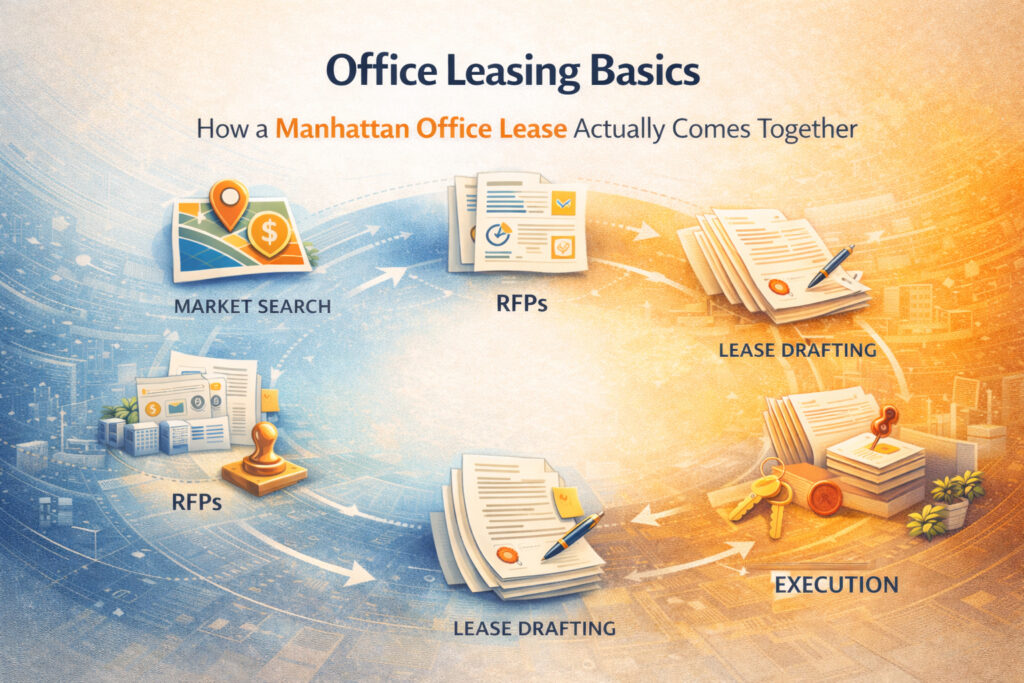
Commercial Leases vs Residential Leases
Why the Rules Are Completely Different
Many first-time office tenants assume commercial leases operate like apartment leases. They do not.
In a commercial lease:
- Nearly all tenant rights are defined by the lease itself
- Landlords are not automatically required to make repairs or provide services unless the lease says so
- There is no legal cap on rent increases at renewal
- Landlords are not required to renew the lease
This is why professional review and careful negotiation matter so much. The lease governs the relationship from day one through move-out.
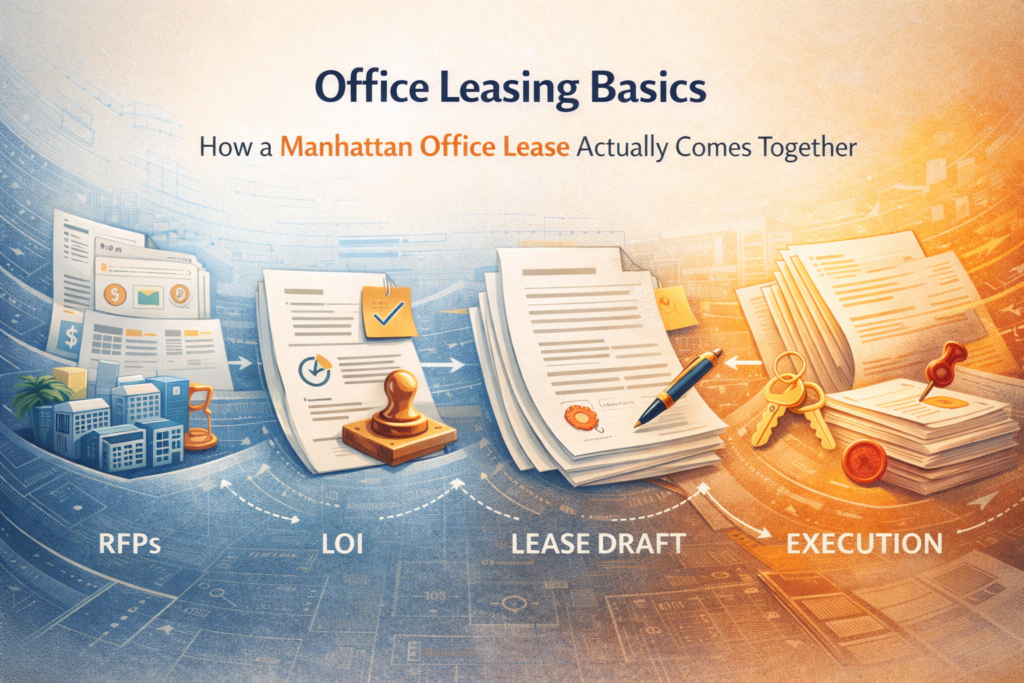
Step One: Request for Proposals (RFPs)
Once a tenant has identified target neighborhoods and approximate size requirements, the next step is gathering proposals from multiple landlords. This is typically coordinated by a broker or tenant representative.
What a Proposal Includes
A proposal is not a lease. It is a snapshot of headline terms that allows tenants to compare options. Proposals commonly outline:
- Lease term length
- Base rent
- Estimated additional rent
- Utility structure
- Security deposit requirements
- Basic build-out assumptions
At this stage, tenants should resist the urge to focus on rent alone. Two proposals with similar rent can have dramatically different long-term costs depending on escalation structures, operating expenses, and flexibility.
Step Two: Letter of Intent (LOI) or Term Sheet
The Most Underrated Step in the Process
After narrowing options and selecting a preferred space, tenants often move to a Letter of Intent, sometimes called a term sheet.
An LOI outlines the major business terms the tenant and landlord have agreed upon in principle. It is usually not legally binding—but it is strategically critical.
Why the LOI Matters
Many tenants treat the LOI casually, assuming everything can be renegotiated later in the lease. In reality, landlords often treat the LOI as the framework for the final lease and resist reopening agreed terms.
This is where tenants should:
- Involve legal counsel
- Confirm build-out assumptions
- Address timing, possession, and contingencies
- Walk away if deal-breaker terms cannot be resolved
If a landlord will not agree to essential terms at the LOI stage, the space is likely not a good fit—no matter how attractive it looks.
For smaller spaces or very short-term deals, landlords may skip the LOI entirely and move straight to lease drafting. This increases risk for the tenant and makes professional review even more important.
Step Three: The Lease Draft
Expect It to Favor the Landlord
In most Manhattan office deals, the landlord prepares the first lease draft using a standardized form. These documents are typically long, technical, and written to protect the landlord’s interests first.
The lease will include the agreed-upon business terms from the LOI, but it will also contain many additional provisions that materially affect risk, cost, and flexibility.
Why Legal Review Is Essential
The lease governs:
- Repair and maintenance obligations
- Default and termination rights
- Personal liability exposure
- Assignment and subleasing rights
- Operating expense responsibility
Tenants should never rely on verbal assurances or emails. If it is not written into the lease or a formal rider, it does not count.
Negotiated changes are typically made through a lease rider, which modifies or replaces specific provisions in the landlord’s form lease. While not every term is negotiable, understanding which ones matter most to your business is critical.
Assignment and Subleasing
Planning for Change Before It Happens
Even with careful planning, businesses evolve. A company may outgrow a space, downsize, merge, or relocate before a lease term ends. Assignment and subleasing provisions determine how flexible your exit options are.
Assignment
An assignment transfers the lease to a new tenant, who takes over rent payments directly to the landlord. Landlords usually require consent and may impose conditions, but tenants can often negotiate that consent not be unreasonably withheld.
Subleasing
A sublease allows the tenant to rent all or part of the space to another occupant while remaining responsible to the landlord. This can help offset rent but does not eliminate liability.
In both cases, the original tenant typically remains responsible if the new occupant fails to pay rent. This is why these provisions must be reviewed carefully before signing.
Landlords are sometimes more flexible when assignments or subleases involve affiliated entities or business successors, but this should be clearly documented.
Written Terms Always Win
One of the most important principles in commercial leasing is simple: the written lease controls everything.
Promises made during tours, negotiations, or phone calls have no legal effect unless they appear in the lease. Tenants should assume that if a term is not written, it does not exist.
Tenant Takeaways
Leasing basics are not about paperwork—they are about control. Understanding the leasing process allows tenants to:
- Compare deals accurately
- Avoid false assumptions
- Negotiate from a position of knowledge
- Protect flexibility and downside risk
A well-structured lease process saves time, money, and stress long after the ink dries.
Fill out our 📋 online form or give us a call today 📞 212-967-2061 — let’s find the right office for your business.
Source Acknowledgment
Portions of this Commercial Lease Guide are informed by publicly available educational materials published by the New York City Department of Small Business Services. This website is not affiliated with, endorsed by, or acting on behalf of the City of New York or any government agency. All interpretations, explanations, and market commentary reflect independent analysis focused on Manhattan office tenants.