Limiting Business and Personal Risk
How to Protect Yourself Before the Lease Becomes a Liability
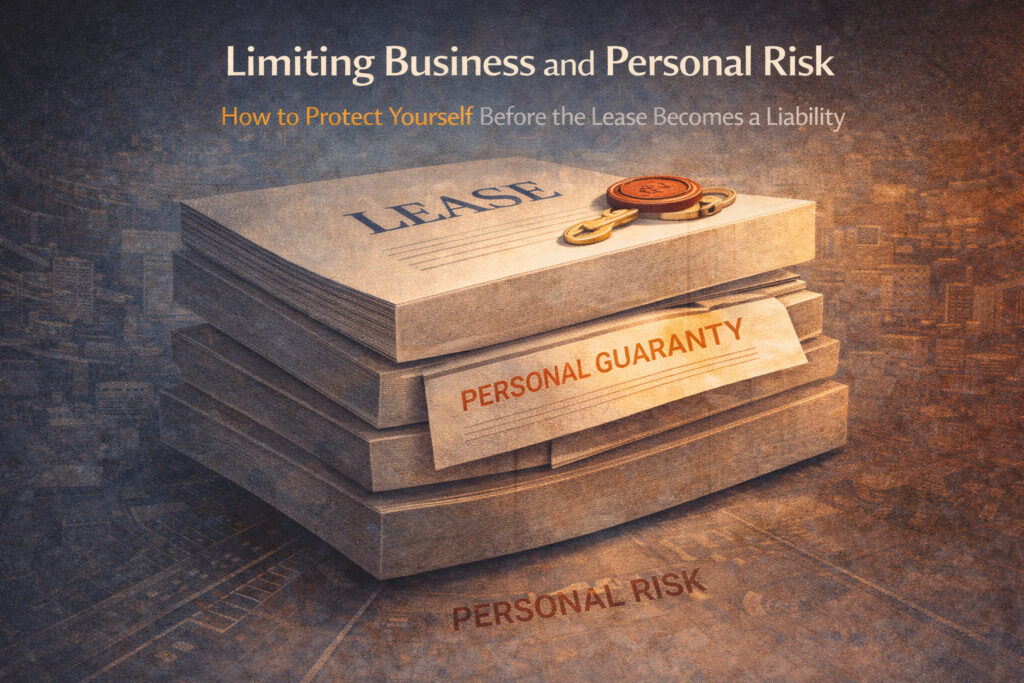
In a Manhattan office lease, risk is not theoretical. It is contractual, enforceable, and often personal. Many tenants focus on rent and space design while overlooking clauses that can expose their business—or themselves personally—to significant financial harm if circumstances change.
This section explains the primary ways risk enters a commercial lease and how tenants can limit that exposure through structure, negotiation, and foresight.
Default: The Trigger for Most Risk
A default occurs when a tenant violates the lease. This does not only mean failing to pay rent. Defaults can include:
- Missing insurance renewals
- Violating permitted use
- Failing to repair or maintain the space
- Vacating improperly
- Missing notice deadlines
Once a default occurs, landlord remedies can escalate quickly. This is why risk management begins with understanding how liability is structured before a lease is signed.
Tenant Entity
Separating the Lease From Your Personal Assets
One of the most effective ways to limit personal risk is to sign the lease through a tenant entity, such as an LLC or corporation, rather than in your individual name.
When structured correctly, the tenant entity—not the owner personally—is responsible for lease obligations. Claims by the landlord or third parties are generally limited to the assets of that entity.
Strategic Use of a Single-Purpose Entity
Many experienced tenants create a single-purpose entity whose only function is to hold the lease. This limits exposure if the business fails or relocates.
The trade-off is that newly formed or lightly capitalized entities often trigger:
- Larger security deposits
- Personal guaranty requirements
This is where negotiation becomes critical.
Personal Guaranties
Where Risk Becomes Personal
Even when a tenant entity signs the lease, landlords frequently require a personal guaranty from the business owner—especially for smaller tenants, startups, or companies without a long financial history.
Full Guaranty vs “Good Guy” Guaranty
A full guaranty makes the guarantor personally responsible for all tenant obligations under the lease, including future rent for the entire term.
A good guy guaranty is a limited form of guaranty. Under a properly drafted good guy guaranty:
- The guarantor is personally responsible only while the tenant occupies the space
- Personal liability ends once the space is vacated and returned properly
However, many leases claim to offer a “good guy guaranty” while quietly including provisions that eliminate its protections.
Red Flags That Undermine a Good Guy Guaranty
Avoid provisions that require the guarantor to:
- Pay accelerated future rent
- Perform additional construction or restoration work
- Repay tenant improvement allowances, free rent, or brokerage commissions
If these clauses exist, the guaranty is no longer meaningfully limited.
Security Deposits as Risk Substitutes
Landlords often balance risk using a combination of:
- Tenant financial strength
- Security deposit size
- Guaranty scope
In some cases, increasing the security deposit can reduce or eliminate the need for a personal guaranty. Strong tenants may also negotiate partial reductions or step-downs in the deposit after a track record of timely payment.
Insurance
Transferring Risk Away From the Lease
Insurance does not eliminate risk—but it limits financial damage when incidents occur.
Most Manhattan office leases require tenants to carry:
- Commercial general liability insurance
- Property insurance covering tenant improvements and contents
Landlords often require:
- The landlord, property manager, and lender to be named as additional insureds
- Proof of coverage before move-in and annually thereafter
Tenants should also strongly consider business interruption insurance, which can cover lost income if the office becomes unusable due to damage or building failure.
Insurance policies vary widely. Coverage gaps are common and should be reviewed carefully with a licensed insurance broker.
Indemnification
Who Pays When Something Goes Wrong
Indemnification clauses determine who is financially responsible when injuries, damage, or claims occur.
In a balanced lease:
- The tenant indemnifies the landlord for incidents inside the leased premises, except where caused by the landlord
- The landlord indemnifies the tenant for incidents in building areas under the landlord’s control
Poorly drafted indemnification clauses can shift broad liability onto the tenant—even for events outside their control. These provisions deserve close legal scrutiny.
Contingency and Early Termination Provisions
Planning for Regulatory Risk
Some businesses require licenses, permits, or approvals before legally operating. If those approvals are delayed or denied, the tenant may be unable to use the space despite being obligated to pay rent.
A contingency termination provision allows the tenant to exit the lease if required approvals cannot be obtained despite reasonable efforts.
These clauses are especially important for:
- Medical offices
- Childcare facilities
- Regulated professional uses
- Spaces requiring changes to certificates of occupancy
Landlords often require documented proof of good-faith efforts, so tenants should plan accordingly.
Tenant Takeaways
Risk in a commercial lease is not accidental—it is structural. Tenant entities, guaranties, insurance, indemnification, and contingency clauses all determine how much damage a bad outcome can cause.
Tenants who address risk early:
- Protect personal assets
- Preserve exit options
- Avoid catastrophic liability
- Negotiate from a position of strength
The goal is not to eliminate risk entirely, but to contain it.
Fill out our 📋 online form or give us a call today 📞 212-967-2061 — let’s find the right office for your business.

Source Acknowledgment
Portions of this Commercial Lease Guide are informed by publicly available educational materials published by the New York City Department of Small Business Services. This website is not affiliated with, endorsed by, or acting on behalf of the City of New York or any government agency. All interpretations, explanations, and market commentary reflect independent analysis focused on Manhattan office tenants.