Freight Elevator
Freight Elevators in Manhattan Office Buildings
A Freight elevator allows a business to move furniture, equipment, supplies, and large shipments between the street or receiving level and its office floor. For tenants evaluating Manhattan commercial buildings, dependable freight access can be essential to moving in, receiving regular deliveries, replacing technology, and making alterations without disrupting the main lobby. The presence of a freight car, however, does not guarantee a truck-height loading dock, unrestricted operating hours, or permission to transport every kind of equipment.
New York Offices helps businesses compare the complete delivery route, the building’s procedures, and the actual office layout. In commercial real estate, the critical question is not simply whether a listing says “freight elevator,” but whether the building can receive, safely handle, and deliver the materials your company uses.
What Is a Freight Elevator in an Office Building?
A freight elevator is a purpose-designed form of vertical transportation for goods transportation between floors. The terms cargo elevator and goods lift may describe similar goods-carrying equipment, although naming and specifications vary. A material lift can refer to a different type of device with restricted uses, so tenants should not assume that every lift marketed for goods is a conventional elevator permitted to carry people.
The distinction between service versus freight elevator is also important. A service elevator may be a passenger-rated cab reserved at certain times for housekeeping, building staff, or deliveries. A dedicated commercial elevator built and classified for freight has its own rated loading arrangement. For freight versus passenger elevator comparisons, the decisive factors are the approved classification, capacity, permitted riders, doors, and actual intended use—not whether the interior has a rugged finish. A passenger elevator should not be used for a heavy delivery merely because its doors appear wide enough.
Manhattan office tenants rarely need the capabilities of an industrial elevator or heavy-duty lift serving manufacturing plants, but businesses with repeated heavy loads must establish the appropriate system. The needs of a professional office differ from warehouse operations in industrial facilities, back-of-house deliveries at retail properties, and high-throughput storage facilities. These comparisons help define what your office actually requires, rather than selecting unnecessary industrial features.
Follow the Full Delivery Route From Curb to Office
Effective freight handling starts before a shipment enters the building. A useful site visit traces a delivery from the truck’s stopping place through the building entrance, receiving area, freight car, destination floor, and the final office doorway.
Where there is a truck-accessible dock, check its reservation process, vehicle clearance, unloading equipment, and the route to the freight car. Where there is no dock, confirm whether deliveries are made at sidewalk level, through a side entrance, or via another approved receiving location. A building that advertises a freight elevator is not necessarily equipped with a dedicated loading dock.
For large deliveries, determine whether the cargo can pass through every door and turn in the corridors, including any restricted corners near the elevator. Oversized equipment, server cabinets, production cases, large desks, and conference tables may fit the cab but fail to clear the loading entrance or the door to the suite. Also ask whether trucks can legally stand and unload at the relevant curb and whether a building employee must supervise the process.
A floor plan often shows the elevator location but not the loading route. Request a freight-access plan or walk it with management before relying on the feature in a move-in schedule.
Freight Capacity, Cab Dimensions, and What Can Actually Be Moved
The posted freight capacity and load capacity are essential, but they are not interchangeable with the practical ability to handle a particular shipment. A prospective tenant should obtain the elevator’s elevator specifications, including the rating, loading class, clear interior dimensions, door opening, and permitted loading equipment. Verify any applicable weight limits for the route as well as the elevator itself.
| Item to verify | Why it matters for an office tenant |
|---|---|
| elevator dimensions | Interior width, depth, and clear height determine whether furniture or equipment physically fits. |
| Door opening | A large cab is ineffective if the clear entry is too narrow or low. |
| Rated load and loading class | Combined freight and any handling equipment must comply with the car’s approved limits. |
| Floor loading | Concentrated point loads may require review of the cab platform and the route across the building. |
| Operating arrangements | Reservations, staffing, and approved hours affect delivery timing and cost. |
Inspect the elevator cab, including its wall protection, floor condition, lighting, and any equipment projecting into the loading space. Features such as reinforced flooring and steel construction may be used in heavy-duty freight cars, but their appearance cannot establish the actual approved rating. A building may also require protective pads or temporary floor covering when large items are moved.
For deliveries using pallet jacks, confirm permissible pallet handling, wheel loads, turning radius, and storage restrictions. Forklift access is a separate technical question: forklifts are not automatically allowed on every freight car, and the combined truck-and-load weight must be evaluated against its loading classification and operator rules.
Freight Elevator Loading Classes: A, B, and C
The recognized freight loading classes under the ASME A17.1 framework include A, B, and C1–C3. The classification determines how loads are introduced to the platform, not merely the amount of weight the elevator can lift.
| Classification | Intended loading arrangement | Typical relevance to offices |
|---|---|---|
| Class A freight elevator | General freight handled manually or with hand trucks, subject to limits on individual pieces and loaded trucks | Furniture, ordinary supplies, and many office moves, subject to actual ratings |
| Class B freight elevator | Motor-vehicle loading within the approved gross vehicle weight | Specialized vehicle transport; not typical of a standard office floor |
| Class C freight elevator — C1 | Industrial truck is carried inside the elevator with its load; combined weight must meet the rated limit | Specialized heavy-equipment or industrial operations |
| Class C2 | Industrial truck is used to load or unload but is generally not carried; a limited static loading allowance can apply during the loading process | Specialized handling of heavy concentrated loads |
| Class C3 | Heavy concentrated loads handled without the industrial truck arrangement typical of C1/C2 | Specialized equipment, with engineered loading conditions |
For the C2 arrangement, the often-quoted 150% figure refers to a permitted temporary static load during loading or unloading under the applicable design—not permission to travel with an elevator loaded to 150% of its rated capacity. The actual transported load must remain within the approved limit. Tenants should use the classification posted on the equipment and obtain confirmation from building management or its elevator professional before scheduling unusual freight.
The search phrases Class D freight elevator and Class E freight elevator should not be presented as additional ASME A17.1 freight-loading classes. If either appears in a vendor proposal, ask the provider to identify the standard and product classification it means rather than incorporating the label into an office listing as a fact.
Elevator Doors, Operating Systems, and Building Equipment
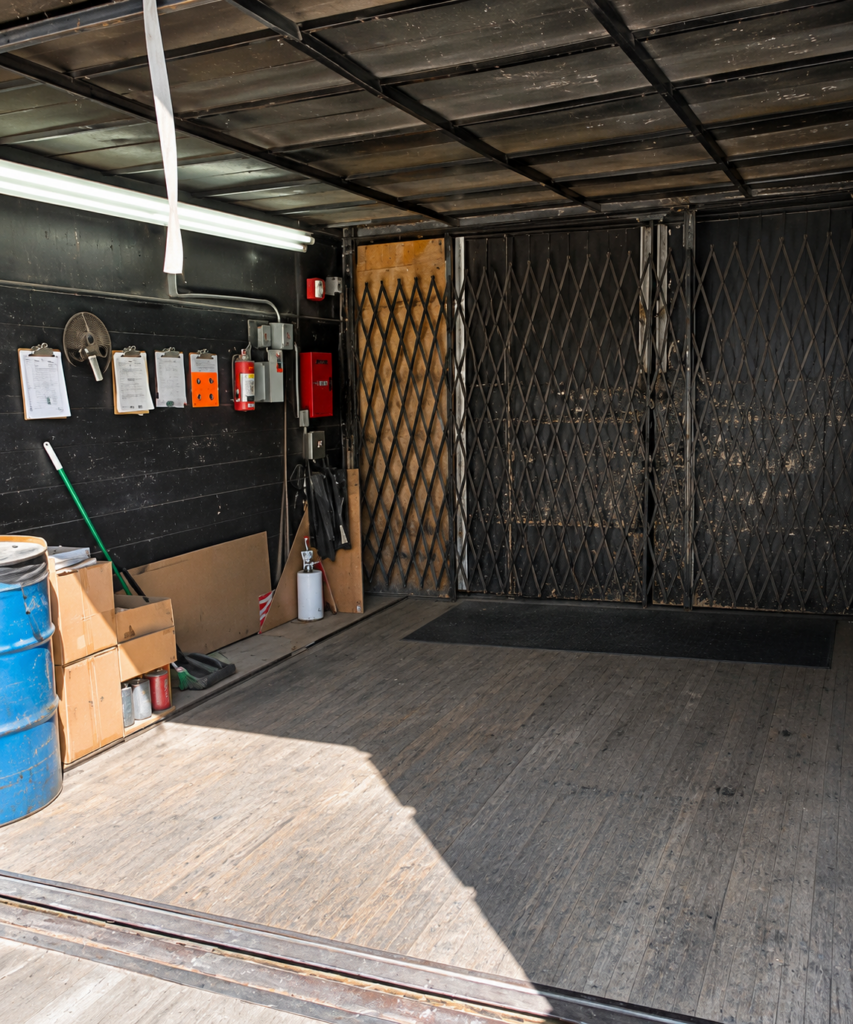
Freight systems may use heavy-duty elevator doors, vertical openings, protective gates, and other components suited to repeated goods movement. Older installations can have manual gates, while others use powered or automatic doors. The clear opening and loading procedure should be observed during a building tour; never assume that an automatic passenger-style door offers the same protection or clearance as a freight entrance.
The building’s elevator shaft and equipment arrangement govern what can be installed or upgraded. Some systems require a dedicated machine room, while others use different machine configurations. Within the broader category of vertical lift systems, hydraulic elevators and traction elevators are both used for goods movement. The correct choice depends on rise, capacity, speed, space, existing conditions, and engineering—not a fixed rule that hydraulic freight is only suitable below a particular number of floors.
A tenant generally does not control the building’s elevator installation or elevator modernization project, but construction schedules and outages may affect occupancy. If the landlord is promising an upgraded freight car or new controls, request the scope, expected completion, and any interim procedure for deliveries. Maintenance or upgrade work should not be confused with an assurance of increased capacity.
NYC Safety Requirements and Passenger Restrictions
Freight elevators are governed by applicable safety regulations, building codes, equipment approvals, and the building’s operating procedures. In New York City, the adopted elevator standards are supplemented by local requirements. A property’s equipment must comply with the applicable NYC building regulations for its installation, alterations, inspections, and permitted use.
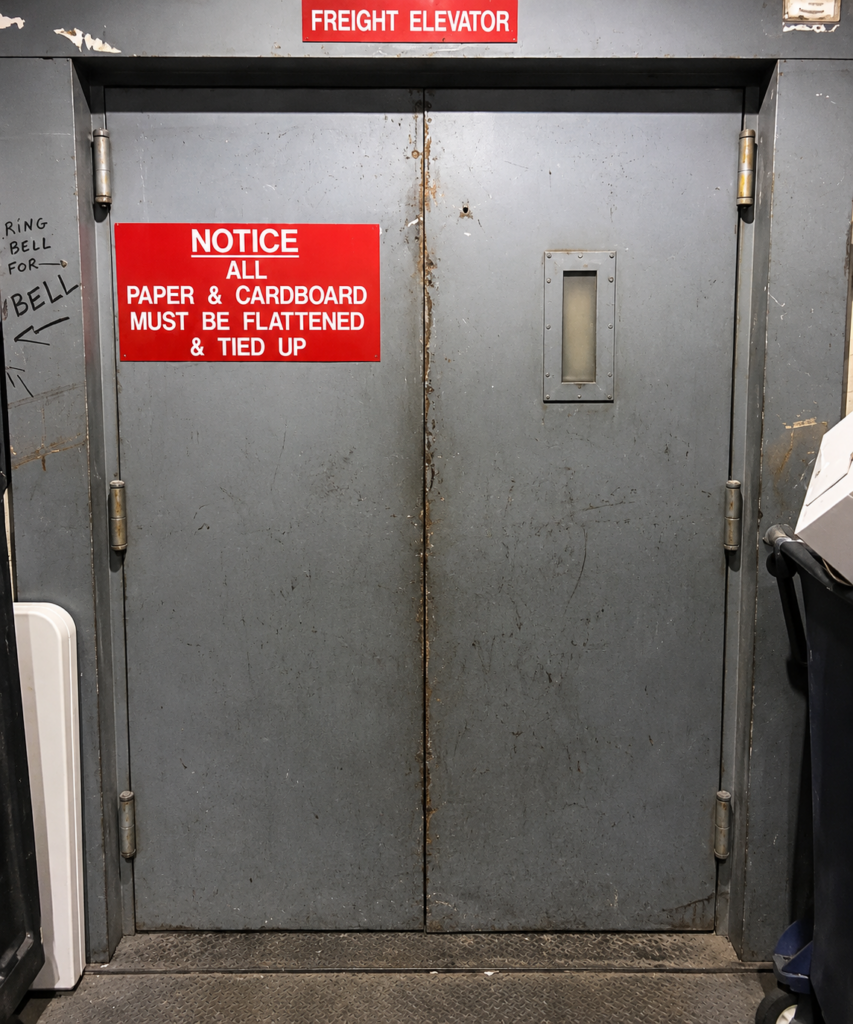
Some freight elevators permit designated personnel to accompany goods under approved conditions; others are not for general public use. Do not use a freight elevator as an alternative accessible passenger route or normal employee transportation without confirming its approval. Posted signs, the building’s operating policy, and the elevator’s classification determine what is allowed.
The building owner is responsible for the applicable inspection and testing program and the equipment’s ongoing maintenance requirements. Ask whether recurring outages, planned modernization, or limited staffing could interfere with a regular delivery operation. Elevator operators may be required by the building’s staffing model or particular equipment, even where other freight installations are self-service.
For shipments involving powered trucks, relevant OSHA standards address workplace material handling, equipment operation, loading docks, and safe elevator entry. They are not a general license for a tenant to bring a forklift into an office building. When specialized handling is proposed, coordinate with qualified movers, building management, and the relevant safety professionals.
What Freight Elevator Access Costs an Office Tenant
The phrase freight elevator cost can describe two separate things: the owner’s capital expense to provide or maintain the equipment and the tenant’s expense to use it. A leasing decision normally involves the second category: freight reservations, operators, overtime security, protective materials, moving-company time, and related service charges.
Similarly, commercial elevator pricing from manufacturers concerns the equipment and installation and should not be mistaken for a per-use freight charge in a Manhattan lease. Do not assume a building charges a fixed fee, guarantees free daily access, or includes overtime reservations in base rent.
Ask whether the lease grants routine deliveries as well as move-ins, which days and hours are available, how much notice is required, and whether there are minimum staffing charges. Our guide to freight access for daily deliveries versus move-ins explains why these details should be resolved before signing.
Use the office lease proposal and work-letter checklist to record any freight reservation or delivery rights that are material to your operation. For an office requiring construction, review our tenant improvements guide alongside the freight plan.
A properly negotiated arrangement can be particularly important for a technology office receiving server equipment, a design firm moving samples, or a showroom replenishing displays. Compare the total recurring freight expense with the reliability of the service, not just the presence of a freight elevator icon in a property brochure.
Freight Elevator Examples From Our Manhattan Office Inventory
Published descriptions on NewYorkOffices.com illustrate how much freight access can differ from one property to another. These examples are not confirmations of current availability or unrestricted use; verify the present terms and the specific building’s policies.
135–139 West 29th Street — 6,810-Square-Foot Full-Floor Office
Our West 29th Street Office Space for Lease describes a furnished ninth-floor office with five glass-fronted meeting spaces, three phone booths, an open work area, and a pantry. Its published amenities include direct freight elevator access in addition to two passenger elevators. The property is a useful example of why a finished workplace still needs a practical route for moving desks, large furniture, and future replacement equipment.
49 West 24th Street — 4,850-Square-Foot Full-Floor Commercial Co-op
The West 24th Street Commercial Loft for Sale advertises an entire second-floor commercial unit with a large freight car and a separate freight entrance. The premises include a broad open area, a private room, reception, pantry, and restrooms. This is a sale/ownership example, not an ordinary direct office lease; it illustrates why access from outside the building can matter as much as the freight elevator itself.
Park Avenue South — 9,936-Square-Foot Custom Office
Our Custom Park Avenue South Office describes an eighth-floor direct-lease opportunity with direct freight access. Its proposed test fit accommodates 66 workstations, two conference rooms, phone booths, and support facilities. The existing installation is intended for replacement, so the office layout is a proposed buildout, not a completed suite. Freight availability should be coordinated with construction deliveries and the future move-in.
22 West 21st Street — 5,040-Square-Foot Fitted Loft
The 22 West 21st Street Office describes a third-floor installation with enclosed offices, meeting rooms, an IT closet, an open workspace, and pantry. The published building description identifies two passenger and two freight elevators and advertises extended access. Check the current freight schedule and reservation requirements rather than assuming that every type of delivery can occur at any hour.
350 West 38th Street — Whole-Building Delivery Comparison
Our Garment District Building for Sale describes a six-story property with approximately 29,628 gross square feet and a freight elevator opening toward the sidewalk. This whole-building example is useful for businesses with regular receiving or light-industrial requirements, but the actual curbside loading permissions, freight-car rating, and suitability of any proposed use require separate verification.
Questions to Ask Before Leasing an Office With Freight Access
Use the following checklist when comparing properties:
- Receiving route: Where may trucks stop, and does the route begin at a dock, sidewalk door, or controlled loading entrance?
- Physical clearances: What are the measured cab dimensions, door opening, corridor widths, and any steps or tight turns along the route?
- Approved loading: What is the rated capacity and posted loading class, and will management permit your handling equipment?
- Scheduling: Are ordinary weekday deliveries included? What advance notice, blackout periods, and after-hours reservations apply?
- Staffing and charges: Is an operator or security officer required, and who pays for overtime, pads, cleaning, or damage?
- Move-in coordination: Can movers reserve a full time block, and must certificates of insurance or contractor approvals be submitted?
- Reliability: Is the freight car shared by the whole building, and what is the procedure when it is out of service?
- Contract language: Does the lease expressly address the tenant’s anticipated delivery frequency and any negotiated freight rights?
A large freight car is less useful when its route, staffing, or schedule does not match the business’s operations. The complete moving and delivery plan belongs in the lease review, alongside the office’s room count, usable area, and construction requirements.
Freight Elevator Manufacturers and Service Companies
Among established freight elevator manufacturers and elevator-service organizations are KONE, TK Elevator, Schindler, and Otis. Their product lines and local support offerings vary, and a particular office building may contain equipment from a different manufacturer. The landlord or its elevator contractor should confirm the precise model, rated load, maintenance arrangement, and availability of parts rather than assuming comparable specifications across brands.
Tenants choosing office space usually do not select the elevator manufacturer. For an owner considering a major upgrade, however, the choice of equipment and service contract can affect capacity, reliability, future maintenance costs, and disruption during construction. These questions require engineering and owner involvement rather than ordinary tenant furniture planning.
Find Manhattan Offices With Appropriate Freight Elevator Access
New York Offices helps businesses compare Manhattan offices by floor plan, delivery route, equipment access, operating hours, and overall lease terms. We can identify listings advertising freight service, arrange property tours, and help clarify the proposed access rights and associated costs. The landlord pays our tenant-representation brokerage commission, with no brokerage fee charged to office tenants.
Contact a broker or call 212-967-2061 to discuss the size and type of shipments your business expects, your preferred location, and the office configuration you need. There is no obligation.
Find an Office with Freight Elevator Access
If your business requires an office with freight elevator access, we can help locate the perfect space.
📞 Contact us today to explore Manhattan office listings with dedicated freight service elevators.
✅ No broker fees
✅ Access to exclusive office spaces
✅ Personalized office search solutions
Let us simplify your office search—call or message us now!

SOME SAMPLE FREIGHT ELEVATOR COMPANIES IN MANHATTAN