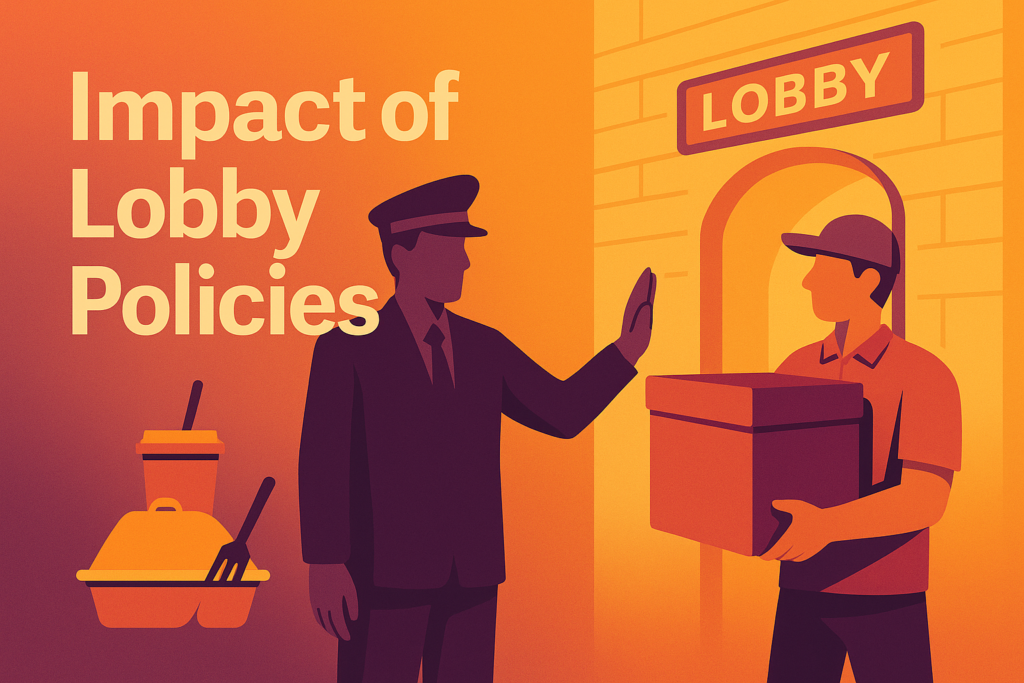
Can a Landlord Restrict Food Deliveries or Require Lobby Check-Ins?
The Everyday Impact of Lobby Policies
In Manhattan office towers, food deliveries and catering aren’t just perks—they’re essential. From daily lunches to client meetings and firm-wide events, tenants often rely on regular deliveries. Yet many landlords impose rules requiring lobby check-ins, ID verification, or even limiting which vendors can enter the building. For tenants, these policies can slow down operations, frustrate staff, and add hidden costs. The big question: Can a landlord really restrict food deliveries?
How Landlords Control Deliveries
- Lobby Security Protocols
- Most Class A and Class B buildings have 24/7 lobby security. Delivery workers must sign in, show ID, and be badged.
- Some require tenants to pre-register deliveries through an online portal.
- Designated Delivery Hours or Entrances
- In many Midtown and Downtown towers, all deliveries (including catering) must use the freight entrance, not the main lobby.
- Certain landlords restrict deliveries during rush hours (8–10 AM, 12–2 PM, 4–6 PM) to avoid congestion.
- Vendor Approval Policies
- Some landlords approve or disapprove vendors, often citing union rules, insurance coverage, or building security.
- In extreme cases, landlords have banned outside food delivery altogether in favor of on-site vendors.
What Leases Usually Say
- Broad Discretion: Most office leases give landlords wide control over building rules and regulations, which include delivery policies.
- Tenant Rights: Unless the lease specifically grants unrestricted access for deliveries, tenants are bound by the landlord’s rules.
- Service Disruption Claims: Tenants can sometimes argue restrictions interfere with “quiet enjoyment” of the premises, but this is a high bar legally.
Real-World Examples
- Midtown Class A Tower: A financial tenant’s catering deliveries were rerouted to the freight dock. Because the freight was overbooked, hot meals often arrived cold. The tenant negotiated dedicated lunchtime delivery access as part of a renewal.
- Downtown Creative Loft: A landlord required all deliveries to be registered in advance through a digital portal. Small vendors struggled, leading the tenant to push for simplified ID-only entry for food carriers.
- Plaza District Office: Landlord banned outside food deliveries beyond the lobby, steering tenants toward a pricey in-building café. Tenants resisted, but the lease’s “landlord rules” clause gave the owner discretion.
Tenant Strategies
- Negotiate Delivery Rights Up Front
- Add language ensuring reasonable food and package deliveries without excessive restrictions.
- Push for Freight Access Flexibility
- Secure priority freight slots for catering during lunch hours.
- Request Waivers for Frequent Vendors
- Landlords may allow standing access permissions for approved caterers or daily lunch providers.
- Track Impact on Operations
- Document delays, missed meals, or costs incurred; these strengthen your case during disputes or renewals.
Tenant Takeaway
Yes—landlords can restrict food deliveries or require lobby check-ins, since most leases give them broad authority to set building rules. But tenants have room to negotiate:
- Pre-approved vendor lists
- Freight access carve-outs for catering
- Lease language guaranteeing reasonable delivery access
The key is raising the issue early—before you’re stuck waiting in the lobby for cold lunches.
Where We Fit In
We know which buildings impose strict delivery rules and which are more flexible. We’ll:
- Flag tenant-unfriendly lobby policies before you sign
- Negotiate delivery rights to keep your office running smoothly
- Benchmark how competitors in Midtown, Downtown, and Midtown South handle deliveries
Contact us to find a space where your team’s daily operations aren’t at the mercy of restrictive food delivery rules.