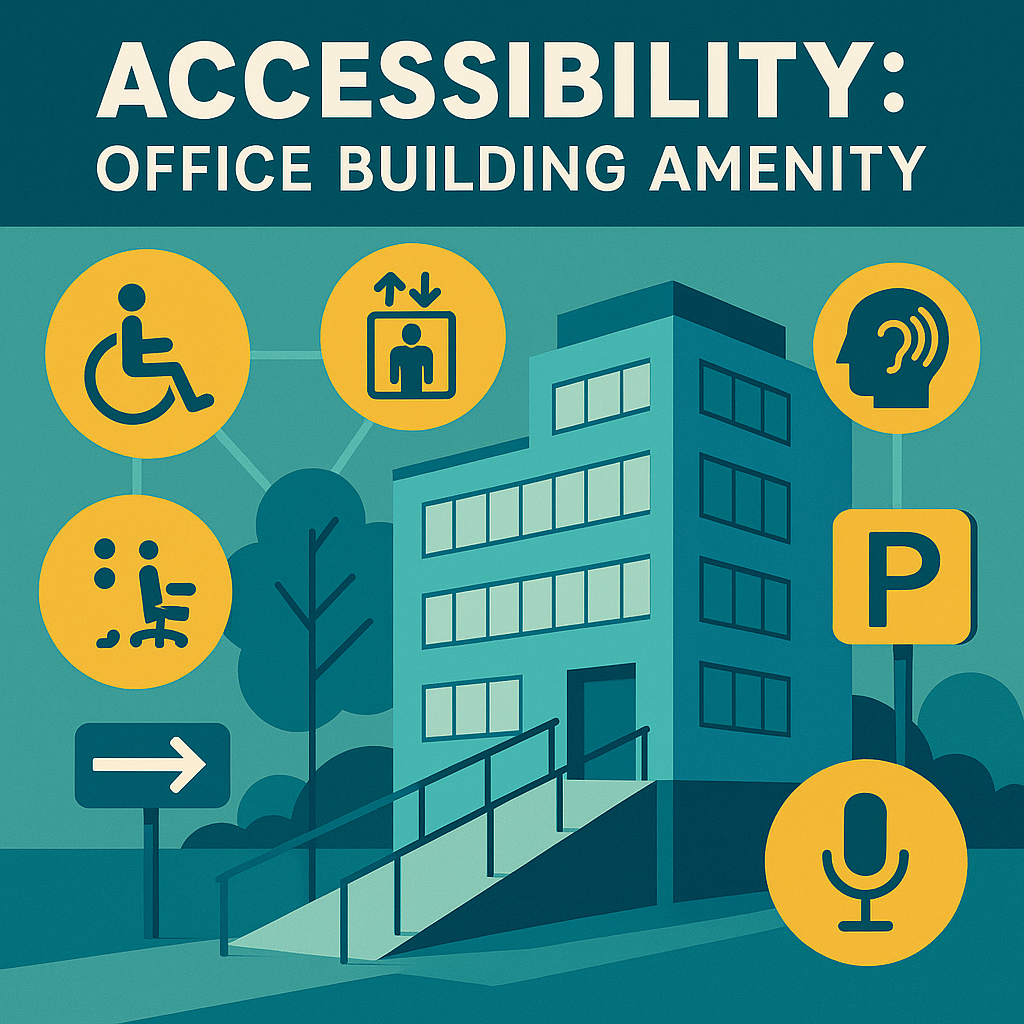
Accessibility: Office Building Amenity
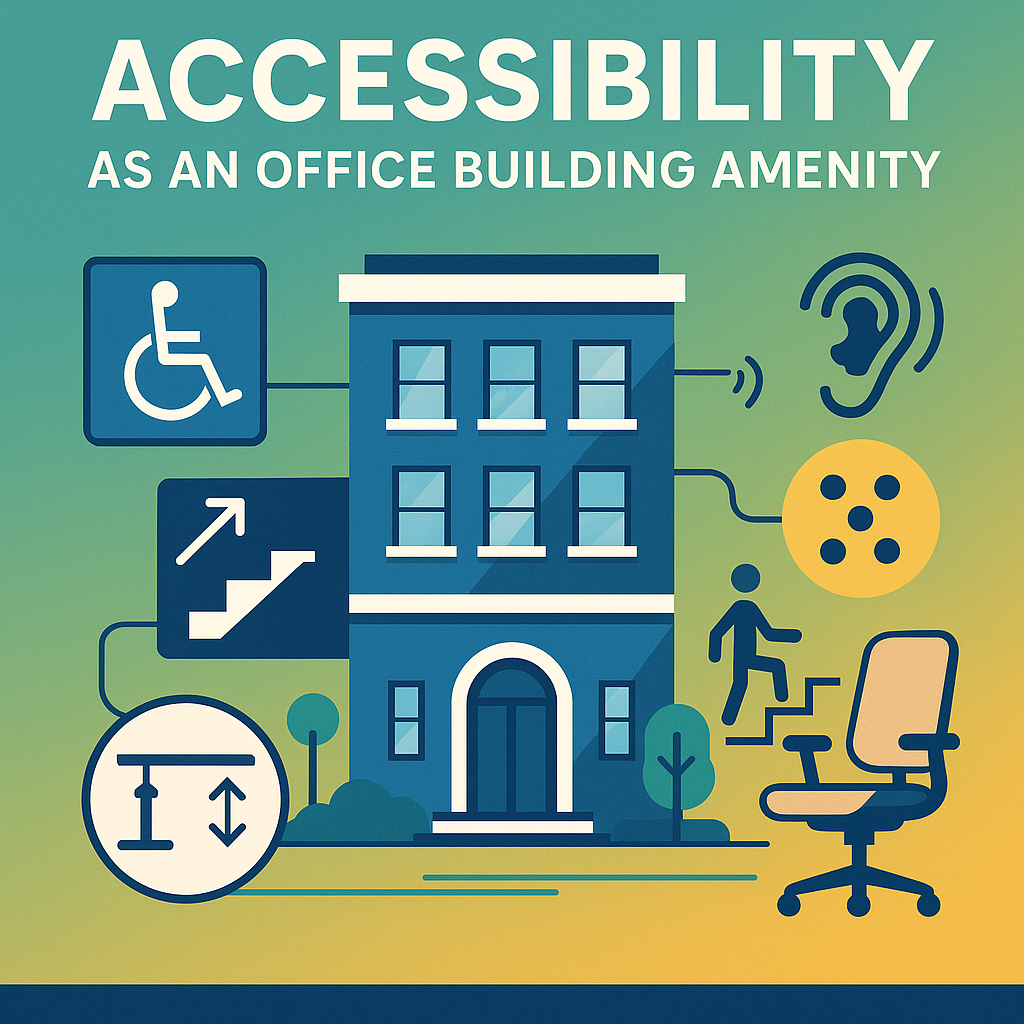
Accessibility as an Office Building Amenity
Accessibility is no longer just a regulatory requirement; it’s a core feature of inclusive, high-performing office environments. In the context of office buildings, accessibility as an amenity refers to physical and digital design elements that ensure equitable access and usability for everyone—including people with disabilities. Prioritizing accessibility benefits all users and enhances the building’s appeal to a broader range of tenants.
Key Aspects of Accessibility in Office Buildings
Physical Accessibility: Office buildings must feature ramps, elevators, wide doorways, and accessible restrooms to accommodate individuals with mobility impairments. Designated accessible parking spaces near entrances and clear circulation paths throughout the building are essential components.
Sensory Accessibility: Support for individuals with hearing or vision impairments includes features like Braille signage, auditory signals in elevators, high-contrast wayfinding systems, and visual emergency alarms.
Cognitive Accessibility: Buildings benefit from intuitive layouts, clear and easy-to-read signage, and quiet zones that support individuals with cognitive disabilities or sensory sensitivities.
Ergonomic Design: Adjustable furniture, such as sit-stand desks and supportive chairs, provides comfort and flexibility for a wide range of users.
Assistive Technology: From screen readers and voice recognition software to alternative input devices, these technologies ensure digital access for employees and visitors alike.
Inclusive Culture and Training: Beyond the built environment, training building staff and tenants in accessibility practices promotes a respectful and inclusive workplace culture.
Benefits of Accessibility in Office Buildings
- Attracts Diverse Talent: Inclusive spaces appeal to a wider range of tenants and employees.
- Boosts Productivity: Comfortable, accessible environments support focus and engagement.
- Improves Employee Well-Being: Thoughtful design reduces stress and enhances morale.
- Enhances Reputation: Companies in accessible buildings project a commitment to diversity and inclusion.
- Ensures Legal Compliance: ADA standards and NYC-specific regulations must be met or exceeded to avoid penalties.
Common Accessibility Amenities
- Accessible Parking with clear signage and van-accessible dimensions.
- Barrier-Free Entrances with automated doors and level thresholds.
- Wide, Clear Circulation Paths at least 36 inches wide.
- Accessible Restrooms with grab bars, low sinks, and maneuvering clearance.
- Braille and Tactile Signage in hallways, elevators, and restrooms.
- Adjustable Desks and Chairs in communal and private office areas.
- Assistive Technologies built into shared IT or conference areas.
- Quiet Rooms or sensory-friendly zones for focus and decompression.
- Accessible Emergency Plans with visual and audible alerts and evacuation support.
Going Beyond Compliance: Universal Design
The best office buildings integrate Universal Design principles, creating environments that are usable by all people without the need for adaptation or specialized design. This approach ensures accessibility is built in from the ground up—not added as an afterthought.
Final Takeaway
Accessibility is a foundational amenity in any modern office building. From physical infrastructure and sensory support to digital tools and inclusive policies, accessible design improves functionality and equity. It demonstrates a forward-thinking approach that benefits tenants, landlords, and the broader business ecosystem alike.
Fill out our 📋 online form or give us a call today 📞 212-967-2061 — let’s find the office for your business.